 Save Pin
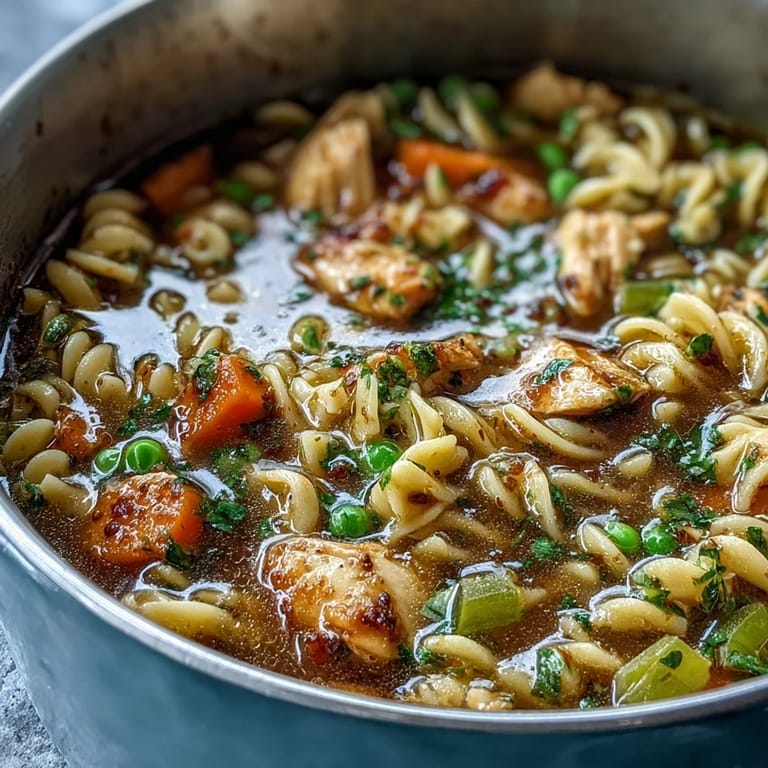
 There's something about the sound of chicken hitting hot oil that signals comfort is coming. My neighbor stopped by on a chilly Tuesday afternoon, and instead of offering coffee, I threw together this one-pot chicken noodle soup while we talked on the kitchen counter. Twenty minutes in, the whole house smelled like home, and she stayed for three bowls. That's when I knew this wasn't just a weeknight dinner—it was the kind of meal that makes people linger.
I made this for my sister during her moving weekend when she had zero energy and even less appetite. She ate two bowls sitting on a stack of boxes, and later told me it was the meal that made her feel human again after eighteen hours of hauling furniture. That's what this soup does—it shows up exactly when you need it most.
Ingredients
- Chicken thighs or breasts (1 lb), cut into bite-sized pieces: Thighs stay juicier longer, but breasts work beautifully if you cut them small and don't overcook them past the noodle stage.
- Low-sodium chicken broth (8 cups): I learned the hard way that regular broth can oversalt the soup by the time noodles finish cooking, so low-sodium gives you control.
- Carrots (2 medium), peeled and sliced: They soften into sweet little coins that catch the light in the bowl and make everything look more wholesome than it is.
- Celery (2 stalks), sliced: The unsung flavor anchor—it adds a gentle earthiness that rounds out the whole pot.
- Yellow onion (1 medium), diced: This caramelizes slightly during the sauté and becomes the flavor foundation before anything else joins the party.
- Garlic (2 cloves), minced: One minute in the oil transforms it from raw and sharp to mellow and aromatic.
- Green beans (1 cup), trimmed and chopped: They hold their shape and texture better than you'd expect, staying just tender enough to bite cleanly.
- Frozen peas (1 cup): These add sweet pops of color and cook perfectly from frozen without turning mushy.
- Corn kernels (1 cup), fresh or frozen: Fresh corn is lovely, but frozen is honestly just as good and means you can make this any time of year.
- Egg noodles or wide pasta noodles (6 oz): Wide noodles catch more broth in each forkful, which is the whole point of a soup noodle.
- Olive oil (2 tbsp): Just enough to get everything sizzling without making the broth greasy later.
- Dried thyme and parsley (1 tsp each): These dry herbs stay suspended in the broth and taste classically comforting, like someone's grandmother made it.
- Bay leaf (1): It sits quietly in the pot adding subtle depth, but you must remove it before serving or explain it to your guests.
- Salt and black pepper, to taste: Add conservatively at first since the broth already has sodium, then taste before serving.
Tired of Takeout? 🥡
Get 10 meals you can make faster than delivery arrives. Seriously.
One email. No spam. Unsubscribe anytime.
Instructions
- Sauté the base vegetables:
- Heat olive oil in a large soup pot over medium heat and add the onion, carrots, and celery together. Let them soften for about five minutes, stirring occasionally—you want them to start releasing their sweetness without browning.
- Toast the garlic:
- Once the vegetables are tender, add the minced garlic and stir for just one minute until it becomes fragrant and golden. This step prevents garlic from tasting raw or bitter in the finished soup.
- Brown the chicken lightly:
- Add the chicken pieces to the pot and let them cook for three to four minutes, stirring occasionally so they get a light golden color on the outside. This doesn't fully cook them—it just seals in flavor before the broth takes over.
- Build the broth base:
- Pour in the chicken broth and add the thyme, parsley, bay leaf, salt, and pepper, then scatter the green beans throughout. Stir everything together and bring the whole pot to a boil, which should take about five minutes.
- Simmer the soup:
- Once boiling, reduce the heat to low and let it simmer uncovered for fifteen minutes—the chicken finishes cooking gently, and all the flavors start speaking to each other. You'll notice the broth becoming richer and the kitchen smelling absolutely irresistible.
- Add noodles and final vegetables:
- Stir in the noodles, peas, and corn and continue simmering for eight to ten minutes more. The noodles absorb some broth while cooking, which is exactly what you want—they become tender and carry flavor with each spoonful.
- Finish and taste:
- Remove the bay leaf with a spoon or small strainer, then taste the soup for salt and pepper. Add more if it needs it, but remember the broth already brought salt into the pot, so adjust gently.
- Serve with joy:
- Ladle the soup into bowls, garnish with fresh parsley if you have it, and offer lemon wedges alongside so people can brighten their own bowls. Serve immediately while everything is hot.
 Save Pin
 My father made this soup the afternoon I came home from a terrible day at work, and he didn't ask me what happened or try to fix it. He just ladled it into a bowl, cracked black pepper on top, and let me sit at the kitchen table while he read the newspaper nearby. Sometimes the deepest comfort isn't in the talking—it's in someone saying, 'I made this for you,' and meaning it.
Why This Soup Works Every Single Time
The magic here is timing—nothing waits around long enough to get boring or overdone. The chicken cooks gently in broth so it stays moist, the vegetables soften into the liquid rather than floating separately, and the noodles finish at exactly the right moment when everything else is ready. This isn't complicated; it's just thoughtfully sequenced so each ingredient arrives at its best.
How to Make It Your Own
The beauty of a one-pot soup is how forgiving it becomes once you understand the base. I've swapped in diced zucchini, added a handful of fresh spinach, stirred in sliced mushrooms, even thrown in diced tomatoes when I felt like a slightly different mood. The green beans and corn are anchors, but everything else can shift based on what's in your refrigerator.
- If you prefer richer flavor, use bone-in chicken thighs and carefully remove the bones before serving—the extra collagen makes the broth silky.
- For a gluten-free version, egg-free noodles are available at most grocery stores and perform identically.
- This soup freezes beautifully for up to three months, though add fresh noodles when reheating rather than freezing them with the broth.
What to Serve Alongside
I learned that crusty bread is almost ceremonial with this soup—it gives people something to do with their hands while they talk, and the bread soaks up broth in a way that feels intentional rather than accidental. A simple green salad on the side balances the richness, though honestly, the soup is complete enough on its own. Some nights I pair it with grilled cheese, and some nights I serve it alone because the soup is already doing everything it needs to do.
- Torn sourdough or a crusty baguette acts as the perfect vehicle for broth.
- A squeeze of fresh lemon at the table brightens everything without changing the fundamental comfort of the dish.
- Crushed red pepper flakes for anyone who wants to add heat at their own pace.
 Save Pin
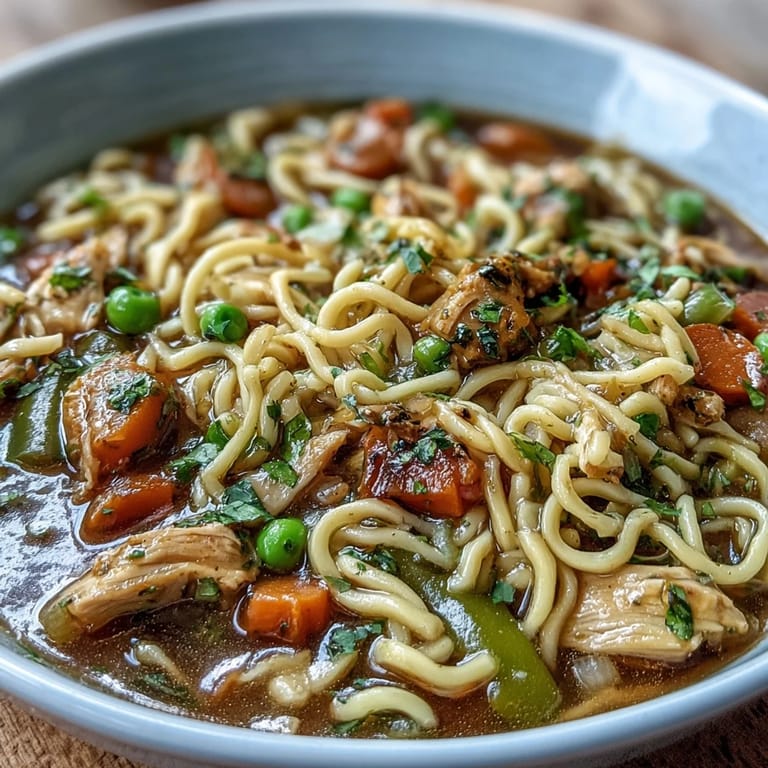
 This soup asks nothing of you except a pot, a knife, and about fifty minutes. In return, it gives you a kitchen that smells like care, a meal that feeds six people or stretches to four if anyone wants seconds, and that quiet knowing that good food doesn't require complexity—just attention and intention.
Recipe FAQs
- → Can I use different vegetables?
Yes, you can swap or add vegetables like zucchini, spinach, or mushrooms to customize the flavor and texture.
- → How do I make this dish gluten-free?
Use gluten-free noodles instead of traditional egg noodles to keep it free from gluten.
- → What is the best chicken cut for this dish?
Boneless, skinless chicken thighs or breasts work well; thighs offer extra tenderness and flavor.
- → Can I prepare this in advance?
Absolutely, this dish can be made ahead and reheated gently to retain its flavors and texture.
- → How can I adjust the seasoning?
Season with salt and freshly ground pepper according to taste; fresh herbs can enhance the aroma and depth.