 Save Pin
 There's something about the sizzle of corned beef hitting a hot skillet that instantly transforms a quiet morning into something worth waking up for. My neighbor Sarah brought over a container of homemade corned beef one Sunday, and instead of saving it for sandwiches, I found myself dicing it up at 7 a.m., watching it crisp in butter while the kitchen filled with that salty, savory smell that makes everyone emerge from their rooms asking what's cooking. That first breakfast skillet became the thing our whole family requested the next weekend, and honestly, it's been a weekend fixture ever since.
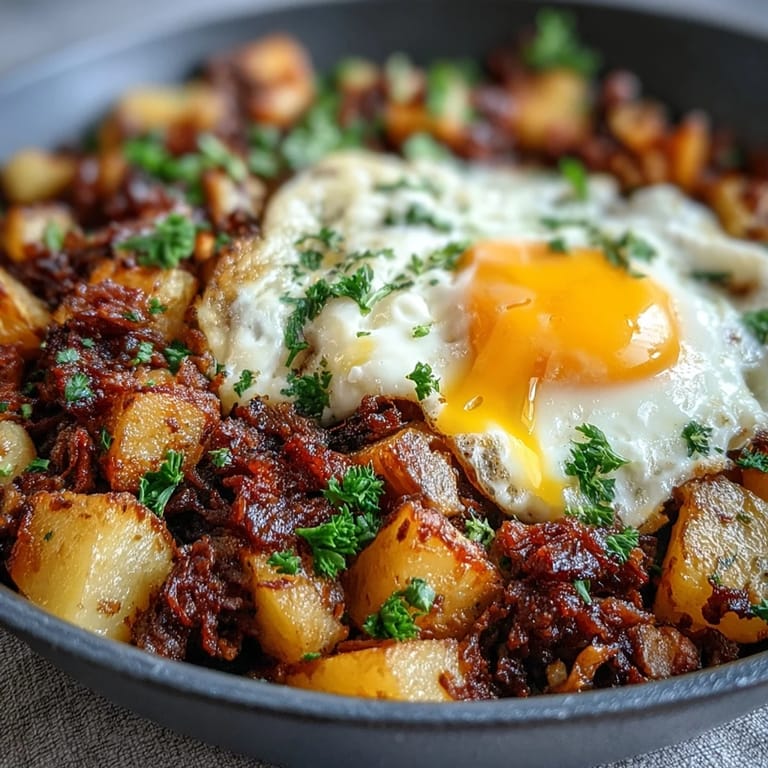
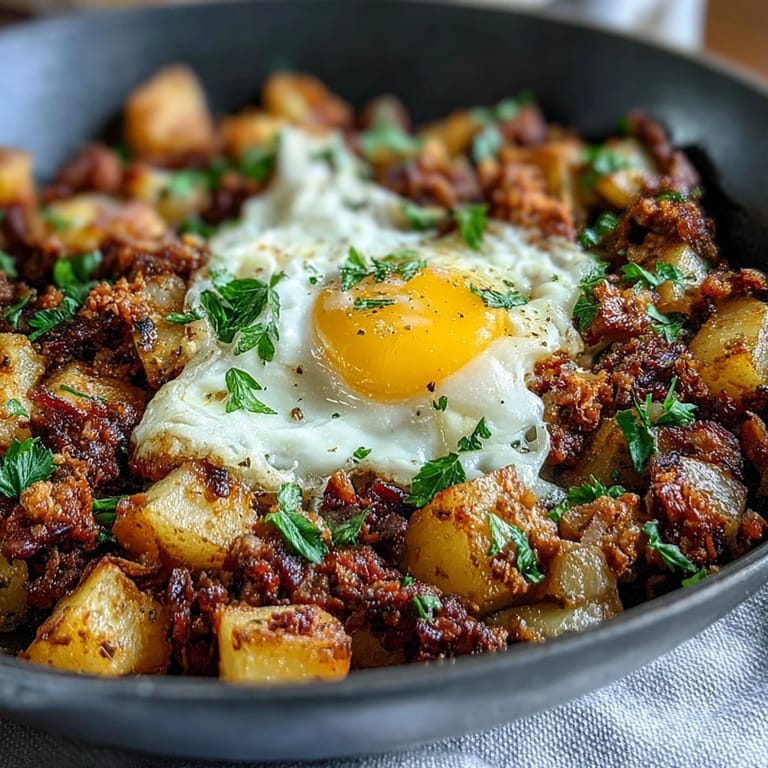
I made this for my coworker's birthday breakfast potluck, and watching people's faces when they bit into it, then immediately go back for seconds—that's when I realized this wasn't just a weekday breakfast, it was something special. The way the crispy bits of corned beef catch against the soft potato underneath, with that just-set egg yolk breaking into it all, it felt like the kind of dish that brings people together without trying too hard.
Ingredients
- Cooked corned beef, diced (340 g / 12 oz): This is your protein powerhouse and flavor anchor—get it from a deli counter if you don't have leftovers, and don't skip the dicing step because uniform pieces mean even crisping.
- Yukon Gold potatoes, peeled and diced (500 g / 1 lb): These waxy potatoes hold their shape while getting golden and tender, unlike floury varieties that can turn mushy before they crisp.
- Yellow onion, finely chopped (1 medium): Finely chopped means it disappears into the hash and seasons everything evenly rather than leaving big chewy pieces.
- Green bell pepper, diced (1): The sweetness cuts through all that savory corned beef richness and adds a textural pop that matters.
- Garlic, minced (2 cloves): Minced small means it distributes throughout and toasts into something mellow and sweet rather than harsh.
- Fresh parsley, chopped (2 tablespoons, plus extra for garnish): This bright herb is your final touch that says you actually cared, and it genuinely does change how the dish tastes.
- Large eggs (4): Room temperature eggs cook more gently, which means you're more likely to hit that perfect runny yolk sweet spot.
- Unsalted butter (2 tablespoons): Split between two additions, butter is your secret to getting those edges crispy while keeping everything else tender.
- Olive oil (2 tablespoons): This gets the potatoes going initially because butter alone would brown too fast.
- Smoked paprika (1/2 teaspoon): Just enough to add depth without turning the whole thing smoky—it's the difference between plain and memorable.
- Black pepper and kosher salt (1/2 teaspoon each): Layer these in stages rather than all at once so you taste the progression and can adjust.
Tired of Takeout? 🥡
Get 10 meals you can make faster than delivery arrives. Seriously.
One email. No spam. Unsubscribe anytime.
Instructions
- Get your potatoes golden:
- Heat a tablespoon each of olive oil and butter in your skillet over medium heat, then add the diced potatoes. You want them to get a light golden crust on the outside while staying tender inside, which takes about 10 to 12 minutes of occasional stirring—don't rush this because it's where the textural magic happens.
- Build your flavor base:
- Add the remaining oil and butter, then toss in your onion, bell pepper, and garlic. Let these soften for about 4 minutes, stirring occasionally, until the onion becomes translucent and the whole skillet smells like breakfast comfort.
- Bring in the star:
- Crank the heat to medium-high and add your diced corned beef. Sprinkle it with smoked paprika, salt, and pepper, then cook everything together for 5 to 6 minutes, stirring occasionally, until the corned beef starts to crisp at the edges and everything feels cohesive.
- Create your egg nests:
- Using the back of a spoon, press four shallow wells into the hash, spacing them out so they cook evenly. This little step means your eggs won't roll around and will cook more consistently.
- Finish with eggs:
- Crack an egg into each well, reduce the heat to medium-low, and cover the skillet. Cook for 5 to 7 minutes depending on how runny you like your yolks—set and firm takes closer to 7, barely-set and jiggly is around 5.
- Garnish and serve:
- Sprinkle everything with fresh parsley and get it to the table while it's still hot, because a cold hash loses something essential.
 Save Pin
 My kid actually asked for this on a regular weeknight, which never happens, and that's when I knew it had crossed from breakfast-special into family-favorite territory. There's something about a meal that satisfies everyone at the table without debate that feels like small kitchen victory.
The Crispy Edge Secret
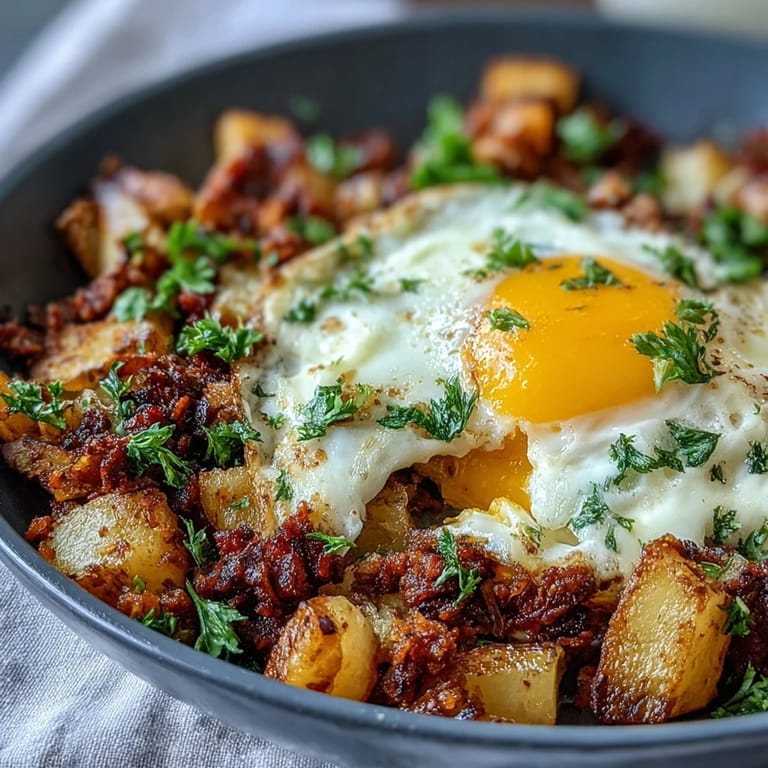
The thing about hash is that people either love it for the crispy bits or they don't really understand what the fuss is about. Once you get to medium-high heat and stop stirring quite so much toward the end, you'll hear it—that gentle crackling sound that means caramelization is actually happening. That's what you're chasing, and it's worth the extra minute or two of patience.
Why Room Temperature Matters
Cold eggs pulled straight from the refrigerator will shock your hot skillet and cook from the outside in too aggressively, giving you rubbery whites before the yolk is anywhere near set. Leave them on the counter for 10 minutes while you're finishing the hash—honestly, the timing works out perfectly if you remember to grab them right when you start cooking.
Customization Without Losing the Plot
The beauty of this skillet is that it handles variations like it was designed for them. I've made it with leftover roast beef on a Tuesday, added sharp cheddar right before the eggs on a whim, and once threw in some wilted spinach because it was about to expire and the whole thing just got better. That said, don't get so creative that you lose the balance between the protein-forward corned beef and those supporting flavors.
- Swap in russet or red potatoes if Yukon Golds are sold out, just watch them a bit closer since they soften faster.
- Add a pinch of hot sauce or a handful of shredded cheddar right before cracking the eggs if you want more personality.
- Serve it with buttered toast or fresh fruit on the side to round out the meal without overcomplicating things.
 Save Pin
 This skillet has become my go-to when I want to feel like I'm actually cooking something worthwhile but don't want to spend my whole morning in the kitchen. It's the kind of breakfast that lingers in conversation for days afterward.
Recipe FAQs
- → What type of potatoes work best?
Yukon Gold potatoes offer a creamy texture and hold their shape well, but russet or red potatoes make good alternatives.
- → Can I make this dish gluten-free?
Yes, use certified gluten-free corned beef and ensure no cross-contamination for a gluten-free meal.
- → How can I get crispy edges on the hash?
Cook the potatoes and beef undisturbed in a hot skillet to allow browning and crispiness before stirring.
- → What is the best way to cook the eggs?
Crack eggs into shallow wells in the skillet, cover, and cook on medium-low heat until whites are set and yolks reach preferred doneness.
- → Can I add other vegetables to the hash?
Yes, feel free to include spinach, mushrooms, or other vegetables to suit your taste and enhance nutrition.