 Save Pin
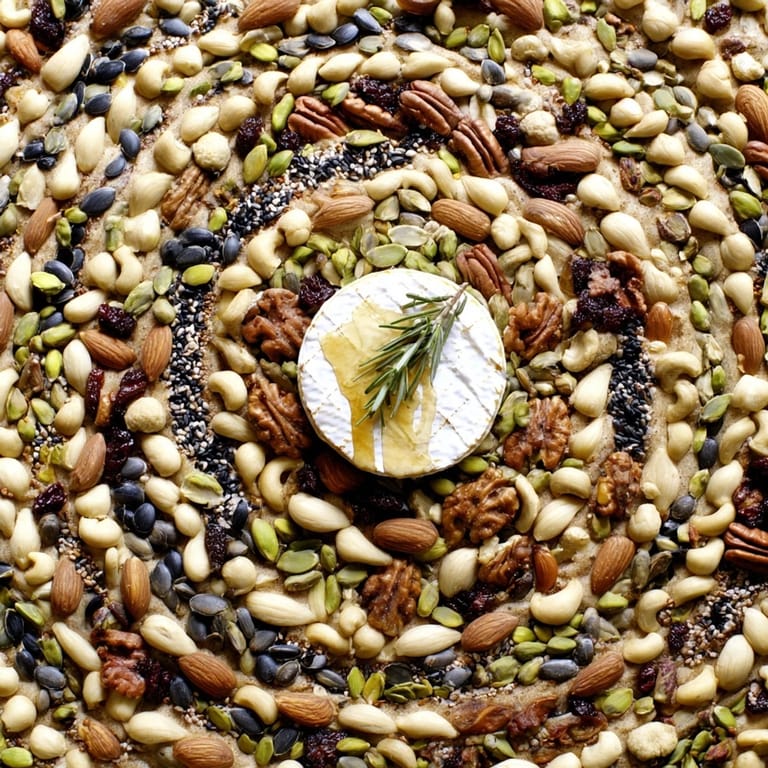
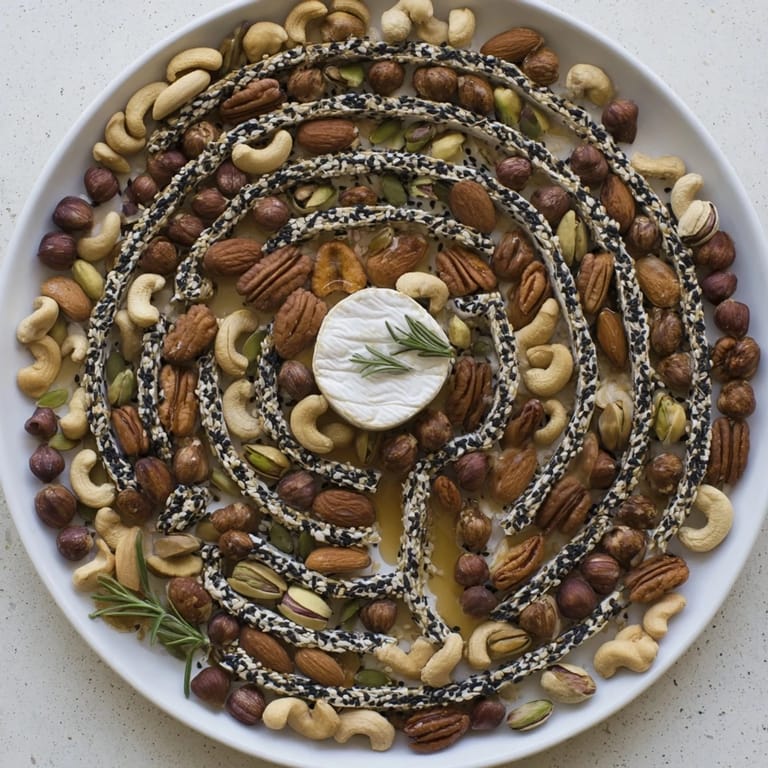
 I first encountered a labyrinth at a dinner party where the host had arranged nuts and seeds in an intricate spiral pattern on a marble board, with soft cheese gleaming at the center like a treasure. Guests wandered their fingers along the path, cracking open pistachios and hazelnuts, laughing at the playful challenge of it all. That night, something clicked—food didn't always need to be plated perfectly or served in courses. Sometimes the joy was in the journey, in making people slow down and engage. I went home and spent the next hour sketching spiral patterns on graph paper, imagining different arrangements. The Labyrinth became my answer to every gathering that needed a little magic.
The first time I made this for my sister's engagement party, I was nervous about the visual impact—would it actually look like a labyrinth or just like scattered nuts? But as guests arrived and started photographing it, then carefully tracing the path with their picks, I realized the imperfection was part of the charm. Someone's slightly crooked arrangement of seeds somehow made it more genuine, less like something from a food magazine and more like something made with actual hands and intention.
Ingredients
- Raw almonds (40 g): Their subtle bitterness anchors the sweeter nuts and won't disappear into the background—use raw ones, as roasted can become too assertive.
- Roasted cashews (40 g): These are your crowd-pleaser; they're buttery and mild, so they bridge the gap for anyone hesitant about nut variety.
- Pistachios (40 g, shelled): The vivid green catches the eye and draws people down the path; their slight saltiness plays beautifully against the cheese.
- Pecan halves (40 g): Rich and earthy, they add depth—I learned to buy these already halved to save time and frustration.
- Hazelnuts (40 g): These add a whisper of chocolate undertone that people taste without quite knowing what they're tasting.
- Pumpkin seeds (30 g): They're your texture anchor; flat, slightly waxy, and they sit perfectly in the lines you're creating.
- Sunflower seeds (30 g): Use these as your secondary texture; they're lightweight enough to stay put but distinct enough to create clear visual separation.
- Black sesame seeds (20 g): These create the dramatic contrast that makes the whole design pop—don't skimp on them.
- White sesame seeds (20 g): They brighten sections of the board and offer a delicate nuttiness that balances the earthier elements.
- Flaxseeds (20 g): These are your tiny wildcard; scattered thoughtfully, they fill gaps and add an unexpected textural complexity.
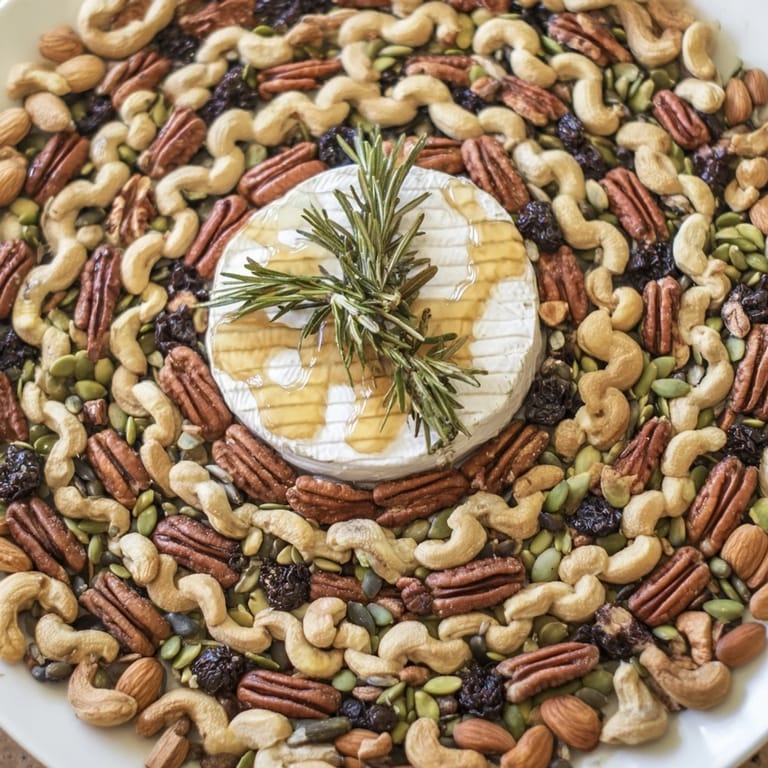
- Soft-ripened cheese wheel (180 g): Brie and Camembert are traditional, but I've had equal success with vegan wheels—the point is that it should feel precious at the center, slightly yielding but still holding its shape.
- Dried cranberries or cherries (2 tbsp, optional): A few scattered around the outer edge add pops of color and tartness that cut through the richness beautifully.
- Fresh herbs (2 tbsp, optional): Thyme and rosemary add an aromatic dimension; I usually scatter them right on and around the cheese.
- Honey or agave (1 tbsp, optional): A light drizzle transforms the cheese into something almost luxurious; it gives people permission to be indulgent.
Tired of Takeout? 🥡
Get 10 meals you can make faster than delivery arrives. Seriously.
One email. No spam. Unsubscribe anytime.
Instructions
- Sketch your path (optional but helpful):
- Lightly pencil a winding spiral or maze on your board, working from the outer edge toward the center. This takes the guesswork out of spacing and lets you focus on arrangement rather than design.
- Create your spiral foundation:
- Starting at the outer edge, lay down single-file lines of your first nut or seed along the penciled path. Work slowly and let your hands feel the rhythm; this is where the meditative part begins.
- Build with contrast:
- Switch to a different nut or seed for the next row, choosing varieties that offer color and textural contrast. Almonds followed by black sesame, then pistachios, then sunflower seeds creates a natural visual progression.
- Wind toward the center:
- Keep spiraling inward, rotating through your nuts and seeds. You'll notice the path getting tighter as you approach the center; this is when the design really starts to sing.
- Place the cheese crown:
- Set your cheese wheel at the very center where all paths converge. This is the moment everything makes sense—the journey has a destination.
- Crown the cheese:
- Scatter fresh herbs across the cheese and drizzle with honey if desired. This small gesture transforms the cheese from ingredient to focal point.
- Fill the gaps:
- If there are bare spots on the board, tuck in dried cranberries or a few extra seeds. You're not trying for perfection; you're creating a sense of abundance and invitation.
- Set the stage for eating:
- Arrange small forks, picks, or even small wooden spoons around the board so guests know how to navigate. Some will trace the path with their fingers; some will dive straight to the center. Both are correct.
 Save Pin
 What struck me most about serving The Labyrinth wasn't the aesthetic appreciation—though there was plenty of that—but how it fundamentally changed how people approached eating together. Instead of standing around picking at items, they were playing, discovering, lingering over small choices. The cheese at the center was never rushed; it was the victory lap of a tiny, delicious journey.
The Art of Arrangement
The first time I tried this, I arranged everything perfectly in advance, then the platter sat for three hours before the party. By serving time, some of the moisture from the board had shifted things, and I spent the last 10 minutes rearranging in a minor panic. Now I've learned to do about 70 percent of the prep—sorting nuts into small bowls, having the cheese ready, sketching lightly—and then do the final assembly 30 minutes before guests arrive. This gives you a small window to fix anything without stress but enough time that nothing has degraded.
Variations and Personal Touches
I've played with dozens of variations depending on the season and who's coming. In autumn, I lean into pecans and hazelnuts with dried apricots scattered around the outer edge. In spring, I minimize the seeds and add more fresh herbs, almost like a garden theme leading to the cheese. For vegan guests, I've found that cashew-based cheese wheels hold up beautifully and actually have a more interesting flavor profile than some dairy alternatives. The magic is that the structure stays the same—the labyrinth is always the labyrinth—but the ingredients tell a different story depending on when and for whom you're making it.
Wine and Serving Suggestions
A light Sauvignon Blanc or sparkling cider pairs beautifully, but honestly, I've served this with everything from rose to a light red, and it works. The real secret is giving people time to linger—don't rush them through the labyrinth. Set it out early in the evening when people are arriving, and let it be the conversation starter. By the end of the night, there will be a beautiful path worn through the nuts where a hundred fingers have traced the journey to the cheese.
- If you're worried about allergies, set small cards near the board identifying major allergens and noting that everything has been handled in a kitchen with tree nuts and seeds.
- Make sure your cheese is at room temperature for about 30 minutes before serving so it's creamy enough to appreciate but still holds its shape.
- Crackers around the outer edge work, but I usually skip them so people focus on the nuts and the journey rather than making it into a traditional charcuterie board.
 Save Pin
 The Labyrinth isn't just an appetizer; it's an experience dressed up as food. It reminds people that eating together is about more than nutrition—it's about slowing down, choosing your own path, and arriving somewhere delicious.
Recipe FAQs
- → What types of nuts work best for this dish?
Raw almonds, roasted cashews, pistachios, pecans, and hazelnuts provide a good balance of flavors and textures for the labyrinth.
- → Can I substitute the cheese with a vegan alternative?
Yes, plant-based soft cheeses like vegan Brie or Camembert-style options work well at the center.
- → How do I create the labyrinth pattern?
Lightly sketch a winding maze path on your serving board with a pencil, then arrange nuts and seeds in single lines following the path.
- → What garnishes complement the cheese centerpiece?
Fresh herbs such as thyme or rosemary and a drizzle of honey or agave add aromatic and sweet notes.
- → Are there any serving suggestions?
Serve with small forks or cocktail picks and consider pairing with light white wines or sparkling cider to enhance flavors.