 Save Pin
 The first time I plated something that actually looked like it belonged in a fine dining restaurant, it was white asparagus. I'd bought a bunch on impulse at a farmers market, struck by their pale elegance, and stood in my kitchen wondering what could possibly do them justice. Then came the idea of pairing them with soft cheese and truffle—not because I was trying to be fancy, but because those three things together just made sense. That dish taught me that simplicity, when executed with intention, can feel more luxurious than anything complicated.
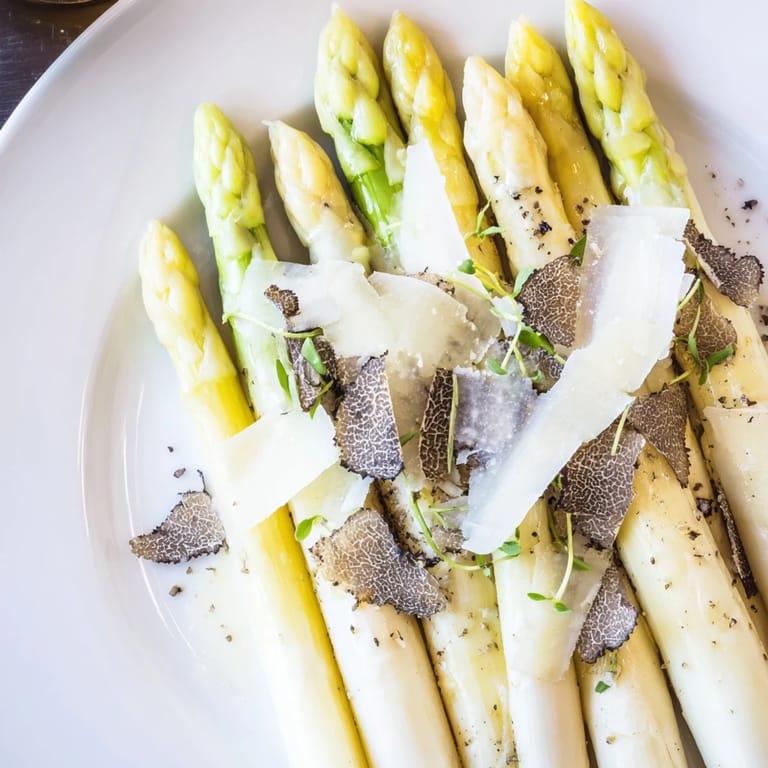
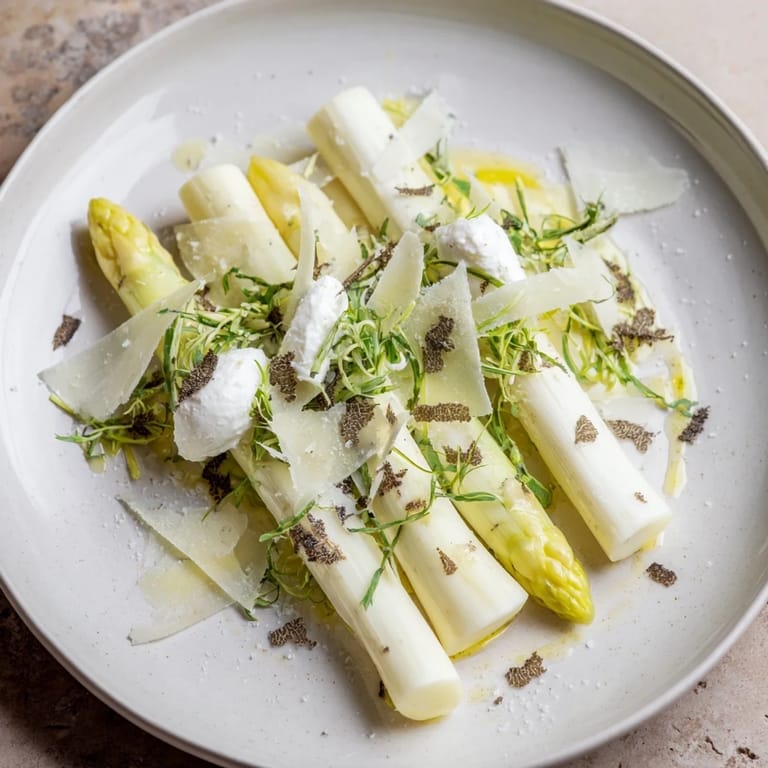
I made this for a dinner party on a spring evening when everyone was tired of winter food. The moment I set these plates down—white asparagus gleaming under the kitchen lights, those black truffle stripes catching just right—the whole table went quiet for a second. That silence told me everything. It wasn't about having expensive ingredients; it was about treating them with enough respect that they could speak for themselves.
Ingredients
- White asparagus, 500 g: Peel them gently—the skin can be tough, but underneath is tender sweetness. If you can't find white asparagus, pale green works, though the flavor is slightly grassier.
- Burrata or buffalo mozzarella, 75 g: Buy it the day you're cooking if possible. It firms up slightly when cold, which helps it hold its shape on the plate.
- Aged Comté cheese, 75 g: Shave it thin with a vegetable peeler or cheese slicer—thick shards break apart, but thin ones ribbon beautifully across the asparagus.
- Parmigiano-Reggiano, 50 g: Finely grate this so it catches the light and adds a salty depth that ties everything together.
- Fresh black truffle, 15 g: If fresh truffle isn't in your budget, high-quality truffle paste works—it's concentrated, so a little goes far. Truffle oil is cheaper but thinner in flavor.
- Extra-virgin olive oil, 2 tbsp: Use something you'd actually drink—it's tasted raw here, so quality matters.
- Fresh lemon juice, 1 tbsp: The acid brightens everything and keeps the cheese from feeling heavy.
- Flaky sea salt and white pepper: White pepper stays invisible on the plate and adds subtle heat without the visual distraction of black specks.
Tired of Takeout? 🥡
Get 10 meals you can make faster than delivery arrives. Seriously.
One email. No spam. Unsubscribe anytime.
Instructions
- Simmer the asparagus gently:
- Bring salted water to just a simmer—not a rolling boil—and slip the asparagus in. You want them tender enough to cut easily but firm enough to hold their shape. Eight to ten minutes is usually right, but taste one to be sure.
- Shock them in ice water:
- The moment they're tender, move them to ice water to stop the cooking. This keeps the pale color bright and the texture crisp-tender. Dry them thoroughly on kitchen towels so they're not waterlogged.
- Arrange with intention:
- Slice each spear lengthwise and lay them on cold plates so they look like pale green ribbons. Chilled plates matter here—they keep the cheese from melting immediately into puddles.
- Layer the cheeses:
- Tear burrata into generous pieces and scatter them over the asparagus. Add those thin Comté shavings, then a light shower of grated Parmigiano-Reggiano. Each layer should have its own moment of visibility.
- Add truffle with a light hand:
- Whether using fresh truffle or paste, less is more. Thin stripes across the top are more elegant than heavy coverage, and the earthiness still comes through.
- Finish with dressing and garnish:
- Whisk oil and lemon together, taste for salt and pepper, then drizzle it all over just before serving. Microgreens or chervil add a whisper of green and a peppery note that completes the picture.
 Save Pin
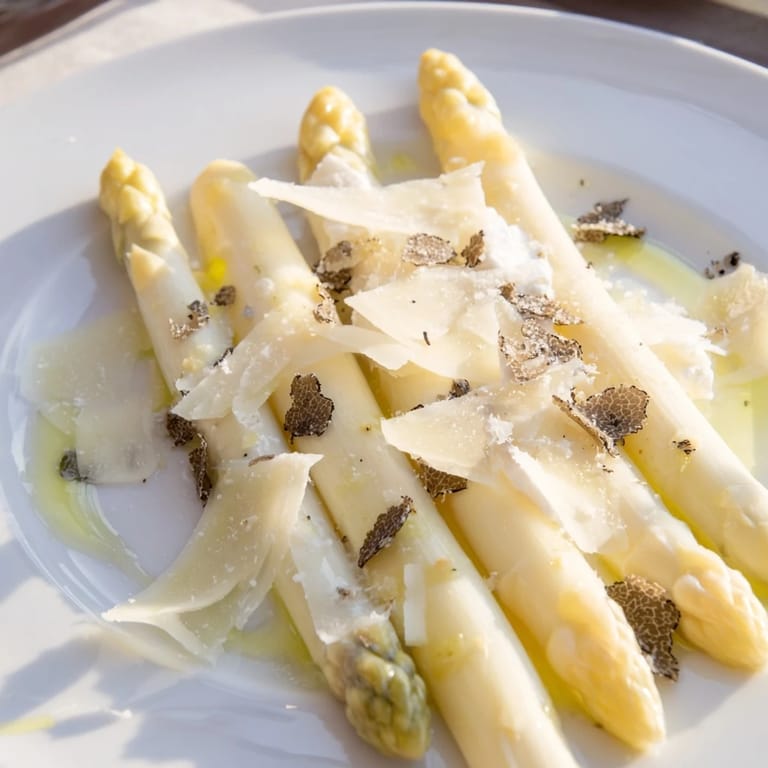
 There's a moment in cooking when you stop trying to impress and just appreciate what's in front of you. That happened to me the first time I made this dish—I stood back from the plate and realized I was looking at something beautiful not because of technique or expense, but because white asparagus, good cheese, and truffle just belong together. It felt like discovering something that was always supposed to exist.
Why White Asparagus Matters
White asparagus grows underground, never exposed to sunlight, which keeps it pale and changes the flavor entirely. It's milder, almost buttery, with none of the grassy earthiness of green asparagus. In Europe, it's considered the refined choice—the luxury version—but that's not pretentious; it's just different. Once you taste the difference, you understand why it deserves to be treated as the star of the plate.
The Truffle Question
Truffle is expensive, so let's be honest about it. Fresh black truffle is worth the cost if you can afford it because the aroma is something you can't get any other way—it fills the plate with earthy complexity. But if your budget doesn't stretch there, high-quality truffle paste captures the flavor reasonably well, just with less of that magical scent. Truffle oil is the third option—it's affordable but tastes thin compared to the real thing. Choose based on what makes sense for your occasion and wallet; the dish is still elegant either way.
Building Flavor Without Fussiness
This dish works because each ingredient is doing one thing well instead of several things averagely. The asparagus is cooked just past tender. The cheeses bring different textures and salt levels—creamy, nutty, sharp. The truffle adds mystery. The lemon juice cuts through and brightens everything. There's no sauce trying to hide anything or technique that makes you sweat.
- The secret is that seasoning happens in layers—a pinch of salt in the cooking water, then flaky sea salt in the dressing, then Parmigiano-Reggiano on top.
- Taste the dressing before you drizzle it; lemon juice varies in acidity, so adjust to your preference.
- Cold plates and room-temperature cheese create the best eating experience—nothing too cold, nothing melting into chaos.
 Save Pin
 This is the kind of dish that reminds you why cooking for people matters. Serve it with a crisp white wine—Sancerre or Grüner Veltliner are perfect—and watch how the meal unfolds from there.
Recipe FAQs
- → How should the white asparagus be cooked?
Simmer the white asparagus in salted water for 8-10 minutes until tender but still firm, then cool in an ice bath to retain texture.
- → What cheeses complement the asparagus best?
Soft burrata or buffalo mozzarella combined with aged Comté and grated Parmigiano-Reggiano create a rich yet delicate flavor profile.
- → Can truffle paste be used instead of fresh truffle?
Yes, fine lines of high-quality truffle paste can be drizzled over the dish as an alternative to shaved fresh truffle.
- → What dressing ingredients highlight the flavors?
A simple dressing of extra-virgin olive oil, fresh lemon juice, flaky sea salt, and white pepper enhances the dish without overpowering it.
- → Are there suggested garnishes for this dish?
Microgreens or chervil provide a fresh, delicate garnish that complements the asparagus and cheeses beautifully.
- → What wines pair well with this dish?
Dry white wines such as Sancerre or Grüner Veltliner pair excellently, enhancing the dish's refined flavors.