 Save Pin
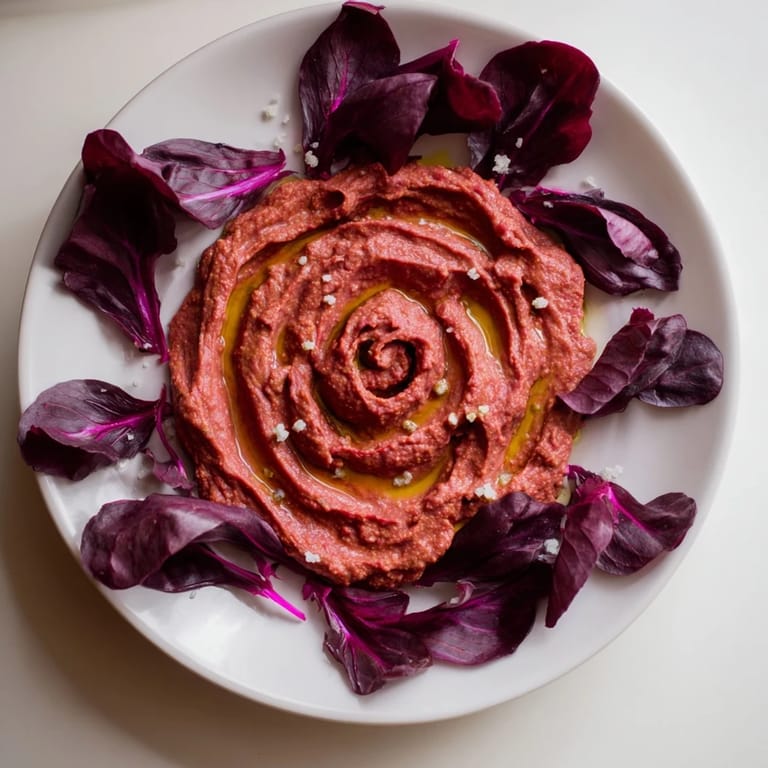
 The first time I piped beet hummus onto a plate, I wasn't thinking about roses at all. I was stressed, honestly, preparing for a dinner party and convinced the appetizer would look like a mess. But then something clicked as I squeezed the bag—the deep crimson swirls caught the light and suddenly reminded me of velvet petals unfurling. That moment changed how I saw hummus forever, transforming it from a dip into something worthy of slowing down for.
I remember my friend Sarah's face when she walked into the kitchen and saw the finished platter. She actually gasped—which never happens. She grabbed her phone before even trying it, and watching her share it on Instagram made me realize this dish was doing something special: it made people feel like the occasion mattered before they'd even taken a bite.
Ingredients
- Beet: Choose one large, firm beet without soft spots; roasting it whole in foil keeps all the deep color and sweet earthiness locked in rather than leaching into water.
- Chickpeas: Use canned for convenience, but rinse them thoroughly to remove excess starch—this makes the hummus silkier.
- Tahini: This sesame paste is the secret weapon that creates that luxurious, almost creamy texture you'd swear came from dairy.
- Extra-virgin olive oil: The good stuff matters here; it's tasted raw and becomes part of the flavor story.
- Garlic: Just one small clove keeps the hummus refined without overpowering the beet's delicate sweetness.
- Lemon juice: Fresh lemon brightens everything and prevents the hummus from tasting one-dimensional and earthy.
- Cumin: A whisper of spice that echoes Mediterranean warmth without announcing itself loudly.
- Radicchio leaves: Slightly bitter and crisp, they balance the sweetness of the beet and look architectural on the plate.
Tired of Takeout? 🥡
Get 10 meals you can make faster than delivery arrives. Seriously.
One email. No spam. Unsubscribe anytime.
Instructions
- Roast the beet until it yields:
- Wrap it tightly in foil and let the oven do the work for 40–45 minutes at 400°F. You'll know it's ready when a fork slides through like butter. The smell that escapes when you unwrap it—earthy and slightly sweet—is when you know you're on the right track.
- Build the hummus base:
- Combine your cooled beet chunks with chickpeas, tahini, olive oil, garlic, lemon, cumin, salt, and pepper in the food processor. Blend until completely smooth, stopping to scrape the sides so nothing hides at the bottom. This is where patience pays off.
- Achieve the perfect texture:
- Add cold water one tablespoon at a time, blending between additions. Watch as the hummus transforms from thick paste into something cloud-like and luxurious. Taste and adjust—you might want more lemon brightness or a touch more salt.
- Pipe the rose shapes:
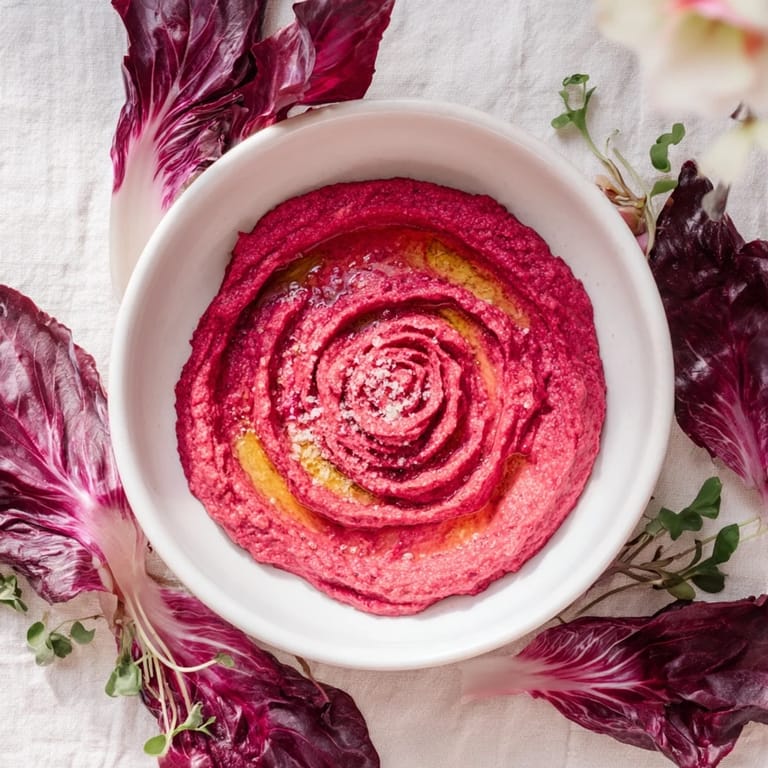
- Using a piping bag fitted with a large star tip, squeeze the hummus onto your serving plate in tight spirals that fan outward. If you don't have a piping bag, a spoon works too; just embrace the organic, free-form look.
- Frame with radicchio:
- Arrange the deep purple leaves around your hummus roses so they look like natural petals. Position them so some overlap, creating depth and movement on the plate.
- Finish and serve:
- Drizzle everything lightly with olive oil, scatter flaky sea salt across the top, and add microgreens or edible flowers if you have them. Serve immediately with extra radicchio leaves for dipping.
 Save Pin
 There's a moment, right before guests arrive, when you step back and see the finished platter under good light. The deep magenta roses against the purple radicchio, the olive oil catching gold at the edges—it's when this dish stopped being just another appetizer and became an opening act that sets the tone for the whole meal. Suddenly the hour you spent feels completely worthwhile.
Why This Works as Entertainer's Food
This recipe sits in that sweet spot between impressive and manageable. The roasting happens early, the processing takes minutes, and the actual plating is meditative rather than stressful. By the time guests arrive, you're not standing in the kitchen wilting—you're calm, ready to greet people, and the food is already doing the talking for you. That's the real luxury of entertaining well.
The Art of the Swirl
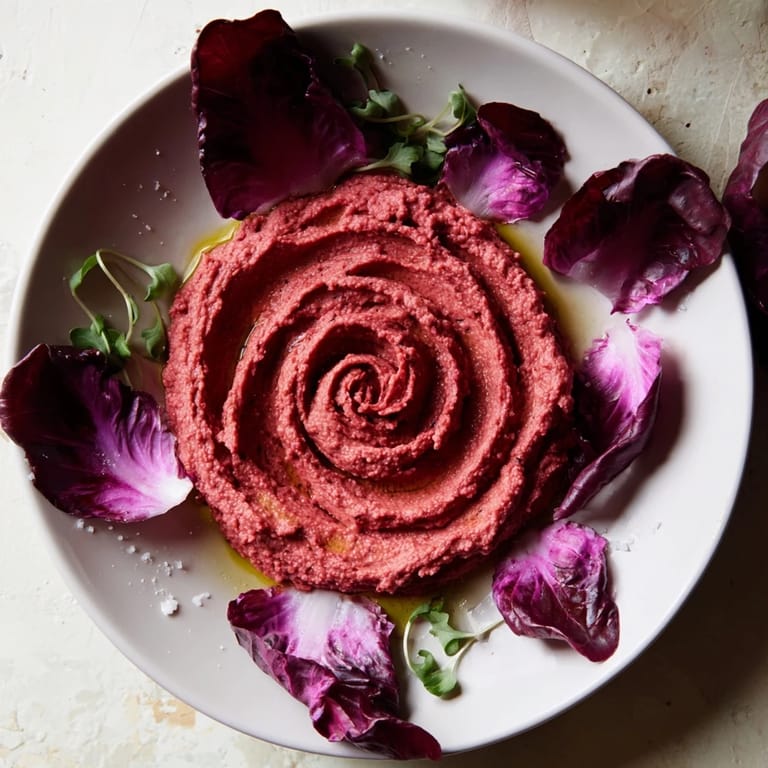
I learned the hard way that piping technique matters less than commitment. The first time I second-guessed myself mid-squeeze, the rose looked hesitant. Once I stopped overthinking and trusted the motion—steady pressure, confident spirals outward—the hummus shaped itself beautifully. The imperfections, the slightly wonky petal here or there, are what make it look handmade and real rather than mass-produced.
Make It Your Own
This is a foundation, not a final word. I've added a pinch of smoked paprika for depth, swapped in golden beets for a different visual, even piped it onto endive spears for a different serving style. The beauty of hummus-as-art is that it adapts to what you have and what your guests love. Some people serve it with pita chips, others with Belgian endive—the core remains perfect while the edges stay flexible.
- Try a tiny dash of smoked paprika stirred into the finished hummus for subtle warmth and complexity.
- If beets stain your hands, remember that cold water and a little vinegar work better than soap alone.
- Make the hummus the morning of serving, cover it well, and pipe it no more than 2 hours before guests arrive so the radicchio stays crisp.
 Save Pin
 This dish taught me that appetizers aren't just about feeding people—they're about creating the first impression that carries through the whole meal. The Velvet Rose does that effortlessly, turning something as humble as beans and beets into a moment worth remembering.
Recipe FAQs
- → What type of beet is best for this dish?
A large, fresh red beet works best for its vibrant color and sweetness, which enhance the creamy spread.
- → Can I prepare the beet mixture in advance?
Yes, roasting and blending the beet hummus ahead of time allows the flavors to deepen, but assemble the rose shapes just before serving for best presentation.
- → What can I substitute for radicchio leaves?
Belgian endive or slightly bitter greens like chicory make great alternatives that maintain a crisp texture.
- → How do I achieve the rose shape with the spread?
Using a spoon or piping bag with a large star tip allows for elegant swirling to mimic natural rose petals.
- → Are there recommended garnish options?
Microgreens or edible flower petals add delicate accents and enhance the visual appeal of the dish.
- → Is this dish suitable for dietary restrictions?
Yes, it is naturally vegan, gluten-free, and nut-free, though it contains sesame from tahini.