 Save Pin
 My tía swore by these little guava thumbprint cookies, insisting they were the reason her coffee gatherings never felt complete. One afternoon, watching her press her thumb into each warm disc of dough, I realized she wasn't just baking—she was creating tiny pockets of joy, each one waiting to cradle that tangy, tropical jam. The buttery aroma filling her kitchen that day became the smell of her love language. Now whenever I make them, I understand why she'd triple the batch and still run out before everyone left.
I once made these for a potluck and brought exactly twenty-four cookies in a carefully arranged box. By the time I set them on the table, someone was already asking for the recipe before the first batch was even gone. What stuck with me wasn't the compliments—it was watching a friend's eyes light up at that first taste, then quietly eat three more while pretending to look at something else.
Ingredients
- Unsalted butter, softened: This is your foundation, so let it sit at room temperature until it's genuinely soft enough to leave a fingerprint—cold butter won't cream properly and your cookies will be dense instead of delicate.
- Granulated sugar: The modest amount keeps these cookies tender and lets the guava flavor shine without competing sweetness.
- Egg yolk: One yolk provides richness and helps bind everything together without adding extra moisture that would make the dough sticky.
- Vanilla extract: A teaspoon sounds small, but it creates a subtle backbone that makes people wonder what the secret ingredient is.
- All-purpose flour: Measure by spooning into the cup and leveling off—scooping directly compacts it and throws off your proportions.
- Salt: Just a pinch to balance the sweetness and deepen the vanilla flavor.
- Unsweetened cocoa powder (optional): Swap two tablespoons of flour for cocoa if you want a chocolate version that plays beautifully against the guava's tartness.
- Guava jam or paste: This is where personality comes in—soften it slightly so it's easier to spoon without falling into cracks, and taste it first because some brands are sweeter than others.
Tired of Takeout? 🥡
Get 10 meals you can make faster than delivery arrives. Seriously.
One email. No spam. Unsubscribe anytime.
Instructions
- Set yourself up for success:
- Preheat your oven to 350°F and line a baking sheet with parchment paper so you're not scrambling when the dough's ready. This takes two minutes and prevents cookies from sticking or browning unevenly on the bottom.
- Build the buttery base:
- Cream the softened butter and sugar together for about two minutes until it's pale and fluffy—this isn't just mixing, it's incorporating air that makes cookies tender. You'll know it's ready when it looks almost like frosting.
- Add richness and flavor:
- Beat in the egg yolk and vanilla, then pause and scrape down the bowl so everything's fully incorporated. This step takes less than a minute but makes a real difference in texture.
- Bring the dough together:
- Gradually add the flour and salt, stirring just until a soft dough forms—overworking it makes cookies tough, so stop as soon as everything's combined. If you're doing the chocolate version, whisk the cocoa powder together with the flour first, then add it.
- Shape and space them out:
- Scoop tablespoon-sized portions, roll them gently into balls, and place them two inches apart on your prepared baking sheet. They'll spread a little as they bake, so don't crowd them.
- Create the indentations:
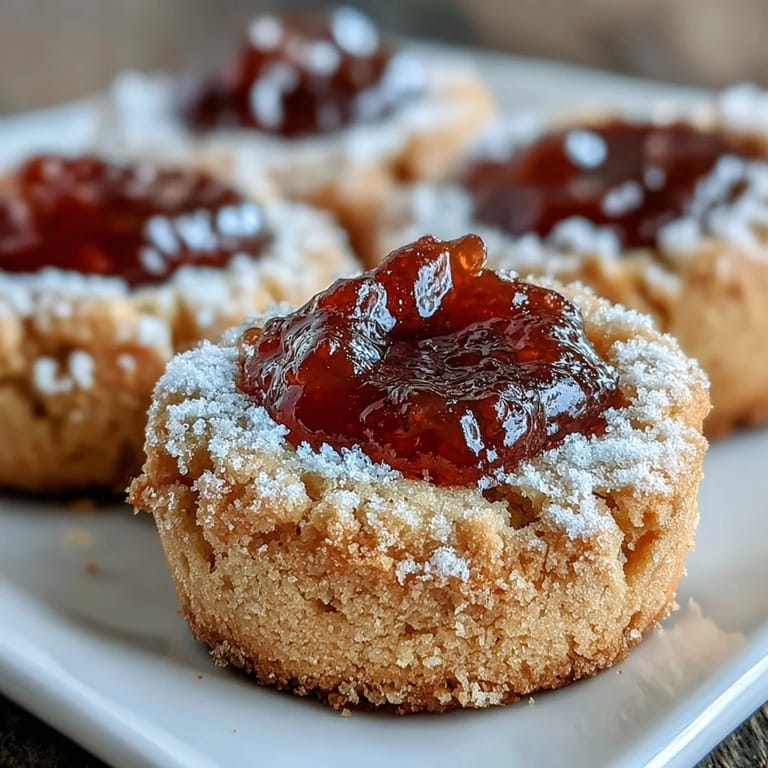
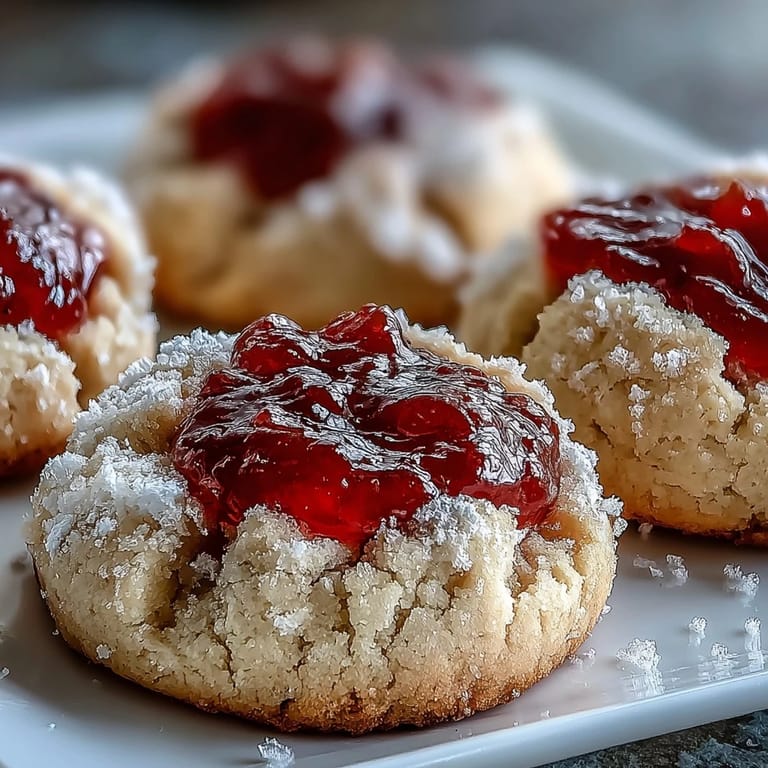
- Press your thumb or the back of a small spoon into the center of each ball, creating a shallow well that goes maybe halfway down—go too deep and you'll crack the cookie, too shallow and the jam might slide off. A little guava paste will pool around the edges, which is exactly what you want.
- Fill with guava treasure:
- Drop about a half-teaspoon of guava jam into each indent—if your paste is thick, warm it slightly with a splash of water to make it spreadable. Don't overfill or it'll bubble out during baking.
- Bake until golden:
- Slide the sheet into the oven for twelve to fourteen minutes, watching for golden edges—the centers should still look slightly underbaked when you remove them because they'll firm up as they cool. Overbaking makes them dry, and you want that tender, buttery bite.
- Cool with patience:
- Let the cookies rest on the baking sheet for five minutes so they can set slightly, then transfer them to a wire rack to cool completely. This prevents them from becoming too soft and also means you can actually handle them without them falling apart.
 Save Pin
 There's something deeply satisfying about pressing your thumb into each little ball of dough, creating that perfect pocket for jam. It's meditative, almost—by the end of shaping two dozen cookies, my hands knew the exact pressure needed, and I understood why my tía made this recipe so often. It wasn't complicated or exhausting; it was something you could do while chatting with someone at the kitchen counter, and suddenly you had homemade cookies that tasted like you'd spent all day on them.
The Guava Question
Guava paste and guava jam are cousins but not identical twins. Paste is thicker and more concentrated, while jam has more moisture and spreads easily—either works, but knowing the difference helps you adjust your technique. If you're using paste and it's stubborn, warm it gently with a teaspoon of water until it's spoonable, being careful not to thin it so much that it runs everywhere during baking. The goal is a jam that stays put in that little indent, creating pockets of tropical sweetness that surprise you with each bite.
Playing with Variations
Once you nail the basic version, the possibilities open up in ways that kept me experimenting for weeks. The chocolate variation is my current favorite because that subtle cocoa base makes the guava pop even brighter, but I've also tried raspberry jam for a berry twist, and a friend swore her apricot version was the best batch I'd made. The dough is flexible enough to handle different fillings without complaint, and honestly, that's when you know you have a real recipe—when it adapts to what you're craving.
Finishing Touches and Storage
These cookies are beautiful as they are, but a light dusting of powdered sugar after they've cooled completely adds elegance without changing the flavor. They'll stay fresh in an airtight container for about four days, though they're best eaten within the first two days when the butter is still tender and the guava's tang is most vibrant. Store them in a single layer with parchment between layers so they don't stick together, and if you're gifting them, arrange them in a box lined with tissue paper for that special touch.
- Let cookies cool completely before storing so condensation doesn't make them soggy.
- Bring them to room temperature before eating if you've stored them in a cool place, which brings back that tender, buttery texture.
- Make a double batch and freeze the shaped, unfilled dough balls for up to a month—just bake them straight from the freezer, adding a minute or two to the baking time.
 Save Pin
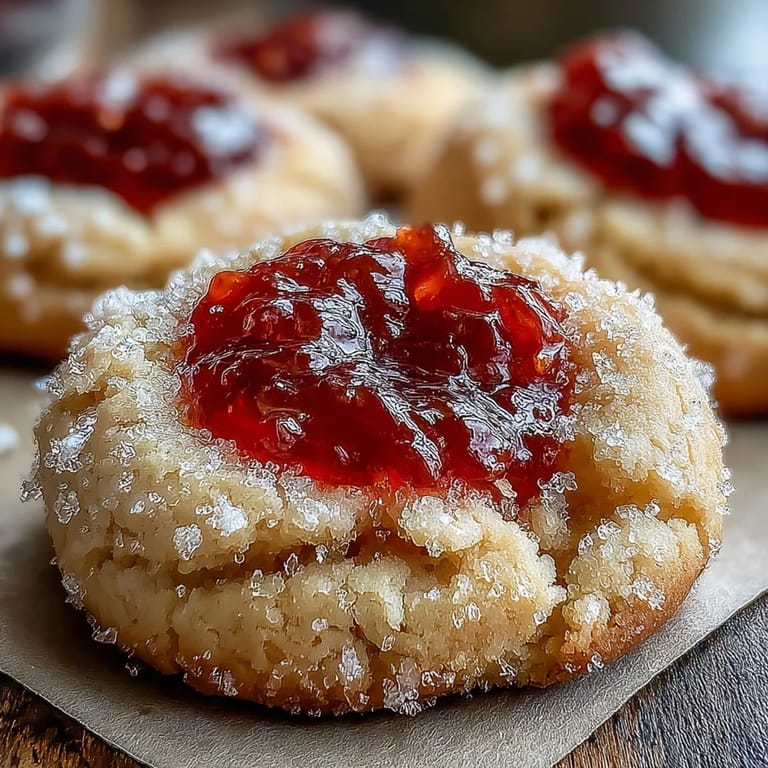
 These torticas de guayaba have become my go-to when I want to bake something that feels special without requiring special skills. They're proof that the simplest recipes, made with attention and care, are often the ones people remember longest.
Recipe FAQs
- → Can I use fresh guava instead of jam?
Fresh guava doesn't work well for the filling since it releases too much liquid during baking. Guava jam, paste, or membrillo provides the right concentrated sweetness and thick consistency needed to hold its shape in the center of these delicate cookies.
- → Why did my cookie dough crack when making the thumbprints?
If the dough cracks, it may be too cold. Let it sit at room temperature for 5-10 minutes before shaping. Alternatively, you can chill the rolled balls first, then use the warm back of a measuring spoon to gently press the centers without cracking.
- → How should I store these cookies?
Store in an airtight container at room temperature for up to 5 days. Place parchment paper between layers to prevent sticking. For longer storage, freeze unbaked balls and bake fresh, or freeze baked cookies for up to 3 months.
- → Can I make the chocolate variation?
Yes! Simply replace 2 tablespoons of the all-purpose flour with unsweetened cocoa powder. The chocolate base pairs beautifully with the tropical guava filling, adding depth and richness to each bite.
- → What if I can't find guava jam?
Raspberry or apricot preserves make excellent substitutes, offering similar tart-sweet balance. Passion fruit or mango jam also work wonderfully for maintaining the tropical flair while keeping the buttery cookie base delicious.
- → Why are my cookies spreading too much?
Excess spreading usually means the butter was too soft or the dough wasn't chilled enough. Try refrigerating the shaped dough balls for 15-20 minutes before baking. Also ensure your oven is fully preheated to 350°F before baking.