 Save Pin
 My tía's kitchen smelled like caramelized guava whenever she made brazo gitano, and I'd watch from the corner as she'd unfurl that delicate cake with such confidence, like she was revealing a secret. The first time I attempted it myself, I was convinced the whole thing would collapse, but there's something almost magical about how a simple vanilla sponge becomes this elegant dessert when you roll it just right. This Puerto Rican treasure isn't just about the taste—it's about that moment when you slice into it and see those beautiful layers, and suddenly everyone at the table goes quiet.
I made this for my friend's birthday potluck last spring, and honestly, I was nervous about transporting it—meringue and delicate cakes don't always travel well. But when I set it down on the table and someone said it looked like it came from a bakery, I knew the nervousness had been worth it. That's when I realized brazo gitano isn't just dessert; it's a conversation starter and a little declaration that you care enough to do something beautiful.
Ingredients
- Eggs (7 total, separated): The yolks create richness while the whites whipped into peaks give you that signature light, spongy texture—room temperature eggs whip better, so pull them out of the fridge 15 minutes before starting.
- Granulated sugar (250 g total): You'll use it twice: some with the yolks for body, the rest with the whites for meringue stability.
- Vanilla extract: A teaspoon of pure vanilla is worth the small splurge here because you taste it in every bite.
- All-purpose flour (120 g): Sift it before folding to avoid lumps that'll make the cake dense instead of feathery.
- Salt: Just a pinch awakens the vanilla and balances the sweetness.
- Guava paste (225 g): This is your star filling—get the real stuff, not the canned varieties that taste artificial; good guava paste should smell fragrant and slightly floral.
- Water (2 tbsp): Helps soften the guava paste to a spreadable consistency without diluting its flavor.
- Cream of tartar: Optional but genuinely helpful; it stabilizes egg whites and makes your meringue less likely to weep.
Tired of Takeout? 🥡
Get 10 meals you can make faster than delivery arrives. Seriously.
One email. No spam. Unsubscribe anytime.
Instructions
- Prepare your stage:
- Preheat to 350°F and line that jelly roll pan with parchment, leaving a slight overhang on the sides so you can grab it easily. A light grease under the parchment stops sticking, and trust me, you want that cake to come out clean.
- Build the yolk base:
- Beat those yolks with half the sugar until they're pale and thick enough that ribbons fall from the beaters—this takes a few minutes and matters more than you'd think. The vanilla goes in now, brightening everything.
- Create the cloud:
- In another bowl (clean, no yolk residue), whip the egg whites with the remaining sugar and salt until stiff peaks form, glossy and proud. If you're using cream of tartar, add it at the soft peak stage so it helps everything hold steady.
- Fold gently:
- This is where patience wins: fold the whites into the yolks in two additions, using a spatula and turning the bowl as you go. You want no white streaks but also no deflated mess—it's a sweet spot that gets easier with practice.
- Sift and fold the flour:
- Sift the flour over the batter and fold it in with the same gentle hand until just combined. Overmixing here is the enemy of that cloud-like crumb.
- Bake the sponge:
- Spread the batter evenly in the pan and bake 12 to 15 minutes until it springs back when you touch the center lightly. The cake should be pale golden, not brown.
- The critical roll:
- While still warm, invert onto a kitchen towel dusted with sugar, peel away the parchment, and roll from the short end with the towel tucked inside. Let it cool completely this way so it holds its shape—this step is easier than it sounds, and the towel is your friend.
- Prepare the guava:
- Heat the guava paste with water over low heat, stirring until smooth and pourable. It'll be thick, so patience is key; let it cool before spreading.
- Fill and roll:
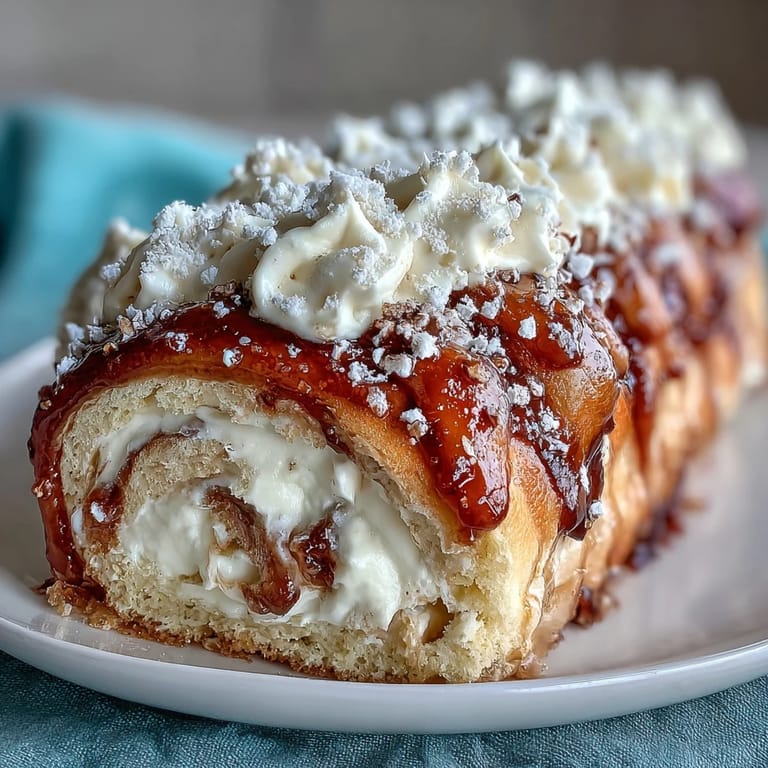
- Unroll the cooled cake, spread the guava filling evenly across, then roll it back up tightly without the towel. Place it seam side down on your serving platter.
- Make the meringue crown:
- Beat the remaining three egg whites until soft peaks appear, then gradually add sugar while beating until the peaks turn stiff and glossy. This meringue should be thick enough to hold its shape when you spread it.
- Top with drama:
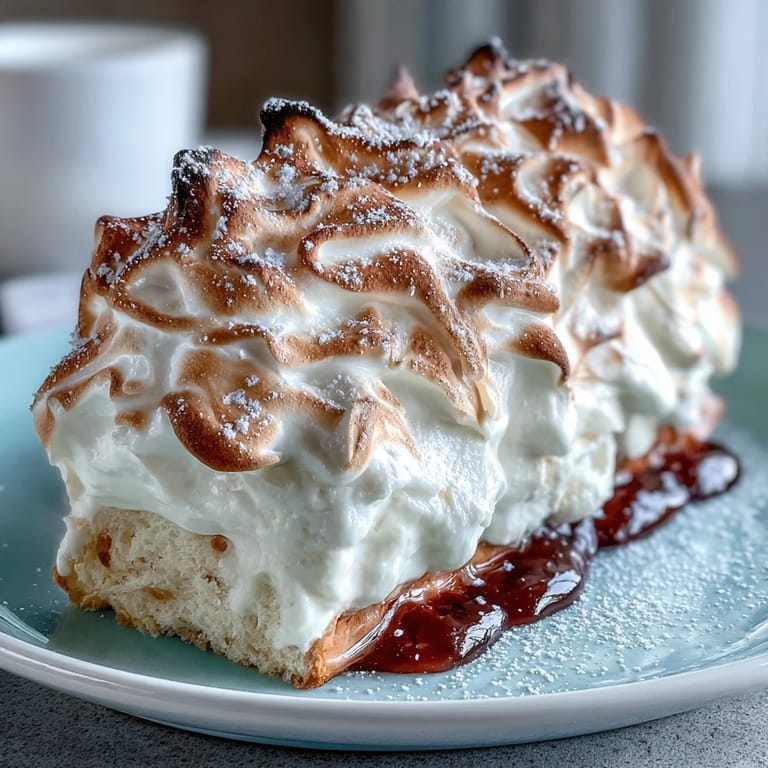
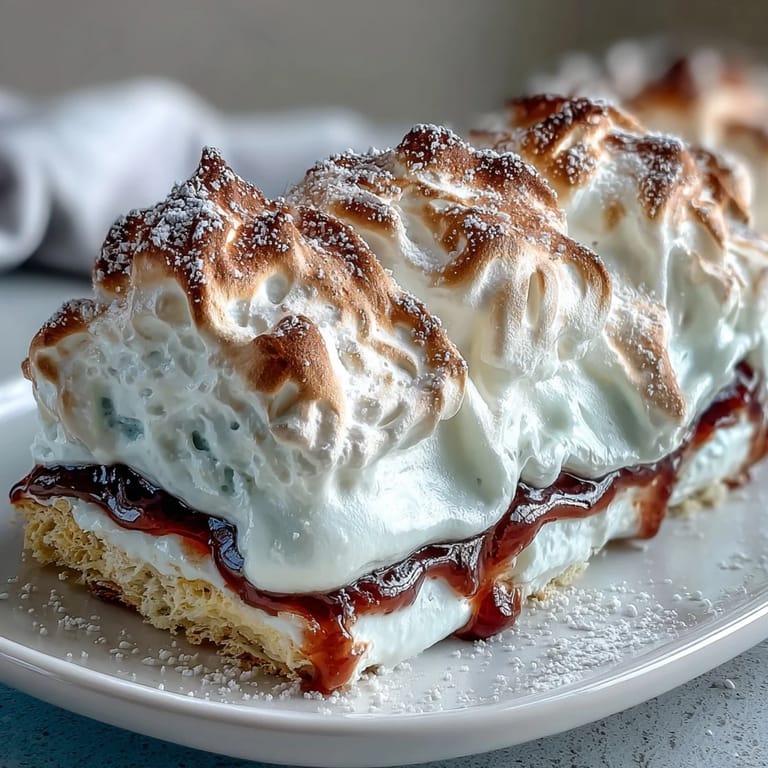
- Spread or pipe the meringue over the top and sides of the roll, creating peaks and swirls. If you have a kitchen torch, a quick pass gives it a burnished golden finish; otherwise, broil it for 2 to 3 minutes under close watch.
- Chill and slice:
- Refrigerate for at least 30 minutes so the layers set and the flavors settle together. Slice with a hot, wet knife for clean cuts.
 Save Pin
 There's a quiet magic in watching someone's face light up the moment they taste the combination of that airy cake, sweet guava, and billowy meringue all together. That's the moment brazo gitano stops being a recipe and becomes a memory.
Why the Technique Matters
Brazo gitano lives and dies by how you treat the eggs—they're not just ingredients, they're the structure of the entire dessert. When you beat the yolks and whites separately, you're building two different textures that, when folded together, create something lighter than either could be alone. I learned this the hard way when I skipped the separation step, thinking I could save time, and ended up with a dense brick of cake that refused to roll.
The Guava Filling Secret
Good guava paste is dense, almost paste-like straight from the package, which is why warming it with water is non-negotiable. I once tried spreading it cold and nearly tore the cake apart; now I always melt it gently and let it cool just enough that it spreads like warm butter. The water helps without watering it down, and the warmth makes it pliable enough to coat the entire surface evenly.
Storage and Serving Ideas
Brazo gitano is best enjoyed fresh, though it keeps refrigerated for up to two days in an airtight container. The meringue softens as it sits, which some people love and others prefer to avoid, so slice and serve immediately if you want that crispy-exterior, fluffy-inside contrast.
- Pair it with a cup of café con leche or a glass of sweet dessert wine like moscato.
- If the meringue starts to weep, a light dusting of powdered sugar over top not only hides it but adds a sweet finishing touch.
- Leftover guava paste works beautifully swirled into yogurt or spread on toast the next morning.
 Save Pin
 Making brazo gitano is less about following instructions and more about understanding why each step exists—once you do, you'll find yourself making it for every celebration that matters. It's the kind of dessert that says, without words, that you put care into something beautiful.
Recipe FAQs
- → What makes Brazo Gitano different from other rolled cakes?
This Puerto Rican classic uniquely combines a delicate sponge with guava paste filling and meringue topping, unlike Swiss rolls which typically use buttercream or whipped cream. The meringue exterior creates a signature cloud-like texture and toasted finish that sets it apart.
- → Can I make Brazo Gitano ahead of time?
Absolutely. This dessert actually improves when made ahead, allowing the meringue to set and flavors to meld. You can prepare it up to 24 hours in advance, storing it loosely covered in the refrigerator. The meringue may weep slightly but this doesn't affect the taste or overall presentation.
- → Why did my cake crack when rolling?
Cracking usually happens when the cake cools completely before rolling or is rolled too tightly. Roll the cake while still warm (but not hot) using the towel method. If cracks occur, don't worry—the filling and meringue will conceal most imperfections, and a powdered sugar dusting can hide any remaining flaws.
- → Can I substitute the guava paste?
Yes, though guava is traditional. Mango paste, passion fruit curd, or thick raspberry jam work beautifully. For a non-fruit option, try dulce de leche or chocolate ganache. The key is using a filling that spreads easily but isn't too runny, which could make rolling difficult.
- → How do I get the meringue perfectly toasted?
A kitchen torch gives the most control, allowing you to create golden peaks without overheating the filling. If broiling, watch constantly—it goes from golden to burned in seconds. The meringue should be set and slightly colored on the peaks while remaining white and fluffy underneath.
- → What's the best way to slice Brazo Gitano?
Use a sharp, thin blade and wipe it clean between cuts. For cleanest slices, chill the roll thoroughly (at least 30 minutes), dip the knife in hot water, and use gentle sawing motions. This prevents the meringue from sticking and helps maintain the beautiful spiral pattern.