 Save Pin
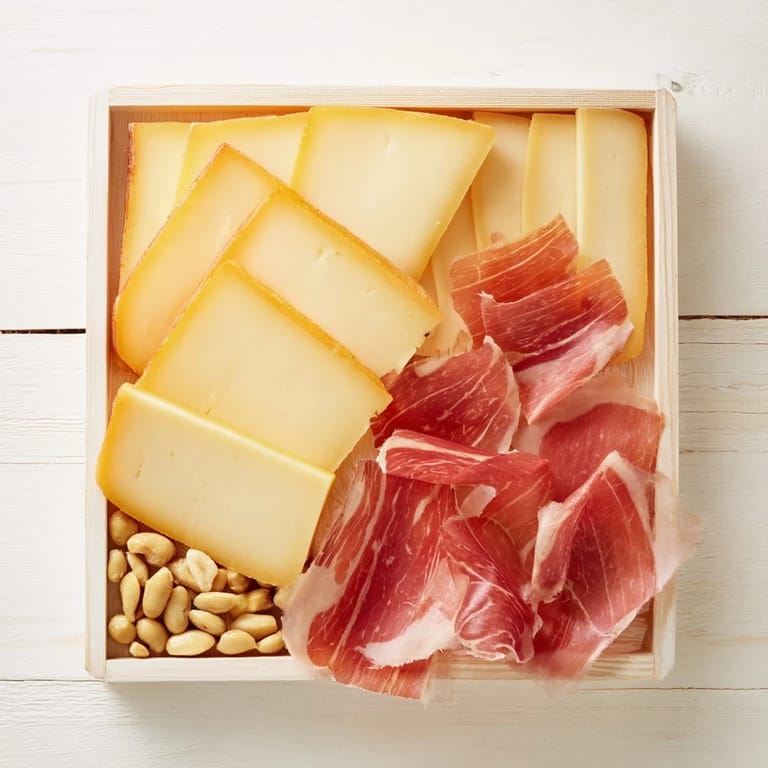
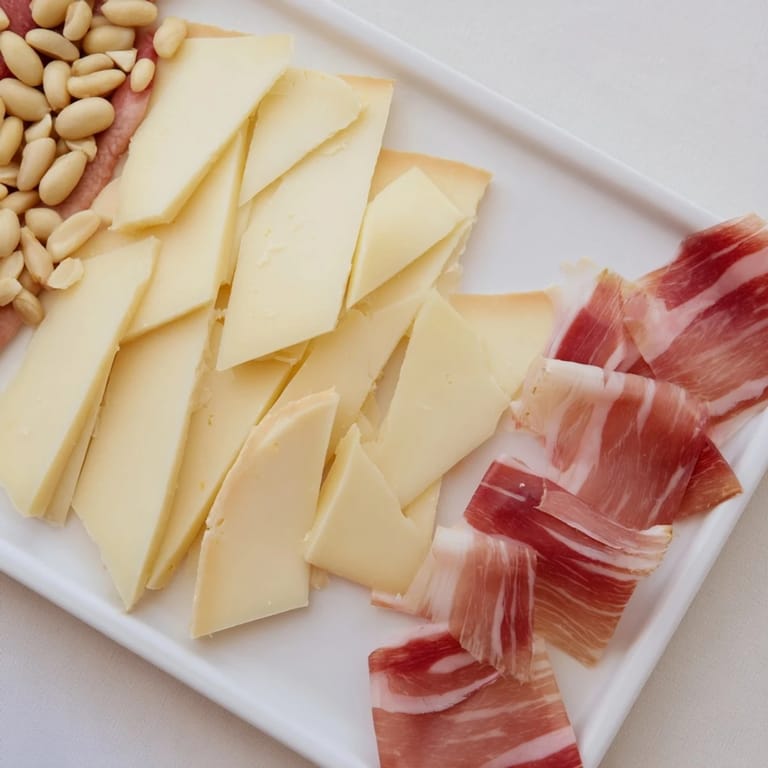
 There's a moment at every dinner party when someone steps back from a carefully composed cheese board and just pauses. I learned that pause matters when a friend brought three perfect ingredients to my place one evening—aged Comté so golden it caught the light, paper-thin Jamón Ibérico that practically dissolved on the tongue, and these buttery green olives that tasted like sunlight. She arranged them in three neat sections on a simple marble board, and that's when I understood that restraint can be more luxurious than abundance.
I made this for my partner on a Tuesday night when we needed to feel a little fancier than usual without the fuss. We sat by the window with a glass of Champagne, and something about three perfect things on one board felt more intimate than an overflowing spread ever could. The olives were still slightly cool, the cheese had just warmed enough to release its nuttiness, and the ham practically melted between our fingers. That's when I realized this wasn't about impressing anyone—it was about really tasting each element and understanding why it belonged there.
Ingredients
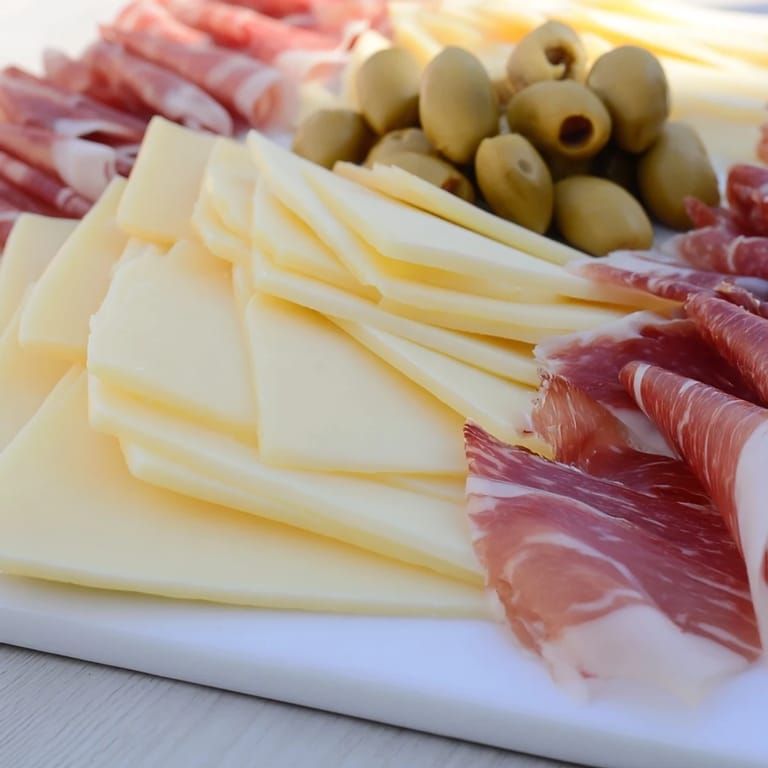
- Aged Comté, 80 g, sliced: Look for a wedge that's been aged at least 12 months—the crystals in the cheese are little pockets of flavor that snap between your teeth. Slice it thick enough to hold together but thin enough to let the buttery texture shine.
- Jamón Ibérico, 80 g, thinly sliced: This is the investment piece that makes the board sing. Ask your cheesemonger to slice it for you if they can—the knife work matters here. If you can't find true Jamón Ibérico, Serrano is a respectable backup, though the depth won't quite be the same.
- Castelvetrano olives, 80 g, pitted: These green olives from Sicily have a buttery, almost grassy sweetness that balances the richness of the cheese and ham. Drain them well before plating so the board doesn't get slick.
Tired of Takeout? 🥡
Get 10 meals you can make faster than delivery arrives. Seriously.
One email. No spam. Unsubscribe anytime.
Instructions
- Divide your canvas:
- Find a board or platter that feels substantial in your hands—ideally marble, slate, or pale wood. Imagine three equal sections, and notice how your eye wants to move across them. The board is doing half the work here.
- Arrange the cheese first:
- Lay the Comté slices in the first section with a slight overlap, like pages in a book you're about to read. Let them lean against each other so light catches the edges and shows off their color.
- Fold and place the ham:
- Take each slice of Jamón and fold it gently into loose thirds, then layer these folds in the second section. You're looking for texture and movement—it should look like the ham is catching a breeze, not lying flat.
- Finish with olives:
- Either pile the olives in the final third directly on the board, or nestle them in a small bowl that sits in that space. Either way feels right; it depends on your mood.
- Serve at room temperature:
- Let the board sit out for five minutes if it's been in the fridge. Room temperature is where all three ingredients taste like themselves.
 Save Pin
 My clearest memory of this board is watching my mother pick up a single slice of Jamón, close her eyes, and say almost nothing. That silence said everything. Food doesn't always need to be complicated to matter.
Why Simplicity Wins Here
In a world of crowded recipe feeds and ingredient lists that stretch for days, there's something quietly rebellious about three things on a board. Each ingredient has to be excellent because there's nowhere for mediocrity to hide. You can't bury a mediocre cheese under bread or nuts or fancy condiments—it just sits there being what it is. That's the gift of this recipe: it forces you to source well and trust your palate. Every time I've made this, I've tasted deeper because there were fewer things to taste.
The Art of Serving
Presentation matters here, but not in a fussy way. The three-section approach isn't about rigid perfectionism—it's about giving your eye room to appreciate each ingredient separately before they mingle on your palate. Bring the board to the table and let people serve themselves, moving their fork or hand from section to section like they're reading a story. There's something generous about that kind of restraint.
Pairing and Variations
I've played with this formula a hundred ways, and it holds up beautifully. The elegance isn't in the specific ingredients—it's in the principle of three. Swap the Comté for an aged Gruyère if that's what calls to you, or replace the ham with sliced soppressata or even smoked salmon if you want to venture slightly away from traditional charcuterie. The olives could become dried apricots one night, or Marcona almonds another. The frame stays the same; only the picture changes.
- Try a soft blue cheese instead of Comté for drama and depth.
- Fresh figs or quince paste add a sweet counterpoint to salty ham and rich cheese.
- A drizzle of good olive oil over the whole board transforms it into something almost alive.
 Save Pin
 This board taught me that you don't need a lot to feel celebrated. Serve this with real attention, and you're saying I chose these three things because they matter.
Recipe FAQs
- → How should the ingredients be arranged on the board?
Divide the board into three equal sections: place sliced aged Comté on the first, folded Jamón Ibérico on the second, and Castelvetrano olives in a small bowl or pile on the third.
- → Can the aged Comté be substituted?
Yes, Gruyère or Manchego are excellent alternatives that provide similar textures and flavors.
- → What is the best serving temperature for this selection?
Serving at room temperature allows the flavors and aromas of the cheese and charcuterie to fully develop.
- → Are there options for dietary preferences?
For vegan adaptations, replace both the cheese and the ham with plant-based alternatives while keeping the olives.
- → What beverages pair well with this selection?
Crisp, dry white wines or Champagne complement the creamy cheese and savory charcuterie beautifully.
- → Are there any allergens to be aware of?
This board contains milk from the cheese and may have traces of nuts or gluten depending on the charcuterie's processing.