 Save Pin
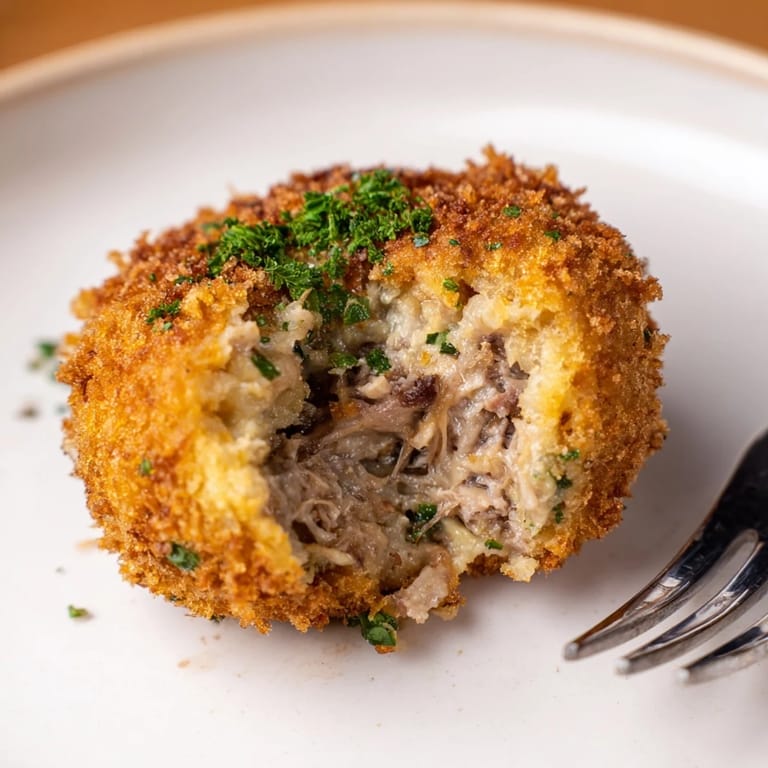
 My first Dutch croquette came from a small takeaway in Amsterdam, still warm in paper, the shell shattering between my teeth into butter-soft beef inside. Years later, I finally understood why my Dutch friend's mother guarded her recipe so carefully—it's not just technique, it's the discipline of patience, the slow braise that makes meat melt like clouds. Making these at home changed how I think about fried food; they're not indulgent, they're crafted.
I served these to my partner's parents for the first time on a wet February evening, and the silence that followed—that fork-frozen, eyes-closed moment of appreciation—told me everything. They're the kind of food that stops conversation, the kind that bridges continents through taste memory.
Ingredients
- Stewing beef (250 g): Chuck or another tough cut becomes impossibly tender after an hour of gentle simmering; the collagen transforms into gelatin that binds your filling together naturally.
- Beef broth (500 ml): Use quality broth—it flavors everything, so don't skimp or use cubes that taste like salt.
- Bay leaf: Removes itself easily once the beef is done, and its subtle anise note lingers in the background.
- Onion (1 small): Finely chopped so it dissolves into the filling; you want sweetness, not chunks.
- Butter (40 g + 1 tbsp): The roux needs proper butter for richness and flavor that oil can't give you.
- All-purpose flour (40 g + 100 g): The smaller amount thickens your ragout into that perfect pipe-able consistency; the larger is for breading.
- Whole milk (150 ml): Brings a gentle creaminess that pure broth would miss.
- Nutmeg (1/2 tsp): Ground fresh if you can; it transforms the filling from savory to sophisticated in a single pinch.
- Fresh parsley (1 tbsp): Optional but worth it for a whisper of brightness that cuts through richness.
- Eggs (2 large): The glue that holds your breadcrumbs in place; beat them loose so they coat evenly.
- Fine dry breadcrumbs (150 g): Panko or Dutch paneermeel creates that shattering crust everyone remembers.
- Neutral oil for frying: Sunflower or canola won't compete with the flavors inside.
Tired of Takeout? 🥡
Get 10 meals you can make faster than delivery arrives. Seriously.
One email. No spam. Unsubscribe anytime.
Instructions
- Braise the beef slowly:
- Combine beef, broth, bay leaf, and salt in a saucepan and bring to a boil, then turn the heat down low. You want a gentle simmer where the surface barely trembles—this is how beef becomes so tender it shreds at a glance. After an hour, the meat should pull apart with a wooden spoon; if not, give it another 10 minutes.
- Build your ragout base:
- While the beef finishes, melt butter in a skillet and add finely chopped onion, stirring until it turns translucent and sweet, about 3 minutes. Add your shredded beef and stir; taste and season with pepper and a pinch more salt if needed.
- Make the roux:
- In a clean saucepan, melt 40 g butter over low heat, then whisk in flour and cook for 2 minutes, stirring constantly. This cooks out the raw flour taste without browning the roux—you want pale and tender, not tan or dark.
- Smooth the filling:
- Gradually whisk your reserved beef broth and milk into the roux, pouring slowly and stirring without stopping. You'll feel it thicken under your whisk; once it's creamy and smooth, add the beef-onion mixture, nutmeg, and parsley if using. Taste and adjust seasoning until it tastes like comfort itself.
- Chill until firm:
- Spread the ragout in a shallow dish, press plastic wrap directly onto the surface, and refrigerate for at least 1 hour. Cold filling is essential—warm filling will slip out of your croquettes when you fry them, leaving you with hollow shells.
- Shape with cold hands:
- Using two spoons or your hands, form 10 cylinders about 8 cm long. Work quickly so the filling doesn't warm up; if it softens, pop it back in the fridge for 10 minutes.
- Set up your breading station:
- Arrange three shallow bowls: one with flour, one with beaten eggs, one with breadcrumbs. Roll each croquette in flour first, tap off excess, then dip in egg, then press into breadcrumbs until completely coated. For extra crispiness that rewards you, repeat the egg and breadcrumb step on at least one croquette to see the difference.
- Fry until golden:
- Heat oil to 180°C (350°F) in a deep fryer or heavy pot—a thermometer is non-negotiable here, as temperature determines crispiness. Fry croquettes in batches for 3–4 minutes until the outside is deep golden and shiny; don't overcrowd the pan, which lowers oil temperature and makes them greasy instead of crispy.
- Rest and serve:
- Drain on paper towels for a minute while they finish crisping, then serve hot with mustard for dipping and preferably with fries alongside.
 Save Pin
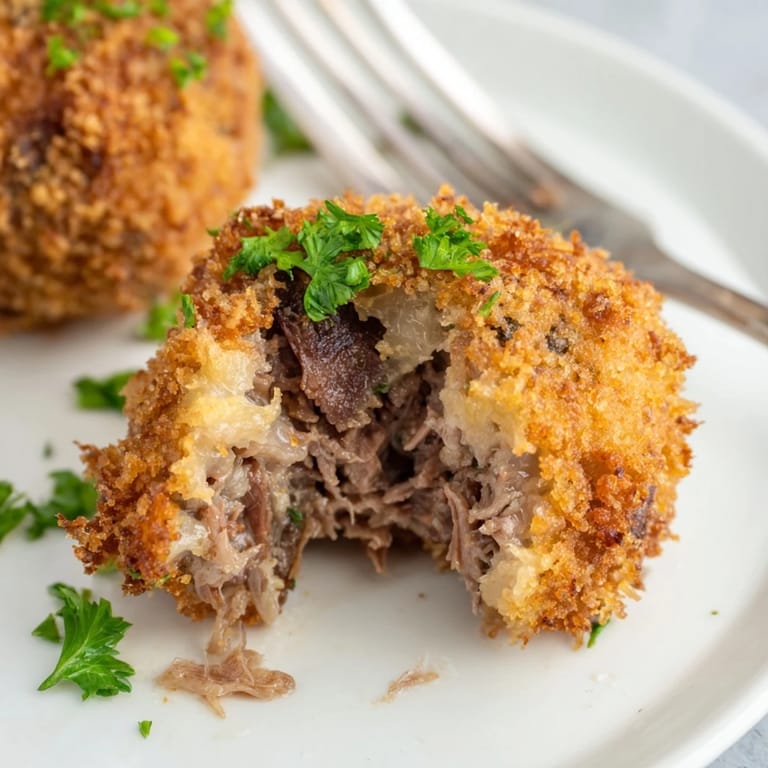
 The first time someone bit into one I made and closed their eyes in that particular way people do when food surprises them—that's when I realized these aren't just appetizers. They're a small, edible declaration that you care enough to cook something that takes time and attention.
The Science of the Shattering Crust
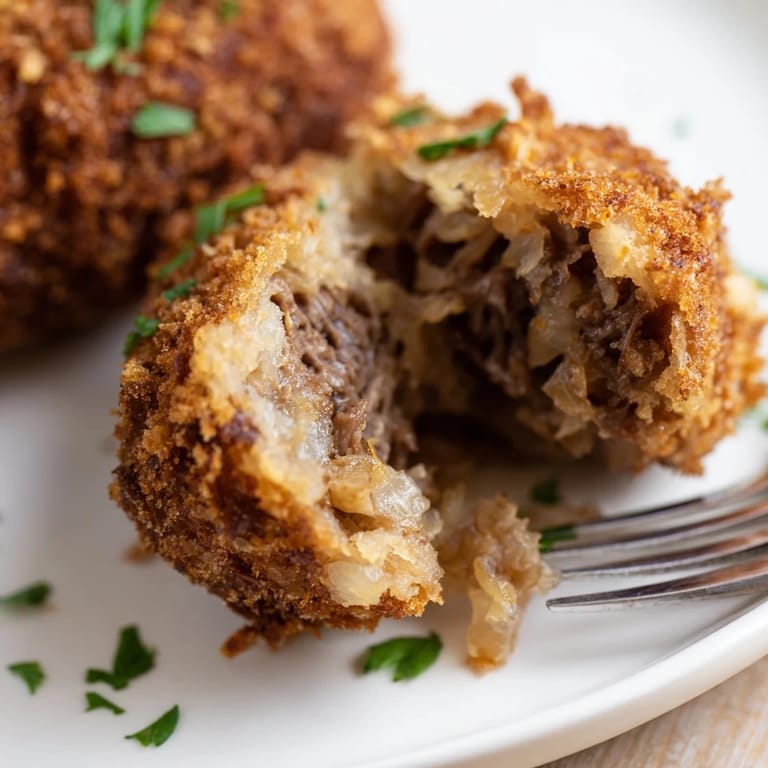
The magic happens at 180°C when moisture inside the croquette creates steam, which pushes outward against the breadcrumb coating and oils it from the inside. This is why your timing matters so much; a few seconds too long and the steam has nowhere to go but creates dense, heavy croquettes instead of that hollow, shattering shell everyone wants. The double-coating amplifies this effect because the extra layer of breadcrumb creates more surface area for the oil to work.
Make-Ahead Magic
Breading your croquettes and then freezing them solid before frying is not a shortcut—it's actually the secret to crisper results. The frozen center means the exterior browns properly before the inside has a chance to overcook, and you can keep a batch in the freezer for unexpected guests or sudden cravings.
What to Serve Alongside
These are never just about the croquette itself; they're part of a moment. Crisp fries, tangy mustard, maybe a cold pilsner that cuts through the richness—the whole picture matters. Some people add pickles, others mayonnaise, and there's no wrong answer as long as you're eating them warm and someone across the table is enjoying them too.
- A crisp pale lager or pilsner pairs perfectly and cuts the richness beautifully.
- Hot mustard, whole grain, or even a touch of mayo on the side lets each person find their own balance.
- Serve immediately while the crust is still shattering; they soften as they cool but are still worth eating room-temperature if you have leftovers, which you might not.
 Save Pin
 These croquettes are proof that food made with attention tastes different from food made in a hurry. Make them for people you want to impress, or make them for yourself on a quiet evening when you deserve something that feels like celebration.
Recipe FAQs
- → What type of beef is best for croquettes?
Stewing beef like chuck is ideal as it becomes tender and flavorful after slow simmering.
- → How can I ensure a crispy coating?
Double coating with egg and breadcrumbs and frying at 180°C ensures a golden, crunchy crust.
- → Can these croquettes be prepared in advance?
Yes, the croquettes can be shaped, breaded, and frozen before frying. Frying from frozen adds a couple extra minutes.
- → What side pairs well with these croquettes?
Serving with fries and a crisp pilsner or pale lager complements their rich flavors beautifully.
- → How do I make the filling creamy?
Adding a butter, flour roux combined with milk creates the thick, smooth texture essential for the filling.
- → Are there allergen concerns to watch for?
These croquettes contain wheat, eggs, and dairy, and commercial breadcrumbs may have soy traces.