 Save Pin
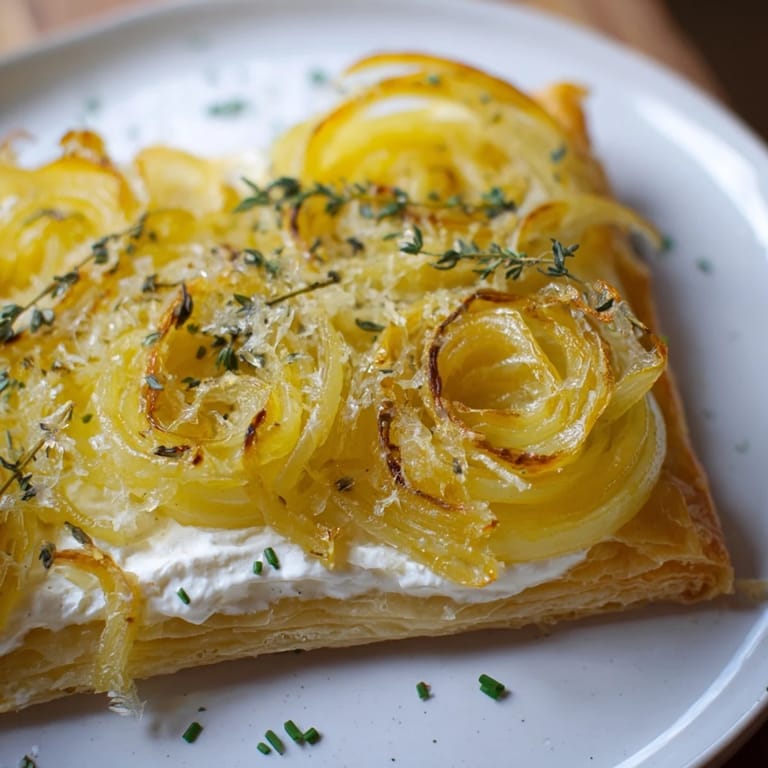
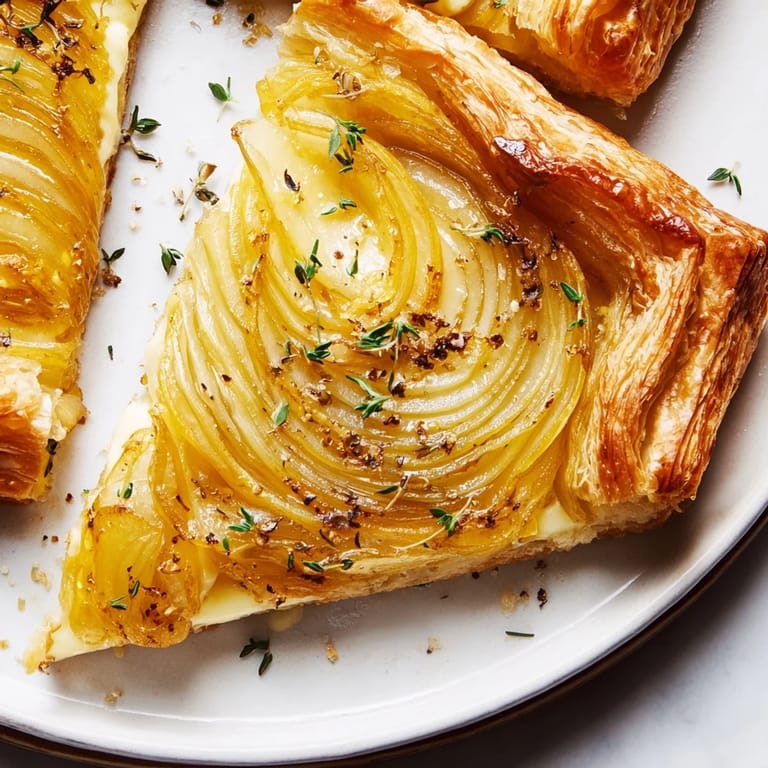
 There's something almost meditative about watching onions transform in a hot skillet—those crisp, sharp slices gradually turning amber, then deep gold, releasing their sweetness bite by bite. I discovered this tart on a Sunday when I had nothing but a block of frozen puff pastry and too many onions from the farmer's market. What started as improvisation became my go-to when someone's coming over and I want to seem effortless and French without actually fussing.
I made this for my neighbor once when she stopped by just as it came out of the oven, the whole kitchen smelling like butter and time. She ate two slices standing at my counter, and I realized right then that caramelized onions are one of those quiet ingredients that make people pause and actually taste what they're eating.
Ingredients
- Frozen puff pastry (1 sheet, about 250 g): Thawed pastry is your shortcut to flaky layers without any real work—just make sure it's properly soft or it'll crack when you unfold it.
- Large yellow onions (3, thinly sliced): Yellow onions caramelize better than white ones because they have more natural sugar; slice them fairly thin so they cook evenly.
- Unsalted butter and olive oil (2 tbsp and 1 tbsp): The combination gives you richness and a slightly higher smoke point than butter alone.
- Sugar (1 tsp): A small amount helps speed up caramelization and deepens the golden color.
- Salt and freshly ground black pepper (1/2 tsp and 1/4 tsp): Season as you go so the flavors develop gradually.
- Crème fraîche or sour cream (1/2 cup): The tangy base keeps things from feeling too heavy and adds a subtle richness.
- Dijon mustard (1 tsp): A small amount adds complexity without any sharp edge.
- Gruyère cheese (1/2 cup grated): It melts into the filling beautifully and has a nuttiness that complements caramelized onions perfectly.
- Fresh thyme (1 tsp leaves, or 1/2 tsp dried): Thyme's earthiness ties everything together.
- Fresh chives, optional, for garnish: A sprinkle at the end adds freshness and a tiny onion note that echoes the filling.
Tired of Takeout? 🥡
Get 10 meals you can make faster than delivery arrives. Seriously.
One email. No spam. Unsubscribe anytime.
Instructions
- Get your oven ready:
- Preheat to 400°F (200°C) and line a baking sheet with parchment paper so your pastry doesn't stick and browns evenly on the bottom.
- Start the magic:
- Melt butter with olive oil in a large skillet over medium heat, add your onions along with sugar, salt, and pepper. Stir often and let them cook low and slow for 25–30 minutes until they're a deep, glossy gold—this is the heart of the whole thing.
- Unfold the pastry:
- Roll out your thawed puff pastry on a lightly floured surface into a 12-inch square or circle, then transfer it gently to your prepared baking sheet. Don't stretch it too much or it'll shrink back.
- Build the base:
- Mix crème fraîche with Dijon mustard in a small bowl, then spread it evenly over the pastry, leaving about a 1-inch border all around. This keeps the edges free to puff up.
- Layer with intention:
- Scatter half the Gruyère over the crème mixture, top with your caramelized onions, sprinkle thyme leaves, then finish with the remaining cheese. The cheese creates a barrier between the filling and pastry, preventing sogginess.
- Fold the edges:
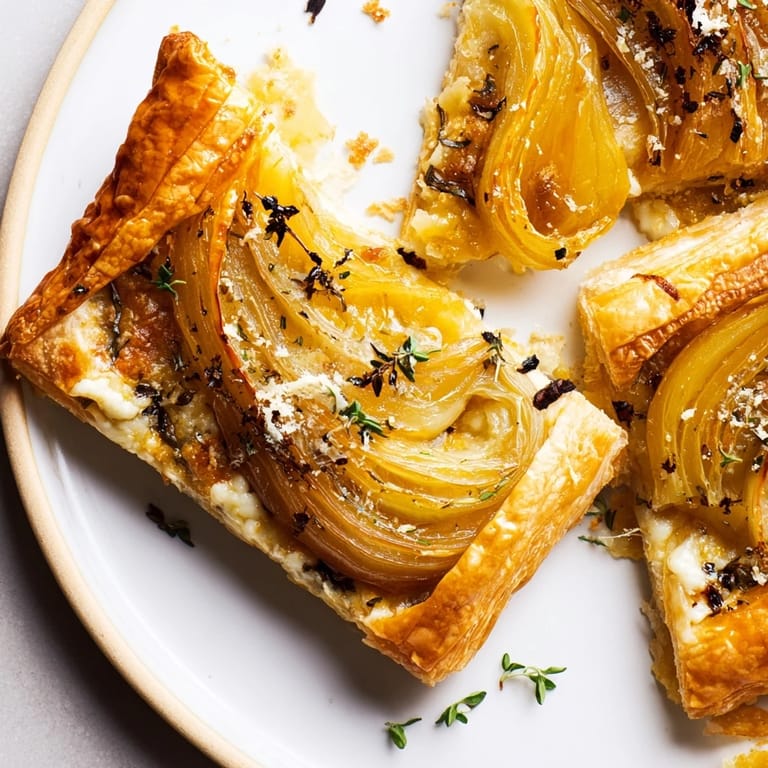
- Gently fold the plain pastry border up and over the filling, creating a rustic frame. It doesn't need to be perfect—imperfect looks better anyway.
- Bake until golden:
- Bake for 20–25 minutes until the pastry is deep golden and crispy on the edges. The cheese should be bubbling slightly at the borders.
- Rest and serve:
- Let it cool for a few minutes before slicing so it holds together, but serve it warm or at room temperature when the flavors really sing.
 Save Pin
 There was a moment during a dinner party when someone asked for the recipe and I nearly laughed because I realized I wasn't thinking about technique anymore—I was just talking about how good onions could taste to someone who'd probably never caramelized them before. That's when I knew this tart had become more than a dish; it was a conversation about flavor and time.
Caramelizing Onions Right
The difference between cooked onions and truly caramelized ones is patience and medium heat. I learned this the hard way by trying to speed things up, which just creates a tough, brown mess. The real caramelization happens when the natural sugars slowly break down and reform into complex compounds that taste deeply sweet and savory at the same time. If you catch yourself stirring constantly, you can actually back off the heat a bit and let them work on their own, stirring maybe every minute or two. The slower you go, the deeper the flavor—this isn't the dish to be in a hurry about.
Why This Works as Both Main and Appetizer
A tart like this walks this lovely line where it can be substantial enough as lunch or dinner for one or two people, especially with a side salad, but feels refined enough to serve sliced into small pieces before a bigger meal. The richness of the Gruyère and crème fraîche means a little goes a long way, so you don't need a massive portion to feel satisfied. I've served it four different ways—as a light dinner, as part of a spread of appetizers, as a side to roasted chicken, and even as the centerpiece of a picnic—and it's never felt out of place.
Make It Your Own
The beauty of this tart is that it's flexible enough to bend to what you have on hand. A splash of balsamic vinegar in the last few minutes of onion cooking adds a subtle depth that some people swear by. If you don't have Gruyère, sharp cheddar or Emmental work beautifully, each bringing their own character. Leeks are a wonderful substitute if you want something slightly more delicate than onions, or you could add thin slices of fresh pear on top right before baking for a slightly sweet twist that sounds weird but absolutely works.
- A dry white wine like Sauvignon Blanc cuts through the richness perfectly if you want a pairing.
- You can make this several hours ahead and reheat it gently just before serving.
- Fresh thyme on the plate adds a final touch of elegance that makes people think you spent all day on this.
 Save Pin
 This tart taught me that some of the best things to cook are the ones that ask for patience instead of precision. It's the kind of dish that makes a simple evening feel a little more intentional.
Recipe FAQs
- → How do I caramelize onions properly?
Cook sliced onions slowly over medium heat with butter and olive oil, stirring often until they turn deep golden brown and sweet, about 25-30 minutes.
- → Can I use different cheese variations?
Yes, Gruyère can be swapped with Emmental or sharp cheddar for different flavor profiles.
- → What pastry works best for this tart?
Frozen puff pastry works well, providing a flaky and buttery base that crisps beautifully when baked.
- → Is there a way to enhance the onion flavor?
Adding a splash of balsamic vinegar during the last 5 minutes of cooking onions adds depth and subtle sweetness.
- → How should the tart be served?
Serve warm or at room temperature, garnished with fresh chives for added color and mild onion flavor.