 Save Pin
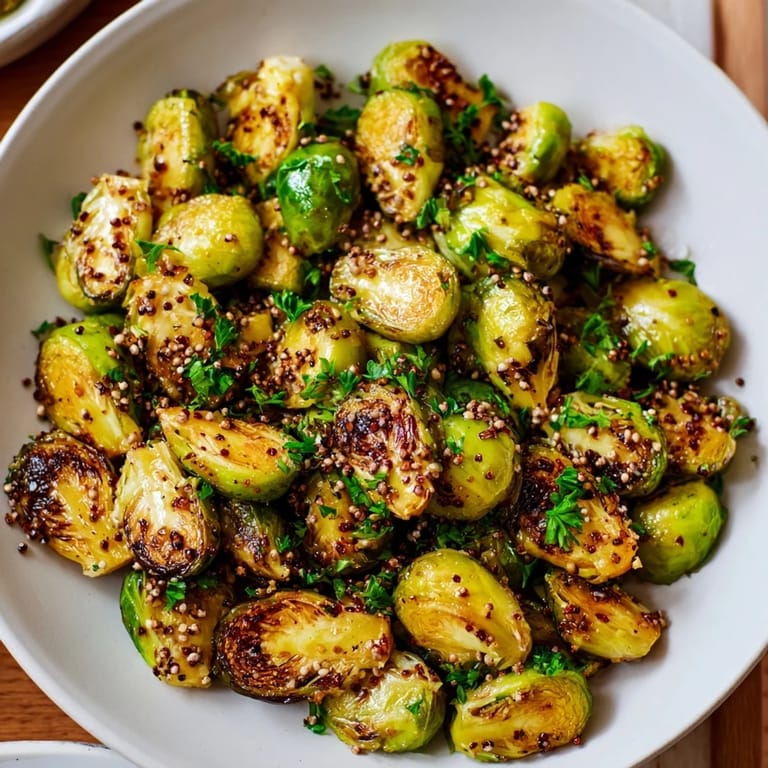
 I discovered the magic of Brussels sprouts by accident one November when my neighbor dropped off a bag from her garden and challenged me to make something that wouldn't taste like regret. That's when I threw together whatever was in my pantry—honey, mustard, a splash of vinegar—and roasted them until the edges turned almost black and crispy. The kitchen smelled incredible, and honestly, I've made them the same way ever since because nothing else comes close.
I made this for Thanksgiving potluck once and it was the first dish to vanish—even people who swear they hate Brussels sprouts came back for seconds. My friend asked for the recipe three times, then finally admitted she'd been eating them straight off the baking sheet before the others arrived.
Ingredients
- Brussels sprouts, 1 lb trimmed and halved: Halving them flat-side down lets that cut surface kiss the hot pan and turn golden and crispy, which is where all the flavor happens.
- Olive oil, 2 tbsp: This carries the glaze and helps the sprouts brown evenly, so don't skip it or use too little.
- Honey, 2 tbsp: The sweetness plays against the mustard's tang; use real honey because the flavor matters here.
- Dijon mustard, 1 ½ tbsp: This is your base note—sharp and sophisticated without overpowering.
- Whole-grain mustard, 1 tbsp: Those little seeds add texture and a slightly milder, earthier mustard flavor.
- Apple cider vinegar, 1 tbsp: This lifts everything and prevents the glaze from feeling too sweet or heavy.
- Garlic powder, ½ tsp: A whisper of garlic that blends into the background rather than shouting.
- Salt and black pepper to taste: Season as you go, tasting the glaze before it hits the sprouts.
- Fresh parsley, 2 tbsp chopped (optional): A bright finish that adds color and a fresh, clean note against the richness.
Tired of Takeout? 🥡
Get 10 meals you can make faster than delivery arrives. Seriously.
One email. No spam. Unsubscribe anytime.
Instructions
- Heat your oven and prep:
- Get your oven to 425°F and line a baking sheet with parchment paper so cleanup is painless. Trim the Brussels sprouts, halve them lengthwise, and pat them dry with a paper towel—moisture is the enemy of caramelization.
- Build the glaze:
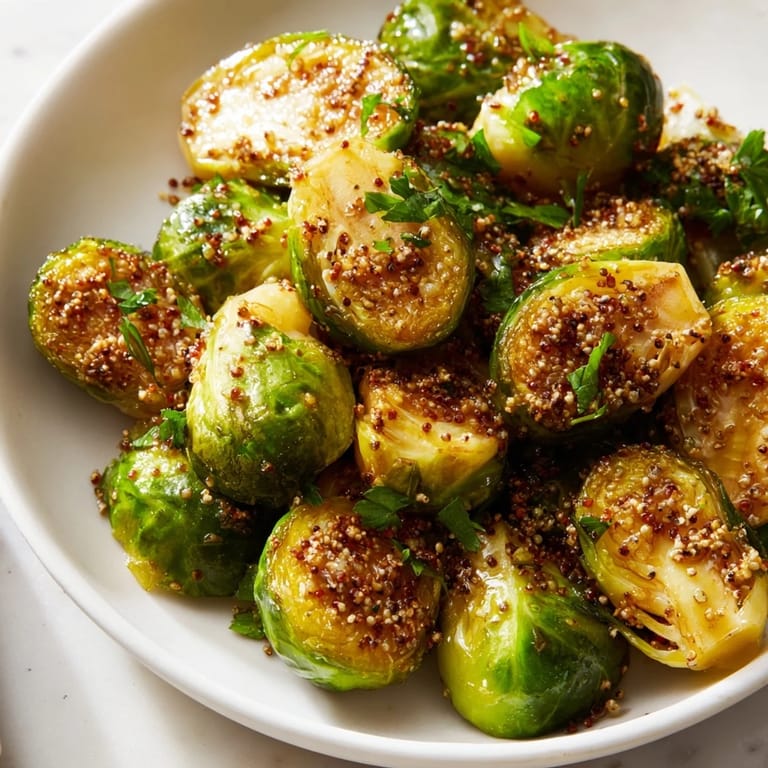
- Whisk the olive oil, honey, both mustards, garlic powder, and apple cider vinegar together in a large bowl until it's smooth and emulsified. Taste it—it should be balanced between sweet and tangy, with a hint of mustard bite.
- Coat evenly:
- Toss the Brussels sprouts in the glaze until every piece is glossy and covered. Don't be shy; make sure the glaze gets into the crevices.
- Arrange and roast:
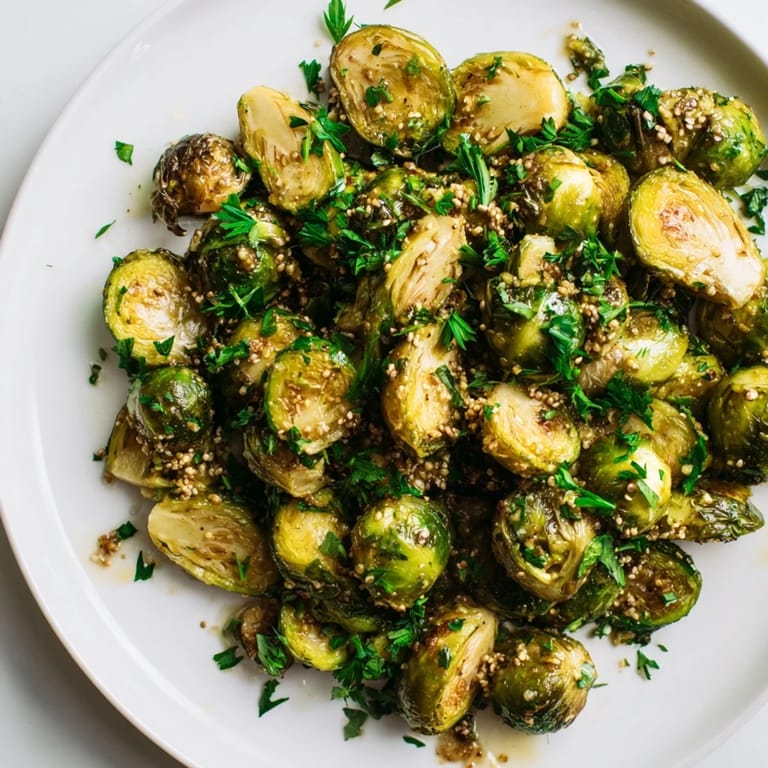
- Spread them on the baking sheet cut-side down in a single layer—this contact with the hot pan is what creates that caramelized crust. Roast for 20-25 minutes, flipping halfway through, until the edges are dark golden and the insides are tender when pierced with a fork.
- Finish and serve:
- Transfer to a serving dish while they're still warm, scatter parsley over top if you like, and serve immediately. They lose their crispiness as they cool, so don't let them sit around.
 Save Pin
 The best part about this dish is how it won over my kid, who used to push Brussels sprouts to the edge of her plate. Now she's the one asking me to make them, and there's something satisfying about that small kitchen victory.
Why the Glaze Works
The combination of honey and mustard isn't random—it's built on contrast. Honey brings sweetness and body, mustard brings acid and punch, and together they coat the roasted sprouts without being cloyingly sweet the way some glazes are. The apple cider vinegar keeps everything bright instead of dull, while the whole-grain mustard adds texture and complexity. By the time they roast, the glaze caramelizes slightly and becomes almost savory, which is why people who don't usually love Brussels sprouts end up asking for the recipe.
Make It Your Own
This recipe is forgiving and adaptable depending on what you're in the mood for or what you have on hand. I've swapped maple syrup for honey more than once when I was out, and it gives a deeper, more muted sweetness that's equally delicious. For a little heat, a pinch of cayenne or chili flakes scattered in just before serving adds a prickle that some people crave. Even toasted chopped nuts—pecans or walnuts work best—stirred in at the end add a crunch that makes the dish feel more substantial, almost like a salad topping.
Storage and Reheating
These keep in the fridge for about three days in an airtight container, though they're best eaten the day you make them when they're still crispy. If you need to reheat them, a quick 5 minutes in a 375°F oven brings back some of that crispness, though the microwave will make them soft and sad. They also freeze beautifully before you roast them, so you can toss the raw glazed sprouts on a baking sheet, freeze solid, then roast straight from frozen, adding just a few extra minutes to the cooking time.
- Eat them warm straight out of the oven for maximum crispiness.
- Leftovers work cold in salads or chopped into grain bowls the next day.
- Freeze the raw glazed sprouts unbaked for easy weeknight sides anytime.
 Save Pin
 This is the kind of recipe that quietly becomes a regular on your dinner table, the one you make so often you stop thinking about it and just do it. It's honest food that tastes better than it has any right to, which is really all you can ask for.
Recipe FAQs
- → What temperature is best for roasting Brussels sprouts?
Roasting at 425°F (220°C) helps achieve a crispy caramelized exterior while keeping the inside tender.
- → Can I substitute honey in the glaze?
Yes, maple syrup works well as a vegan-friendly alternative with a similar sweetness.
- → How do I make the Brussels sprouts extra crispy?
Arrange them cut side down on the baking sheet and roast without overcrowding to maximize caramelization.
- → What mustard types are used for the glaze?
The glaze combines Dijon and whole-grain mustard for a balanced tang and texture.
- → Can I add extra flavor elements?
Try sprinkling chili flakes for mild heat or toasted chopped nuts before serving for added crunch.