 Save Pin
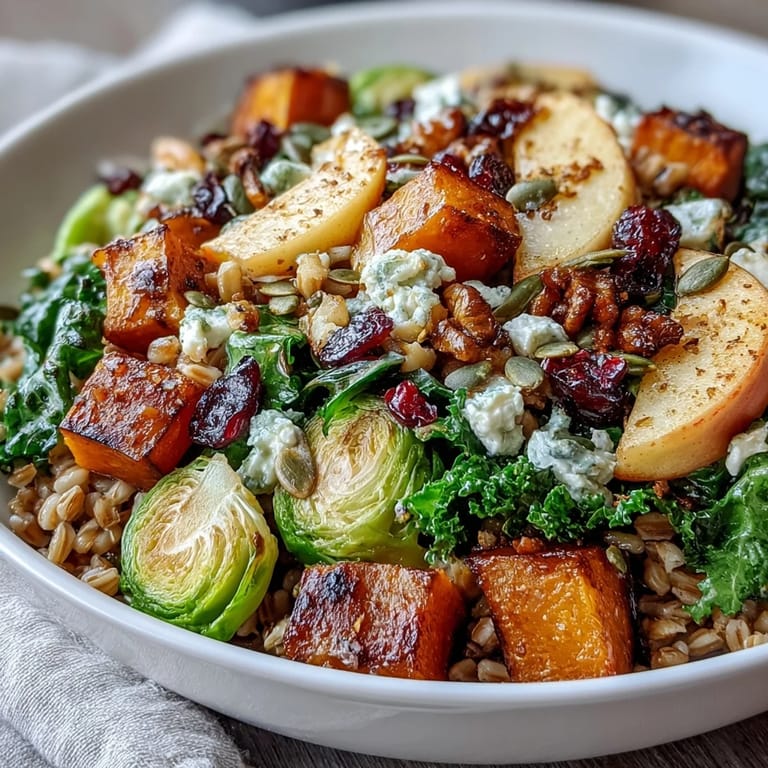
 Last October, I was standing in my kitchen on a drizzly afternoon, staring at a farmers market haul of squash and Brussels sprouts, when it hit me that I was tired of the same roasted vegetable routine. So I grabbed whatever was in the pantry—some farro, a few handfuls of kale—and started layering things into a bowl. The result was so comforting and alive with flavor that it became my go-to meal when the weather turned cool and I needed something that felt both nourishing and celebratory.
I made this for friends one November evening when everyone was craving something healthy but nobody wanted to feel deprived. One of them, who usually picks at salads, went back for seconds and asked for the recipe—that's when I knew it was a keeper. The thing about autumn bowls is that they bridge the gap between summer lightness and winter heaviness in a way that feels natural and satisfying.
Ingredients
- Butternut squash, peeled and cubed (2 cups): The star of the show—it gets creamy and almost candy-like when roasted, which balances the bitter greens beautifully.
- Brussels sprouts, trimmed and halved (2 cups): Their crispy edges are what make this bowl addictive, so don't skip the high oven temperature or skip stirring them halfway.
- Kale, stems removed and chopped (2 cups): Lacinato kale works best here because it's tender enough to wilt gently without becoming bitter or tough.
- Apple, cored and sliced (1 large): This adds a note of brightness and slight tartness that cuts through the richness of the roasted vegetables.
- Farro or quinoa or brown rice (1 cup): Farro has a chewy texture that holds up well, but any whole grain works depending on your dietary needs or pantry.
- Vegetable broth or water (2 cups): Broth adds subtle flavor, but water works perfectly fine if that's what you have.
- Olive oil (3 tbsp): Split between the vegetables and apple, it's what creates those golden, caramelized edges you're after.
- Sea salt (1 tsp): This sounds obvious, but tasting as you go makes the difference between flat and bright.
- Black pepper (1/2 tsp): A small amount of good black pepper adds warmth without overpowering.
- Smoked paprika (1/2 tsp): This is the secret ingredient that nobody expects but everyone tastes—it adds depth without heat.
- Ground cinnamon (1/2 tsp): Just enough to echo the sweetness of the squash and roasted apple without making the bowl taste like dessert.
- Toasted pumpkin seeds, optional (1/4 cup): They add crunch and a nutty richness that ties everything together.
- Dried cranberries, optional (2 tbsp): Sweet-tart pops of flavor that brighten each bite.
- Crumbled feta or vegan cheese, optional: A creamy, salty element that feels a bit luxurious without being heavy.
Tired of Takeout? 🥡
Get 10 meals you can make faster than delivery arrives. Seriously.
One email. No spam. Unsubscribe anytime.
Instructions
- Heat your oven and prep your pans:
- Preheat to 425°F and line two baking sheets with parchment paper—this matters because parchment prevents sticking and makes cleanup blissfully easy. Trust me, you don't want to scrape squash off a hot sheet.
- Season and spread the hearty vegetables:
- Toss butternut squash and Brussels sprouts with 2 tablespoons of olive oil, salt, pepper, and smoked paprika, then spread them in a single layer on the first sheet. Don't crowd the pan, or they'll steam instead of roast and develop that caramelized edge you're after.
- Prepare the apples separately:
- Place apple slices on the second baking sheet, drizzle with the remaining tablespoon of olive oil, and sprinkle with cinnamon. They'll roast faster than the vegetables, so they need their own real estate.
- Get everything roasting:
- Put both sheets in the oven—squash and Brussels sprouts for 25 to 30 minutes (stirring halfway), and apples for about 15 minutes until they're soft and caramelized. Your kitchen will smell absolutely incredible at this point.
- Cook your grain while vegetables roast:
- Rinse your farro, bring vegetable broth or water to a boil in a medium saucepan, add the grain, then lower heat and cover. Let it simmer for 20 to 25 minutes until tender—the timing depends on your grain, so check the package instructions.
- Wilt the kale gently:
- While everything else finishes, heat a skillet over medium and add kale with just a splash of water, stirring for 2 to 3 minutes until it's tender and bright green. This takes less time than you'd think, so watch it closely.
- Bring it all together:
- Divide cooked grains among four bowls, then top each with roasted squash, Brussels sprouts, sautéed kale, and roasted apples in whatever pattern feels right. The order doesn't matter—just make sure everything gets distributed evenly.
- Finish with flourish:
- Scatter pumpkin seeds, dried cranberries, and a bit of cheese (if using) over the top and serve while everything is still warm. The warm grains will soften the cranberries slightly and bring out all the flavors you've built up.
 Save Pin
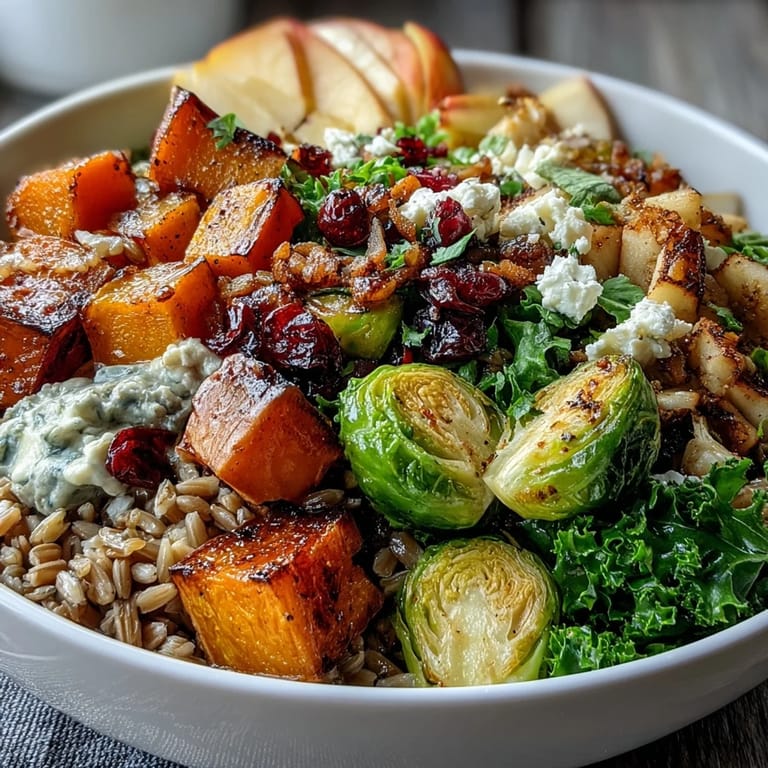
 There's a specific moment when I assemble these bowls where I stop and just look at them—the way the golden squash catches the light, how the kale's texture contrasts with the soft grain, the pops of cranberry color scattered across the top. That's when I remember why I love cooking in the fall; it's not about following rules, it's about making something beautiful that nourishes you.
Why Roasting Matters
The roasting temperature of 425°F is higher than you might think necessary, but it's exactly what coaxes out the natural sugars in the vegetables and makes them caramelize instead of just soften. I learned this the hard way by roasting at 375°F my first time and ending up with steamed, pale squash that had none of the character I was hoping for. Once I turned up the heat, everything changed—the vegetables developed actual flavor and complexity that a gentle roast never would have achieved.
Building Flavor Through Contrast
The real trick to this bowl is layering different flavors and textures so nothing feels one-note. The sweetness of roasted squash and apples plays against the earthiness of whole grains and the slight bitterness of kale, while smoked paprika adds a savory depth that ties it all together. If you make this bowl with only one protein or leave out the apples, you'll notice immediately that something's missing—it's the interplay of all these elements that makes the dish sing.
Make It Your Own
This bowl is genuinely flexible, which is part of why it's become such a staple in my rotation. Pears work beautifully instead of apples if you prefer something softer, and any roasted vegetable you love can replace the Brussels sprouts or squash depending on what's in season or on sale. I've even added roasted chickpeas or crumbled tofu when I wanted extra protein, and the bowl adapted without complaint.
- Substitute quinoa or brown rice for the farro if you need gluten-free or just want to change things up.
- Try pumpkin seeds, sunflower seeds, or almonds depending on what you have in the pantry.
- Swap dried cranberries for raisins, dried apricots, or even fresh pomegranate seeds if you want brightness.
 Save Pin
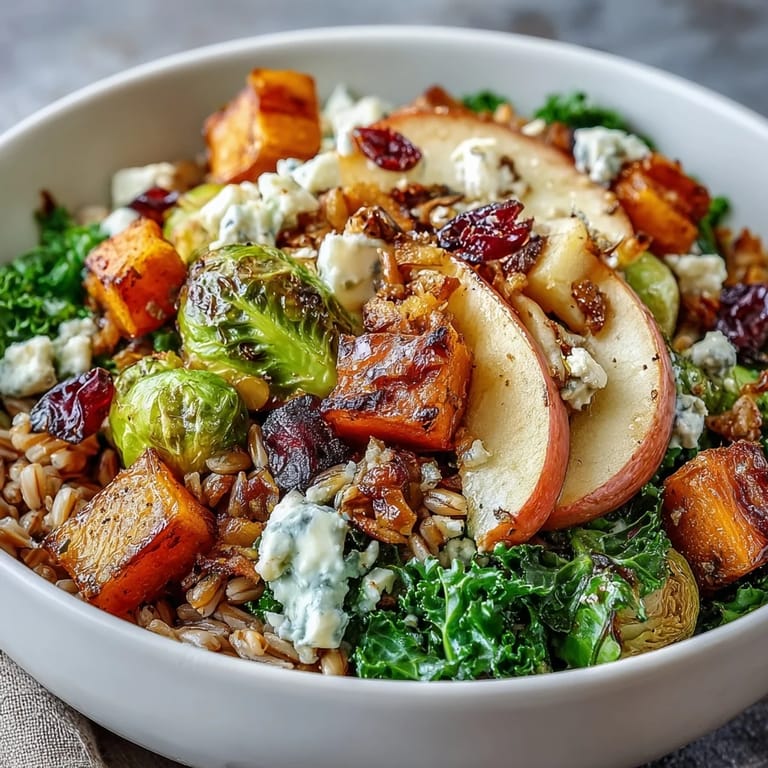
 This bowl has a way of making you feel taken care of, which is exactly what you want from fall food. Make it once and you'll find yourself returning to it all season long.
Recipe FAQs
- → Can I make this ahead for meal prep?
Absolutely. The roasted vegetables and cooked grains keep well in the refrigerator for 4-5 days. Store components separately and assemble when ready to eat. Reheat vegetables and grains gently, then add fresh kale and toppings.
- → What grains work best?
Farro provides a chewy, nutty texture that pairs beautifully with roasted vegetables. Quinoa cooks faster and adds protein. Brown rice offers a familiar taste and longer shelf life. All three absorb the seasonal flavors well.
- → How do I prevent the apples from getting mushy?
Roast apples on a separate sheet at the same temperature, but check them after 12-15 minutes. They should be tender but hold their shape. Firmer varieties like Honeycrisp or Gala work particularly well.
- → Can I add more protein?
Roasted chickpeas, crispy tofu cubes, or pan-seared tempeh make excellent additions. Simply season with similar spices and roast alongside the vegetables. A fried egg on top also transforms this into a complete breakfast bowl.
- → What other seasonal vegetables work?
Sweet potatoes, parsnips, or beets replace squash nicely. Delicata squash requires no peeling. Try adding roasted radicchio for bitter contrast. Swap kale for Swiss chard or spinach based on preference.
- → Is there a way to reduce cooking time?
Use quick-cooking grains like pre-cooked quinoa or instant farro. Cut vegetables into smaller, uniform pieces for faster roasting. You can also sauté the Brussels sprouts and squash instead of roasting, though you'll lose some caramelized depth.