 Save Pin
 My neighbor brought this to a potluck years ago, and I watched people abandon their plates mid-conversation just to get another forkful. The cream was so silky, the cheese so golden and crisp on top, that I had to ask for the recipe on the spot. What struck me most wasn't the elegance of it all—it was how simple the technique actually was, yet how restaurant-worthy the result tasted. That night changed how I thought about side dishes entirely.
I made this for a holiday dinner once, and my teenage daughter—who normally picks at everything—asked for thirds. Her friends were shocked that potatoes could be this good, and honestly, so was I. That moment taught me that comfort food elevated with proper technique and good ingredients stops conversations. It became the dish I'm now known for bringing everywhere.
Ingredients
- Yukon Gold or Russet potatoes (2 lbs, peeled and thinly sliced): Yukon Golds stay buttery and have a delicate flavor that doesn't compete with the cream, while Russets offer a more substantial texture—choose based on your preference for creaminess versus structure.
- Heavy cream (2 cups) and whole milk (1 cup): This combo creates richness without being overwhelming; the milk cuts through so the sauce doesn't feel heavy on the stomach.
- Garlic (2 cloves, minced): Mince it fine and add it to the cream mixture raw—heat gently so the garlic perfumes everything without turning bitter or sharp.
- Salt (1/2 teaspoon), freshly ground black pepper (1/4 teaspoon), and nutmeg (1/4 teaspoon): The nutmeg is the secret whisper in this dish; it's barely noticeable but transforms the whole flavor profile with warmth and subtle sweetness.
- Gruyère cheese (1 1/2 cups, grated) and Parmesan (1/2 cup, grated): Gruyère melts into the layers beautifully while Parmesan adds a sharp, complex note that keeps the cheese from tasting one-dimensional—always grate fresh, never pre-shredded.
- Fresh chives or parsley (2 tablespoons, chopped): A whisper of green and brightness at the end makes this feel finished and alive rather than heavy.
Tired of Takeout? 🥡
Get 10 meals you can make faster than delivery arrives. Seriously.
One email. No spam. Unsubscribe anytime.
Instructions
- Set the stage:
- Preheat your oven to 375°F and butter that baking dish generously—the butter will help the bottom layer of potatoes develop a slight crust. Consider rubbing a cut garlic clove around the inside for an extra whisper of flavor.
- Build your cream base:
- Combine cream, milk, minced garlic, salt, pepper, and nutmeg in a saucepan over medium-low heat. You want it steaming gently, releasing that garlic perfume, but never boiling—boiling can break the cream and make everything grainy. Once it's fragrant and warm, take it off heat.
- Layer with intention:
- Spread half your potato slices in an even layer in the dish—take your time here, overlapping them slightly so they nestle together. Sprinkle half the mixed cheeses over that first layer, covering the potatoes completely.
- Complete the layers:
- Arrange the remaining potatoes on top in that same careful way, then pour the warm cream mixture slowly and evenly so it soaks through all the layers. Top everything with the remaining cheese, which will become your golden crust.
- The covered bake:
- Cover loosely with foil—you want steam to circulate but not escape completely—and bake for 40 minutes. The potatoes will start becoming tender and the cream will bubble gently around the edges.
- Finish with color:
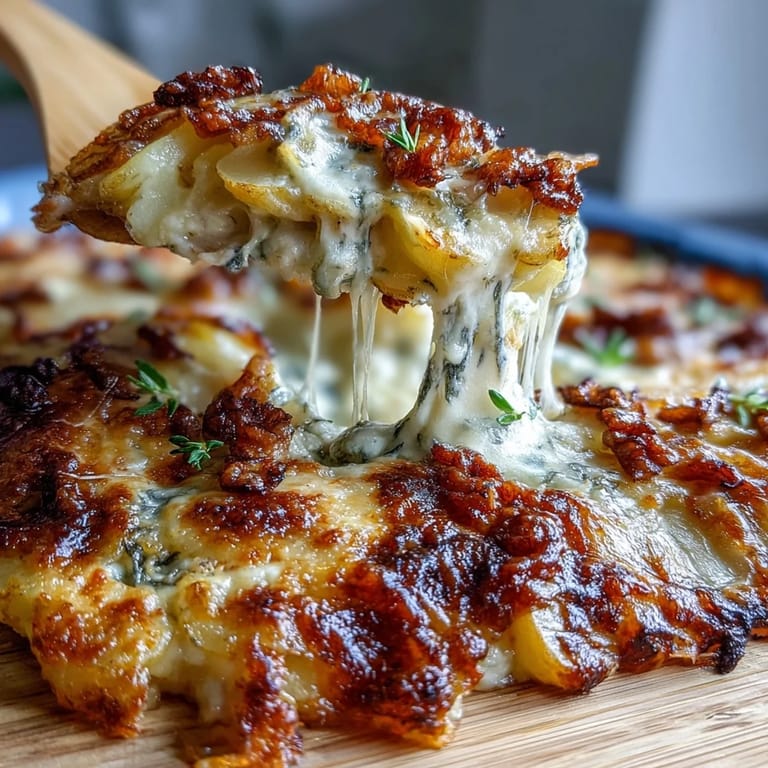
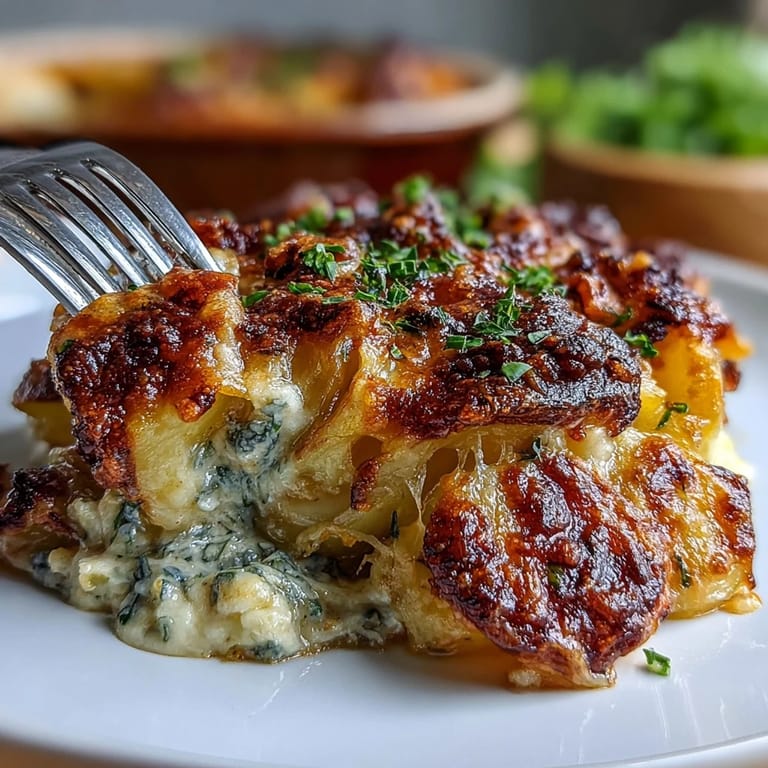
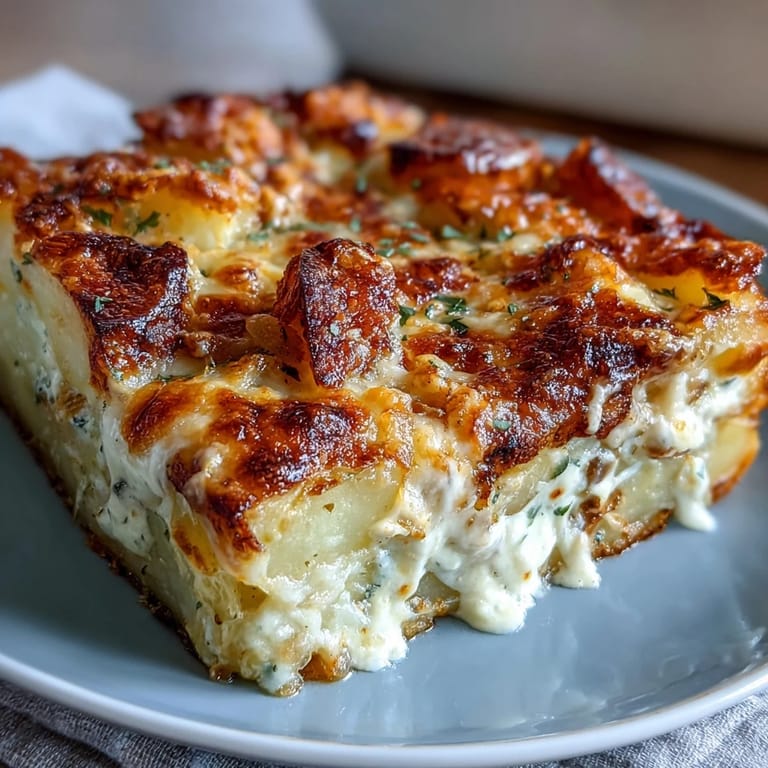
- Remove the foil and bake another 20 to 25 minutes until the top is deep golden brown and a knife pierces the potatoes with barely any resistance. The cheese should be melted and slightly crispy, with brown specks from the Parmesan.
- Rest and serve:
- Let it sit for 10 minutes before you dig in—this gives the cream time to set slightly so the first serving doesn't just pour out onto the plate. Scatter fresh chives or parsley on top if you have them, and watch it disappear.
 Save Pin
 There was a Thanksgiving when my sister brought her new partner for the first time, and I served this alongside the turkey. He went quiet after his first bite, then looked around the table with this expression of pure joy that made everyone laugh. That's when I realized this dish does something special—it makes people feel welcomed and cared for without saying a word.
Timing and Make-Ahead Wisdom
You can assemble the entire dish up to 4 hours ahead; just cover it and refrigerate, then add 10 to 15 minutes to your baking time since you're starting from cold. I've also made the cream sauce the night before and stored it in the fridge, reheating it gently before layering. The beauty of this dish is that it's flexible enough to fit into a busy kitchen schedule while still delivering something that tastes like you spent all day on it.
Variations Worth Trying
Once you understand the basic structure, this dish becomes a canvas for your own creativity. I've added thinly sliced sweet onions between the potato layers for a subtle sweetness, used sharp white cheddar instead of Gruyère on nights when I wanted something bolder, and even stirred fresh thyme into the cream sauce. The foundation is so solid that small changes only add personality rather than throwing things off balance.
Pairing and Serving Ideas
This is obviously spectacular alongside baked or glazed ham, but it's equally beautiful next to roasted chicken, beef tenderloin, or even grilled fish if you want something lighter. I once served it with a simple green salad and crusty bread for a vegetarian dinner, and nobody missed the meat—the richness was genuinely enough. The cream sauce cools as it sits, so if you're serving a crowd, bring it to the table while it's still warm enough to be silky.
- Pair it with a crisp white wine like Sauvignon Blanc or a light Pinot Noir if you're drinking red.
- Leftovers keep for 3 days in the fridge and can be gently reheated in a low oven until warmed through.
- If you're feeding vegetarians, always check that your cheeses don't contain animal rennet before serving.
 Save Pin
 This recipe has become my answer to the question, 'What should I bring?' because it always arrives looking elegant and tastes even better than it looks. It's proof that you don't need complicated techniques to create something memorable—just good ingredients, patience, and a little bit of care.
Recipe FAQs
- → What type of potatoes work best for this dish?
Yukon Gold or Russet potatoes are ideal due to their tender texture and ability to hold slices well during baking.
- → Can I substitute the cheeses used?
Gruyère can be replaced with sharp white cheddar for a different flavor profile, while Parmesan adds a nutty undertone.
- → How do I ensure the potatoes cook evenly?
Thin, even slicing and layering in a single, level layer help the potatoes cook uniformly throughout the baking process.
- → What is the purpose of baking covered then uncovered?
Baking covered keeps moisture in, allowing potatoes to soften, while uncovering at the end creates a golden, bubbly cheese crust.
- → Are there any flavor tips for enhancing this dish?
Rubbing the baking dish with a garlic clove before layering adds subtle aromatics, and thinly sliced sweet onions can be added between layers for extra sweetness.