 Save Pin
 My kitchen smelled like a wellness spa the first time I simmered this broth—ginger and turmeric steam rising like something sacred. A friend had mentioned she'd been drinking bone broth for her knees, and I became curious about turning it into something more substantial, a meal rather than a morning ritual. The idea of slow-simmering aromatics alongside nutrient-dense broth felt like kitchen chemistry, and when I tasted that first spoonful, something clicked. It tasted clean, intentional, and genuinely nourishing in a way that felt different from my usual cooking.
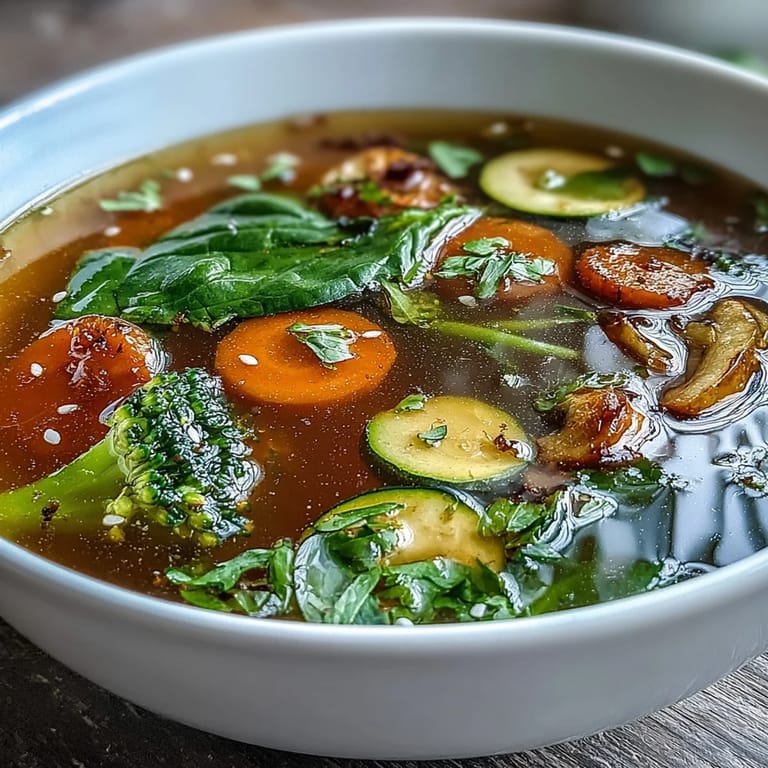
I brought this to my mum's house on a cold Sunday when she'd been dealing with creaky joints, and watching her lean over the bowl, breathing in the steam before tasting it, felt like offering something more than food. She asked for the recipe immediately, and now she texts me photos of her variations with mushrooms and bok choy. That moment taught me that nourishing dishes have a way of creating small acts of care without ever saying the words.
Ingredients
- Beef or chicken bone broth (1.5 liters): This is your foundation—use homemade if you've got time, but a quality store-bought version works beautifully and saves hours.
- Yellow onion (1 medium, quartered): The onion creates a gentle sweetness that balances the spice and earthiness of the aromatics.
- Garlic (4 cloves, smashed): Smashing rather than mincing releases more flavor into the broth and makes the cloves easier to strain out later.
- Fresh ginger (1 thumb-sized piece, sliced): Slicing lets the ginger infuse slowly without overwhelming—much more refined than grating it in.
- Fresh turmeric (1 thumb-sized piece, sliced) or ground turmeric (1 tsp): Fresh turmeric has a brighter, less bitter edge; ground turmeric is more concentrated and works fine if that's what you have on hand.
- Apple cider vinegar (2 tbsp): This isn't about sourness—it helps extract minerals from the bone broth and brightens the whole bowl.
- Black peppercorns (1 tsp whole): Whole peppercorns stay in during simmering and release their warmth gradually rather than becoming sharp.
- Sea salt (1 tsp, to taste): Add what you need as you go; the broth will concentrate as it simmers.
- Carrots (2 medium, sliced): Cut them on a slight bias so they cook evenly and look intentional in the bowl.
- Celery (2 stalks, sliced): Celery adds mineral depth and pairs beautifully with the ginger-turmeric base.
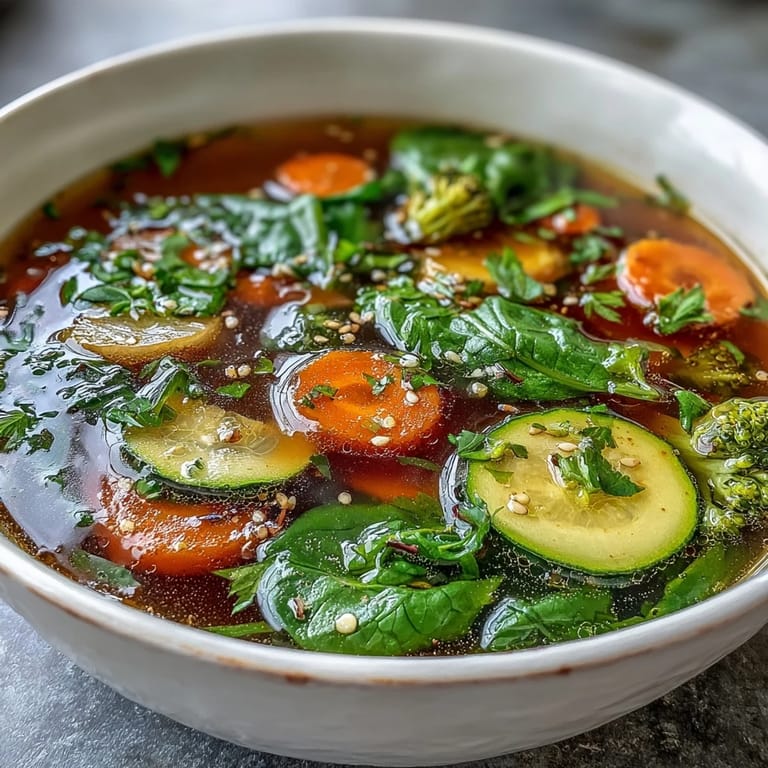
- Broccoli florets (1 cup): These stay slightly firm even with gentle cooking, keeping the bowl textured and interesting.
- Baby spinach (1 cup): Add it at the very end so it wilts just enough to become part of the broth without losing its vibrant color.
- Zucchini (1 medium, sliced): Zucchini is mild enough not to compete with the broth's warmth, and it adds subtle sweetness.
- Fresh parsley or cilantro (2 tbsp chopped): Choose based on mood—parsley is earthy and grounding, cilantro is bright and a bit herbal.
- Sesame seeds (1 tbsp optional): These add a nutty finish and a gentle crunch that lifts the whole experience.
- Lemon wedges (for serving): A squeeze at the table brightens everything and makes the anti-inflammatory properties feel even more purposeful.
Tired of Takeout? 🥡
Get 10 meals you can make faster than delivery arrives. Seriously.
One email. No spam. Unsubscribe anytime.
Instructions
- Build your flavor base:
- In a large stockpot, combine the bone broth with onion, garlic, ginger, turmeric, apple cider vinegar, peppercorns, and salt. Bring it to a gentle boil over medium-high heat—you want movement but not aggressive bubbling. Once it reaches a boil, you'll notice the broth deepening in color as the turmeric releases.
- Let it simmer and develop:
- Reduce the heat to low, cover the pot, and let it bubble quietly for 1.5 hours. This long, gentle simmer is where the magic happens—the ginger and turmeric fully infuse, and the broth becomes something richer and more complex than when you started. Your kitchen will smell warm and inviting.
- Strain for clarity:
- Using a fine mesh sieve, carefully pour the broth through to catch all the solids—the softened onion, garlic, ginger pieces, and peppercorns. Return the clear, golden broth to the pot and discard the solids. This step gives you that beautiful, clean appearance that makes the bowl feel special.
- Add hardy vegetables first:
- Add the carrots, celery, and broccoli to the cleared broth and simmer for about 10 minutes. These vegetables need a bit longer to become tender but still hold their shape. Taste the broth at this point and adjust the salt if it needs brightening.
- Finish with delicate vegetables:
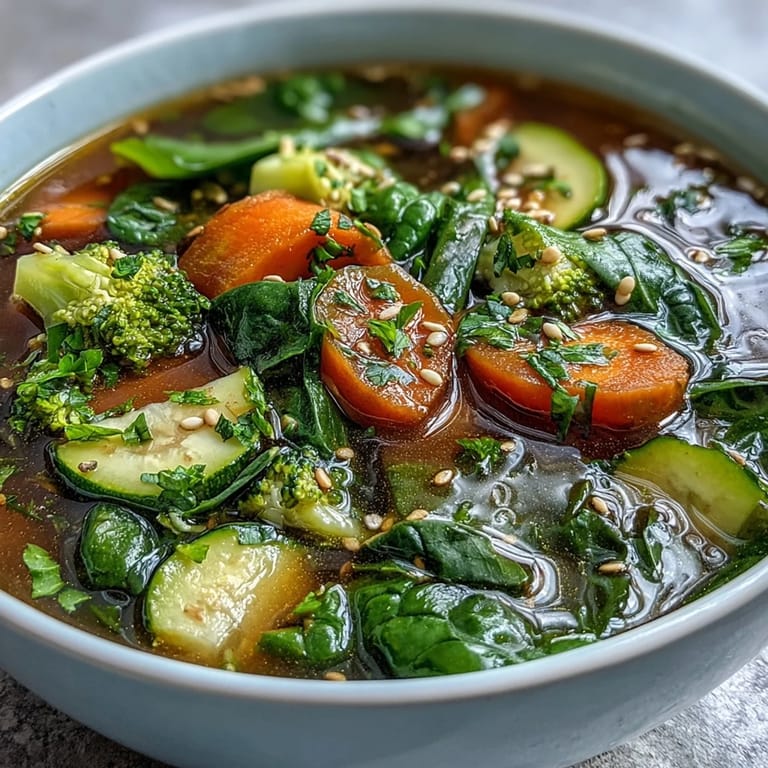
- Add the zucchini and spinach and simmer for just 2 to 3 minutes, until the spinach wilts into the broth and the zucchini is tender but still has slight firmness. This brief cooking keeps the colors vibrant and the vegetables from becoming soft.
- Serve and garnish:
- Ladle the broth and vegetables into bowls, then top each one with fresh parsley or cilantro, a sprinkle of sesame seeds if you like, and a wedge of lemon on the side. Squeeze the lemon just before eating—that brightness changes everything.
 Save Pin
 I've learned that this bowl feels most like self-care when you sit down with it slowly, letting the warmth settle into your hands and the steam clear your mind for just a moment. It's become a ritual on mornings when I feel rushed or when my body needs something gentle and grounding, and somehow that intentionality makes the nourishment feel real.
Making This Bowl Your Own
The beauty of this recipe is that it welcomes substitution without losing its essence. Swap broccoli for kale, add sliced mushrooms for earthiness, try bok choy or chard instead of spinach—the broth base is strong enough to carry whatever vegetables you're drawn to or whatever your season offers. I've made winter versions loaded with root vegetables and spring versions with lighter greens, and each one feels just as nourishing and intentional.
Making It More Substantial
If you're looking for this to be a more complete meal, shredded cooked chicken stirred in just before serving adds protein without changing the broth's character. Tofu cubes work beautifully too if you prefer plant-based, absorbing all that golden turmeric flavor. Some mornings I add a soft-boiled egg or a handful of cooked grains, turning the bowl into something that keeps me satisfied until afternoon.
Pairing and Timing
This bowl feels best on quieter mornings when you have time to sit with it, though it's equally lovely as a simple lunch or a light dinner. Pair it with herbal tea afterward if you want to extend the wellness feeling, or with a dry white wine if you're serving it as an actual meal to guests. The broth keeps in the refrigerator for up to five days, and the vegetables can be added fresh each time, so one batch becomes multiple moments of care.
- Make the broth base on a weekend and reheat portions throughout the week with fresh vegetables added.
- Keep lemon wedges and fresh herbs nearby so every bowl tastes bright and intentional.
- Trust your intuition about vegetable ratios—more broth for sipping bowls, more vegetables for heartier meals.
 Save Pin
 This broth bowl has become my answer to the question of how to cook nourishment into moments rather than just meals. Every time you make it, you're building something that tastes good and feels good, and that combination is rarer than you'd think.
Recipe FAQs
- → What makes this broth bowl collagen-boosting?
The bone broth base contains natural collagen from slow-simmered bones, which supports joint health, skin elasticity, and gut healing. The apple cider vinegar helps extract these beneficial compounds during cooking.
- → Can I make this vegetarian?
Yes! Substitute the bone broth with high-quality mushroom broth or vegetable broth. Mushroom broth provides a rich, umami flavor and contains beneficial compounds that support overall wellness.
- → How long does the broth keep in the refrigerator?
The finished broth bowl will keep for 4-5 days in an airtight container in the refrigerator. The flavors often develop and improve after a day or two. Reheat gently on the stovetop.
- → Can I freeze this broth bowl?
Absolutely! Freeze individual portions in freezer-safe containers for up to 3 months. Leave a bit of space at the top as liquids expand when frozen. Thaw overnight in the refrigerator before reheating.
- → What vegetables work best in this broth bowl?
The suggested vegetables—carrots, celery, broccoli, zucchini, and spinach—provide color and nutrients. You can also add bok choy, kale, mushrooms, or winter squash depending on the season and your preferences.
- → Is the apple cider vinegar necessary?
Apple cider vinegar helps extract minerals and collagen from the bones during simmering. If you don't have it, lemon juice works as a substitute. If using store-bought broth, you can omit this ingredient.