 Save Pin
 The scent of simmering minestrone takes me right back to those chilly autumn evenings when I needed something to warm both body and soul. I first attempted this soup after returning from a walking tour through Tuscany, desperate to recreate those vibrant Italian flavors. My kitchen window was fogged with aromatic steam as vegetables, beans, and herbs melded together in the pot. Even that very first attempt—imperfect as it was—convinced me that minestrone would become a staple in my cooking repertoire.
Last winter during that terrible snowstorm, I made an enormous pot of this minestrone when my neighbors lost power. We crowded around my kitchen table with mismatched bowls, steam rising from each serving as conversations flowed between slurps. The children initially eyed the floating vegetables suspiciously but were soon asking for seconds, fishing out pasta pieces with their spoons. By evening's end, the pot was empty and our spirits were full despite the howling wind outside.
Ingredients
- Olive oil: Use a good quality extra virgin olive oil for that authentic Italian foundation, I learned the difference it makes after once substituting with vegetable oil in a pinch.
- Onion, carrots, and celery: This holy trinity of Italian cooking creates the flavor base, and I've found that taking time to properly sauté them makes all the difference in the final soup.
- Zucchini and green beans: These provide lovely summer freshness, but feel free to substitute with seasonal vegetables you have on hand.
- Cannellini beans: These creamy white beans add heartiness and protein, though navy or great northern beans work beautifully too.
- Small pasta: Ditalini or elbow macaroni are traditional, but any small pasta shape creates that comforting, satisfying element.
- Vegetable broth: This forms your flavor foundation, so use homemade if possible or a good quality store-bought version with minimal additives.
- Dried Italian herbs: The combination of oregano, basil, and thyme creates that classic Italian flavor profile that makes the soup smell like a trattoria kitchen.
- Spinach or kale: Added at the end for bright color, nutrition, and a fresh contrast to the cooked vegetables.
Tired of Takeout? 🥡
Get 10 meals you can make faster than delivery arrives. Seriously.
One email. No spam. Unsubscribe anytime.
Instructions
- Create your flavor base:
- Heat olive oil in a large pot and add onion, carrots, and celery, sautéing until they begin to soften and release their aromas. Your kitchen should start filling with that wonderful savory smell that signals good things are coming.
- Add the chunky vegetables:
- Toss in garlic, zucchini, potato, and green beans, giving everything a good stir to coat in oil. The colorful medley will brighten your pot and build layers of flavor.
- Build your broth:
- Pour in tomatoes, beans, broth, herbs, and that essential bay leaf, then bring everything to a gentle boil. The liquid will begin taking on a rich, reddish hue as the tomatoes break down.
- Let flavors meld:
- Reduce heat, cover, and let simmer for about 20 minutes while the magic happens. Your patience will be rewarded as vegetables soften and flavors harmonize.
- Add the pasta:
- Stir in your pasta of choice and simmer uncovered until both pasta and vegetables reach perfect tenderness. The pasta will absorb some of the broth's flavor while cooking.
- Finish with greens:
- Remove the bay leaf, then stir in spinach or kale until just wilted. Watch as the bright green leaves add vibrant color and fresh nutrition to your creation.
- Season and serve:
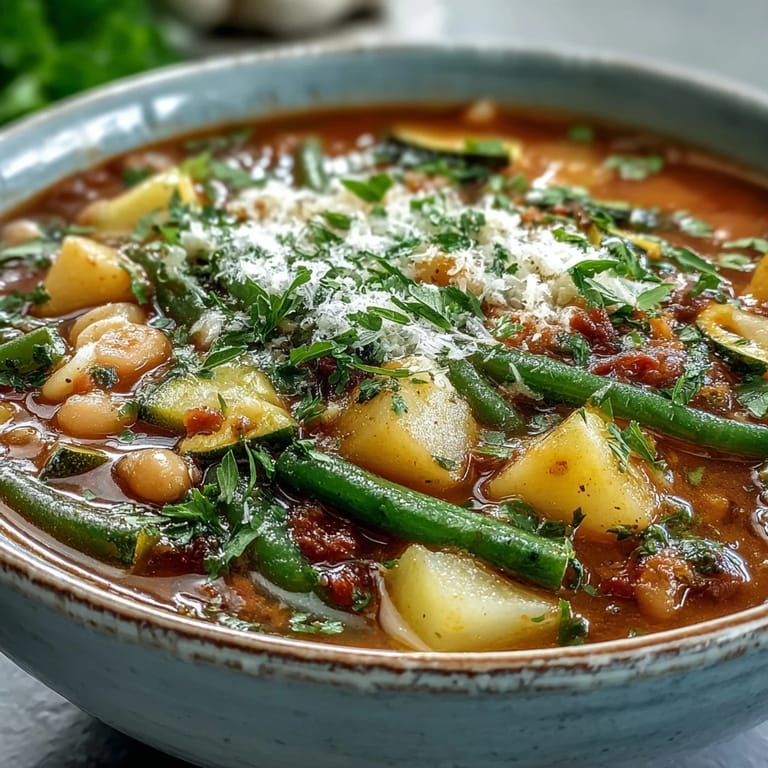
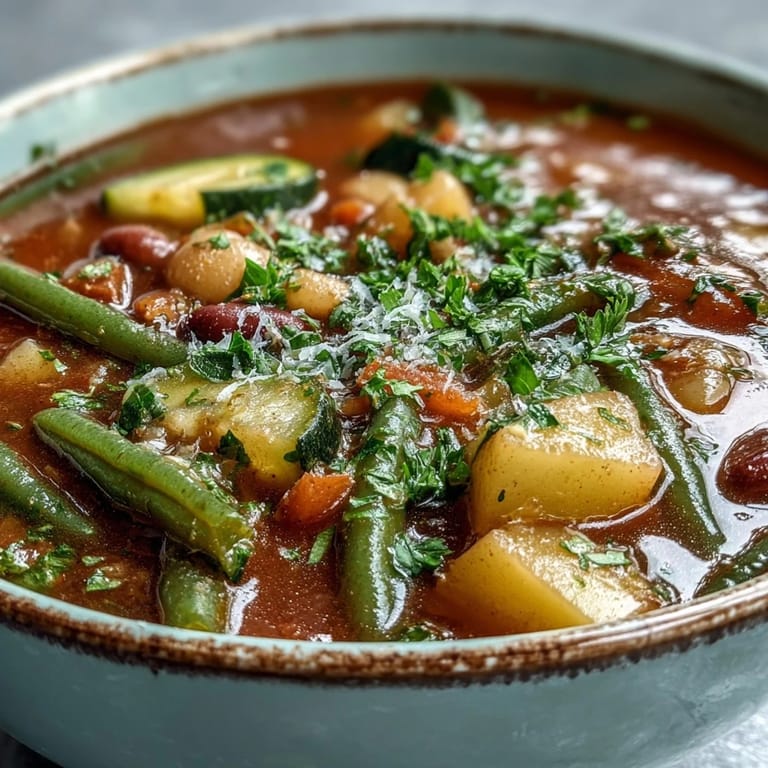
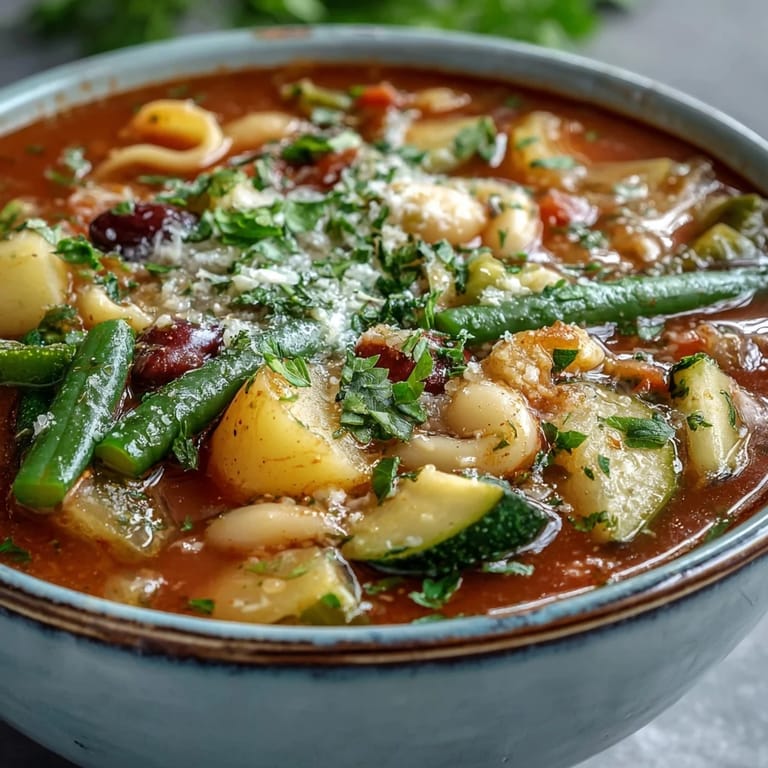
- Taste and adjust salt and pepper to your liking. Ladle into bowls, garnish with fresh parsley, and offer Parmesan for sprinkling.
 Save Pin
 One particularly memorable evening, I served this minestrone to my Italian friend Marco who had been homesick for weeks. His expression softened with the first spoonful, eyes closing momentarily as he savored the familiar flavors. We sat talking late into the night, bowl after bowl disappearing as he shared stories of his grandmother's kitchen in Naples. By evening's end, the soup had bridged cultures and distances, proving once again that food can transport us across oceans and years with a single taste.
Seasonal Adaptations
The beauty of minestrone lies in its seasonal versatility. Summer brings opportunities for fresh corn kernels, bell peppers, and garden-fresh tomatoes that burst with sunshine. Fall versions welcome butternut squash, cabbage, and heartier greens. Winter calls for root vegetables like turnips and parsnips that develop lovely sweetness when simmered. Spring invites asparagus tips, fresh peas, and tender young spinach that brighten both the bowl and your palate after months of heavier eating.
Making It Ahead
Minestrone actually improves with time as flavors meld and deepen. I often make a double batch on Sunday afternoons, enjoying the comforting process of chopping vegetables while music plays. The first serving goes straight to the table that evening, but portions stored in the refrigerator develop even richer flavor profiles by Tuesday or Wednesday. For freezing, I leave out the pasta and greens, adding them fresh when reheating for the best texture and color.
Serving Suggestions
While perfectly satisfying on its own, minestrone welcomes thoughtful accompaniments that elevate the meal. A simple green salad dressed with lemon and olive oil provides bright contrast to the soup's cooked flavors. Garlic-rubbed toast or focaccia offers perfect vehicles for sopping up the last precious drops from your bowl.
- For casual gatherings, set out small bowls of extra toppings like toasted pine nuts, torn fresh basil, or red pepper flakes so guests can customize their servings.
- A glass of medium-bodied Sangiovese or Chianti Classico complements the tomato and herb notes without overwhelming the vegetables.
- Consider serving smaller portions as a primo piatto before a simple protein main course, following the traditional Italian meal structure.
 Save Pin
 This minestrone has taught me that true comfort food doesn't need to be complicated to be spectacular. It simply needs to be made with care and served with love.
Recipe FAQs
- → Can I make minestrone ahead of time?
Yes, the flavors develop beautifully overnight. Store in the refrigerator for up to 3 days, adding a splash of broth when reheating as the pasta absorbs liquid.
- → What pasta works best?
Small shapes like ditalini, elbow macaroni, or shells hold up well during simmering. For gluten-free options, use rice or corn pasta.
- → Can I freeze this soup?
Freeze without the pasta for best results. Add freshly cooked pasta when reheating to prevent it from becoming mushy.
- → What vegetables can I substitute?
Cabbage, peas, bell peppers, or butternut squash work wonderfully. Use whatever seasonal vegetables you have on hand.
- → How do I make it vegan?
Simply omit the Parmesan cheese or use a plant-based alternative. The soup remains hearty and flavorful without dairy.
- → What's the secret to deeper flavor?
Simmer a Parmesan rind in the broth during cooking, then remove before serving. This adds umami richness without overwhelming the vegetables.