 Save Pin
 There's something about the ritual of fondue that transforms an ordinary dinner into an event. Years ago, a Swiss friend showed up at my apartment with a small pot, some cheese, and the promise that melted Gruyère and Emmental would change how I thought about communal eating. She was right—within minutes, our kitchen filled with the aroma of toasted wine and nutmeg, and suddenly everyone gathered around, forks in hand, leaning in like we were sharing a secret. That night taught me that fondue isn't really about the cheese; it's about slowing down together.
I made this for a group of friends on a freezing February evening, and halfway through, the fondue pot started bubbling a little too enthusiastically. Instead of panicking, we just laughed, turned down the heat, and discovered that moment of imperfection actually created some of the best cheese pulls of the night—those long, stretchy strands that make everyone reach for more bread. It became a running joke: we weren't trying to keep it perfect; we were just trying to keep it warm enough to share.
Ingredients
- Gruyère cheese, grated (200 g): This is the backbone—aged, nutty, and it melts with an almost silky texture that cheap processed cheese will never match. Always grate it fresh if you can.
- Emmental cheese, grated (200 g): Where Gruyère brings depth, Emmental brings sweetness and smoothness; together they create magic that neither could pull off alone.
- Dry white wine (1 cup): The wine isn't just flavor; it's the vehicle that carries the cheese into that perfect creamy state. Don't use anything you wouldn't drink.
- Kirsch, optional (1 tbsp): Cherry brandy sounds fancy, but it's really just a whisper of depth that makes people say "what is that?" when they taste it. Skip it if you can't find it, but it's worth seeking out.
- Cornstarch (1 tbsp): This tiny amount keeps the cheese from becoming gloppy or separating—it's the silent hero that stops fondue disasters before they happen.
- Garlic clove, halved: You're not actually cooking garlic into the fondue; you're just seasoning the pot itself, which is a small move that makes a real difference.
- Nutmeg, freshly grated (1/4 tsp): Freshly grated tastes like an entirely different spice from pre-ground, and this tiny amount lifts the whole dish into something elegant.
- White pepper (1/4 tsp): It's gentler than black pepper and won't create dark specks that distract from the pale, creamy beauty of the fondue.
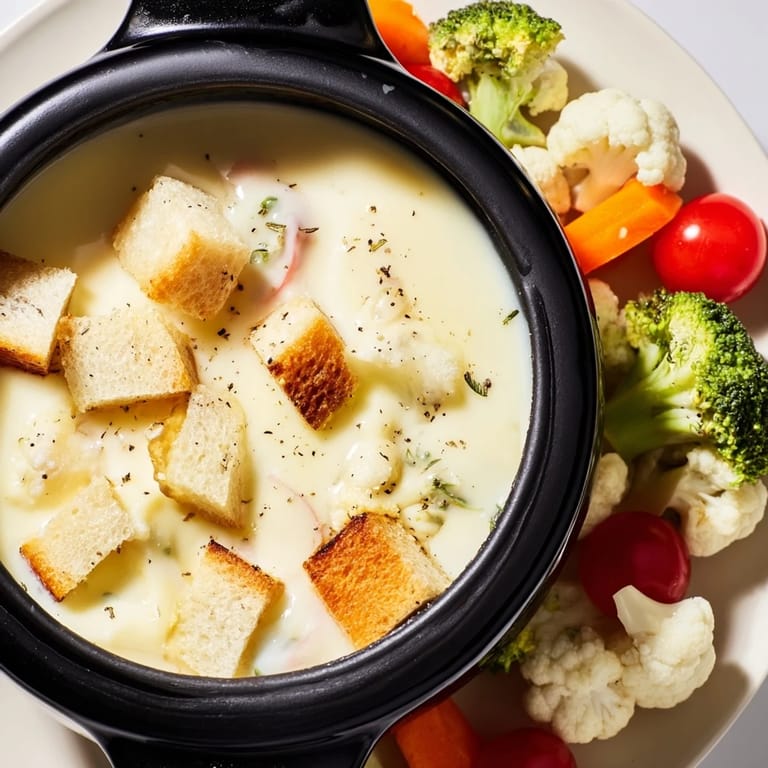
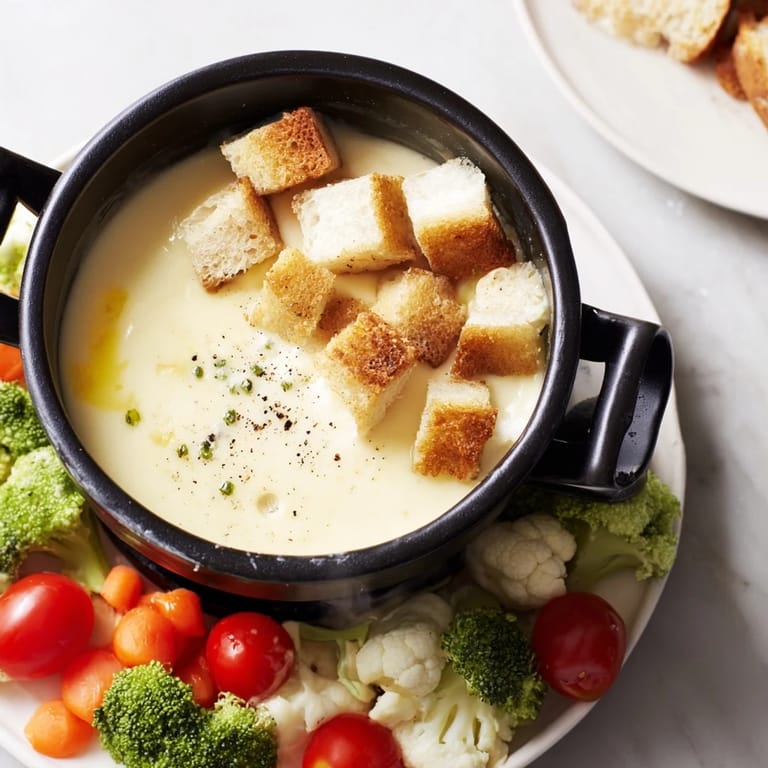
- Bread, cut into cubes: Slightly stale bread holds onto the forks better and won't fall apart in the pot; learn this the easy way instead of discovering it mid-fondue.
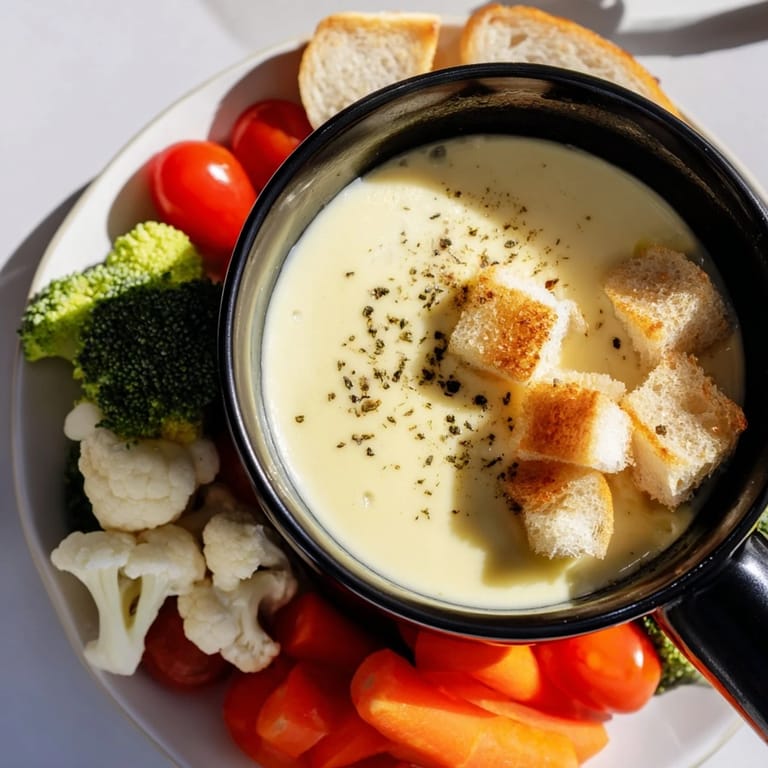
- Vegetables for dipping: Blanch the broccoli and cauliflower lightly so they stay firm enough to fork without becoming mushy.
Tired of Takeout? 🥡
Get 10 meals you can make faster than delivery arrives. Seriously.
One email. No spam. Unsubscribe anytime.
Instructions
- Season the pot:
- Cut your garlic clove in half and rub the inside of your fondue pot with it, then discard the garlic. This is aromatherapy for your cheese—you'll smell it immediately and it primes everything that comes next.
- Heat the wine gently:
- Pour the white wine into the pot and set it over medium-low heat. You want it just simmering—tiny bubbles breaking the surface, not an aggressive boil that will cook off the alcohol too fast.
- Coat the cheese:
- Toss your grated Gruyère and Emmental together with cornstarch in a small bowl. The cornstarch clings to the cheese shreds and prevents them from clumping when they hit the hot wine.
- Add cheese in stages:
- Here's where patience matters: add the cheese to the simmering wine in three or four handfuls, stirring constantly in a figure-eight motion after each addition. This figure-eight pattern keeps everything moving and prevents any cheese from settling and scorching on the bottom.
- Season and finish:
- Once all the cheese is melted and silky, add the kirsch (if using), freshly grated nutmeg, and white pepper. Stir one more time, then lower the heat to the absolute minimum—fondue should stay warm and pourable, never boiling.
- Set up for serving:
- Transfer the pot to a tabletop burner, arrange your bread cubes and vegetables on a platter within reach, and hand out fondue forks. The moment it hits the table is the moment everyone stops talking about their day and starts reaching for cheese.
 Save Pin
 The best fondue moment I ever had wasn't perfectly executed—someone accidentally dipped a tomato instead of bread, it fell into the pot, and we all held our breath wondering if cherry tomato juice would ruin everything. It didn't; instead, it added this tiny bright note that somehow made sense. That's when I realized fondue is forgiving because it's meant to be casual, meant to be shared imperfectly with people you like.
Making Fondue Feel Special
There's a reason Swiss families have been doing this for centuries—fondue forces you to be present. Everyone's eating from the same pot, there's that moment of anticipation as you pull your fork up with the cheese stretched long and thin, and there's something almost playful about how seriously people take the whole ritual. Set the table nicely, dim the lights a little, and suddenly you've created an atmosphere that would cost three times as much at a restaurant. The food matters, but the setup matters too.
Wine Pairing and Flavor Balance
The wine you cook with and the wine you drink alongside matter equally. A dry white Swiss wine like Fendant or Chasselas mirrors the flavors already in the pot and feels natural—like you're eating and drinking the same thing. If wine isn't your thing, a crisp light lager beer has the body and acidity to cut through the richness without overwhelming it. I've also found that one glass of wine during fondue somehow tastes better than anywhere else, maybe because you're relaxed and the environment is right.
Variations and Next Time
Once you've made this classic version a few times, you'll start seeing how to bend it. Some people add a handful of grated Appenzeller for a funkier, spicier edge, or swap half the Emmental for Raclette. I've even seen a tiny drizzle of white truffle oil stirred in at the last moment for something that feels completely decadent. The foundation is so solid that experimenting feels safe—you know it will work.
- For a deeper, almost smoky flavor, substitute a quarter of the cheese with aged Gruyère or Appenzeller instead.
- Keep a small pot of wine simmering nearby so you can add a splash if the fondue thickens too much as it sits.
- If you can't find kirsch, a dry sherry or even a splash of cognac brings similar depth without changing the character too much.
 Save Pin
 Fondue is the kind of food that stays with you not because it's complicated, but because of how it brings people together. Make this when you want dinner to feel like an event, when you want everyone's attention on something warm and shared and genuinely delicious.
Recipe FAQs
- → What cheeses are used for this dish?
Gruyère and Emmental cheeses provide the rich, creamy texture essential for this melting dish.
- → Can I omit the kirsch?
Yes, kirsch is optional; it adds depth but can be left out without affecting the main texture.
- → How do I prevent bread cubes from falling off the forks?
Using slightly stale bread helps maintain the shape and prevents cubes from slipping off during dipping.
- → What is the purpose of cornstarch in the preparation?
Cornstarch stabilizes the melted cheese blend, ensuring a smooth, cohesive texture without separation.
- → What liquids are involved in the melting process?
Dry white wine gently heats the cheeses, creating a delicate and balanced flavor base.