 Save Pin
 My first paella happened by accident during a late summer visit to Barcelona, where I watched a street vendor stir golden rice with the kind of patience I'd never seen in a kitchen before. He never touched it after the stock went in—just let the heat do the work while he chatted with regulars. Years later, I tried recreating that moment at home, and the smell of saffron hitting hot oil took me right back to that crowded plaza. Now when I make paella, I'm not just cooking dinner; I'm recreating that feeling of watching something transform without fussing over it.
I made this for my partner's birthday dinner once, and I remember the moment the mussels started popping open—this sound like tiny applause happening all at once. The clams followed, and there was this unspoken understanding between us that we'd nailed it. When you can actually taste the ocean in rice, you know something magical happened in that pan.
Ingredients
- Short-grain paella rice: Bomba or Arborio varieties hold their shape and soak up flavor without turning mushy—don't substitute long-grain rice or you'll lose the soul of the dish.
- Saffron threads: This is where the magic lives; steep them in warm stock to release their golden color and subtle floral bite.
- Fish or seafood stock: Homemade is best, but good quality store-bought works if you taste it first and adjust salt accordingly.
- Shrimp, mussels, and clams: Buy them the day you're cooking; smell them to make sure they're fresh and pass the sniff test.
- Bell peppers: Red and green create a visual contrast, but use whatever looks vibrant at the market.
- Smoked paprika: The Spanish kind adds a subtle warmth that regular paprika just won't deliver.
- Olive oil: Use something you'd actually taste on bread—this is too simple a dish to hide behind mediocre oil.
Tired of Takeout? 🥡
Get 10 meals you can make faster than delivery arrives. Seriously.
One email. No spam. Unsubscribe anytime.
Instructions
- Steep the saffron:
- Warm your stock gently and drop in those precious threads, letting them bloom and color the entire pot golden. This takes about 5 minutes and changes everything that happens next.
- Build the flavor base:
- Heat oil until it shimmers, then soften your onions until they're translucent and sweet. Add garlic just long enough to smell its perfume, then move on—garlic burns faster than you think.
- Add the vegetables:
- The peppers and tomato cook down into a jammy, caramelized bed that will cradle the rice. Don't rush this step; let them release their liquid slowly.
- Toast the rice:
- Coat each grain in the oil and vegetables so it soaks up color and flavor. You'll hear a gentle crackling sound when it's toasted just right.
- Pour and don't touch:
- This is the hardest part—pouring in that saffron-infused stock and then stepping away. The rice needs 20-25 minutes of undisturbed heat to develop the crispy bottom layer called socarrat.
- Arrange the seafood:
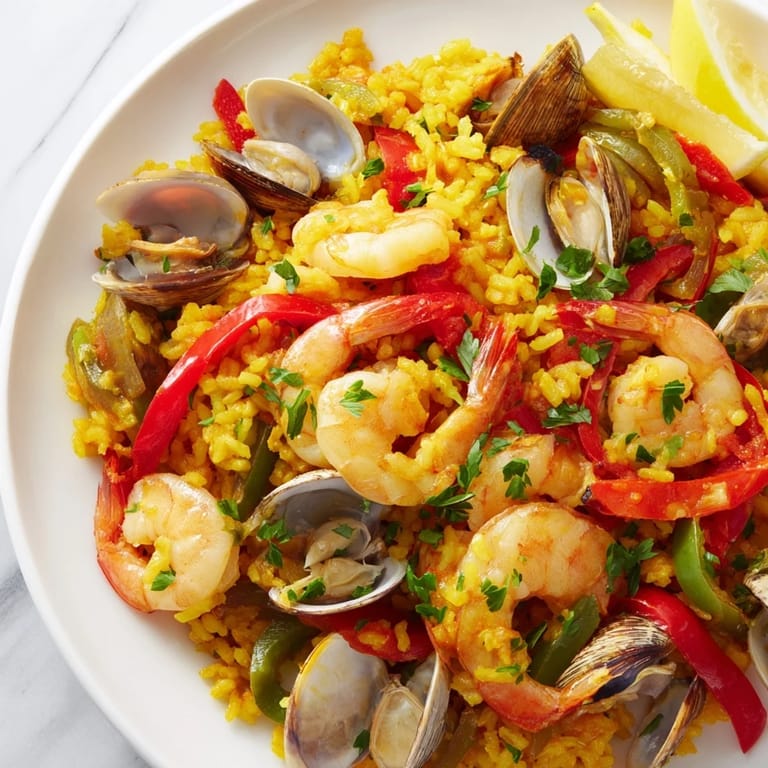
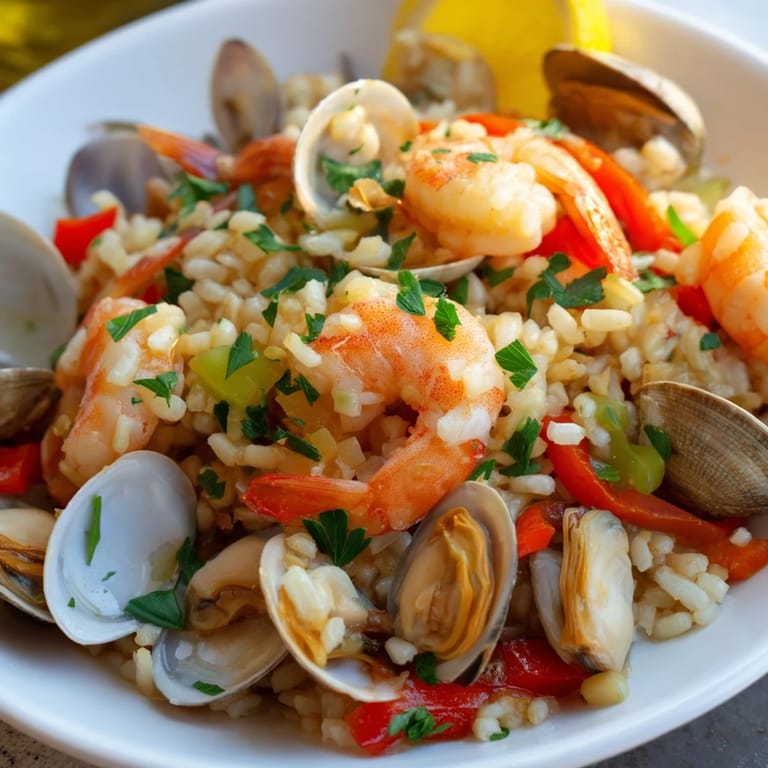
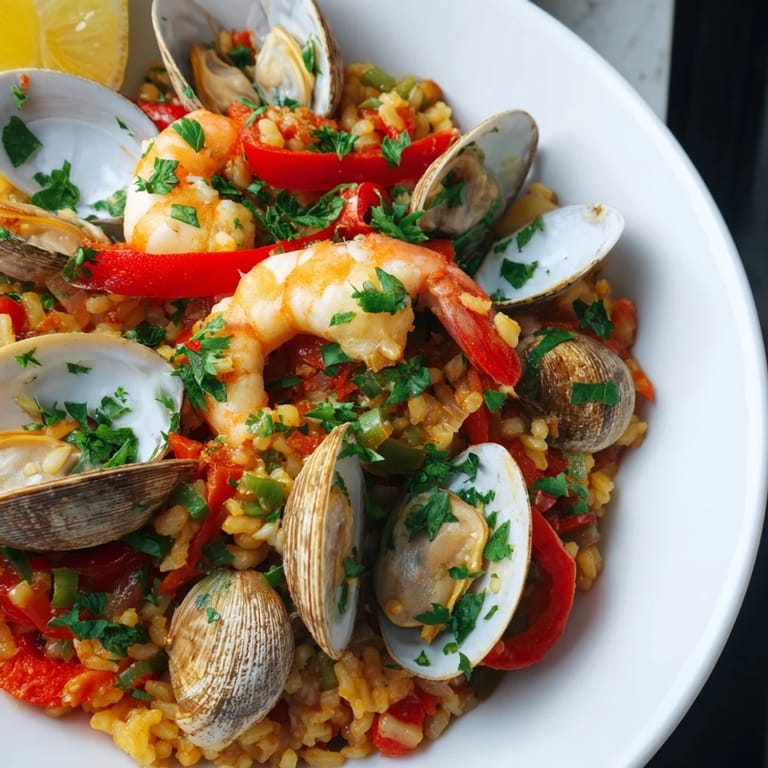
- Nestle shrimp, mussels, and clams directly onto the rice about halfway through cooking. They'll steam gently in the aromatic vapor and open just as the rice finishes.
- Rest and serve:
- Five minutes covered and untouched lets the residual heat finish cooking the rice and firms up everything perfectly. Finish with fresh parsley and lemon wedges.
 Save Pin
 There's a moment when you cover that paella and the kitchen fills with steam carrying saffron and sea salt through the air, and you realize this one-pan meal has become something ceremonial. It's the kind of food that makes people slow down and actually talk to each other.
The Right Pan Makes the Difference
A traditional paella pan with its wide, shallow shape isn't just for looks—it gives the rice maximum surface area to develop that coveted crispy bottom layer. If you don't have one, a wide skillet works, but the magic changes slightly. The wider the pan, the more socarrat you get, and that's where the flavor deepens.
Timing and Temperature Matter
Medium-low heat is your friend here because medium heat will scorch the bottom before the rice cooks through. Listen to the pan—when it starts whispering and popping gently, you know everything's working. If it goes silent, raise the heat slightly; if it roars, dial it back.
Make It Your Own
Spanish purists might argue, but a handful of frozen peas stirred in near the end adds sweetness that balances the brine of the seafood. Some cooks add chorizo for smokiness, others swap in white fish instead of shrimp. The point of paella is celebrating what you have on hand and the people eating it with you.
- A splash of dry white wine mixed into the stock adds complexity and depth.
- Smoked paprika is non-negotiable—regular paprika tastes like dust in comparison.
- Always taste the stock before you use it; oversalty stock ruins everything downstream.
 Save Pin
 Paella is less a recipe and more an invitation to slow down and watch something beautiful happen in a single pan. Serve it family-style straight from the pan, with lemon wedges and cold wine, and let people gather around it.
Recipe FAQs
- → What type of rice works best for this dish?
Short-grain rice varieties like Bomba or Arborio are ideal as they absorb liquid well without becoming mushy, ensuring a tender texture.
- → How is the saffron flavor infused into the dish?
Saffron threads are steeped in warm seafood stock before being added to the rice, imparting a distinct aroma and golden hue.
- → Can the shellfish be substituted?
Yes, calamari or firm white fish can be used alternatively, but shellfish offers the signature briny flavor.
- → Why should the rice not be stirred after adding liquid?
Stirring after adding stock disrupts the cooking process and prevents the formation of the prized crust at the bottom known as 'socarrat'.
- → How can I tell when the shellfish are cooked properly?
Cook until the mussels and clams open their shells; discard any that remain closed to avoid potential hazards.