 Save Pin
 There's something about the smell of sesame oil hitting a hot wok that stops me mid-conversation every time. Years ago, I was wandering through a night market in Bangkok, completely lost, when I stumbled into a tiny stall where an older woman was assembling rice bowls with the kind of speed and precision that made my hands look clumsy. She layered rice, chicken glazed in this glossy sauce, and vegetables so vibrant they almost glowed under the stall lights. I stood there watching for ten minutes, not eating, just observing, until she smiled and handed me a bowl anyway. That bowl changed how I think about simple meals.
I made this for my roommate on the night she got the job she'd been nervous about for months. She was too wound up to eat anything heavy, so I thought a bowl of fragrant rice, tender chicken, and bright vegetables might be the right thing. She ate it standing up in our small kitchen, and somewhere between the second and third bite, she finally smiled. She still texts me asking me to make this when she's had a day.
Ingredients
- Chicken breast or thighs, 500g: Thighs stay more forgiving if you're cooking quickly, but breasts work beautifully if you don't overcook them; cut them into pieces roughly the size of your thumb so they cook evenly and soak up the sauce.
- Toasted sesame oil, 2 tbsp: This is non-negotiable—the toasted version has a nutty depth that regular sesame oil can't touch, and it's what makes people ask for your recipe.
- Soy sauce, 3 tbsp: Use low sodium if you can because the sauce builds flavor as it cooks and you want control over the salt.
- Fresh ginger, 2 tbsp grated: The fresher the better; old ginger tastes papery and defeats the purpose of using it.
- Jasmine or short-grain rice, 250g: Jasmine has this subtle floral note that plays beautifully with the sauce, though any short-grain white rice will work in a pinch.
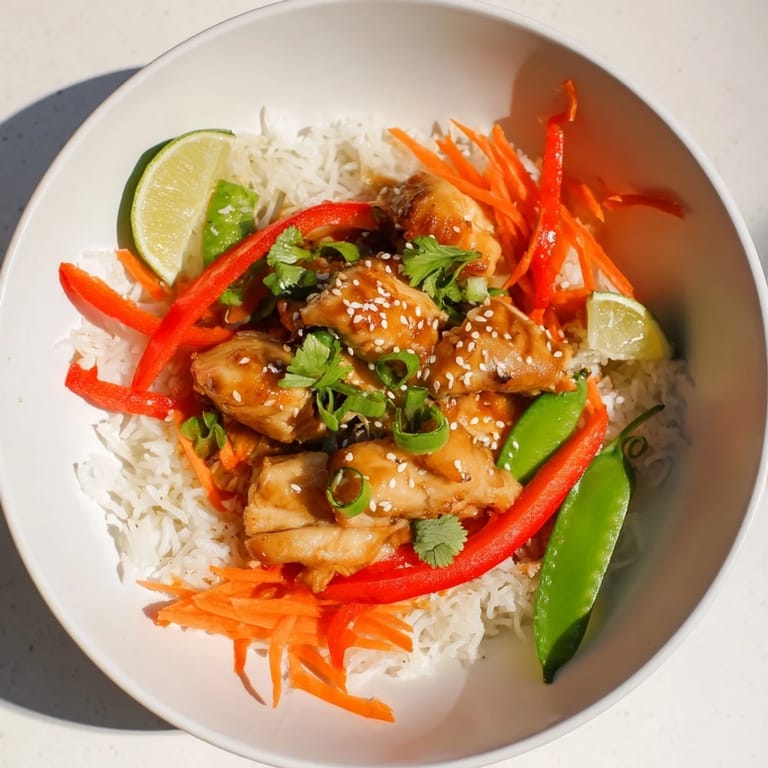
- Vegetables—carrot, bell pepper, sugar snap peas: The crispness matters here; you're not trying to soften them into submission, just warm them through so they're still snappy between your teeth.
- Spring onions, sesame seeds, cilantro, lime wedges: These aren't just garnishes—they're the final notes that turn something good into something memorable.
Tired of Takeout? 🥡
Get 10 meals you can make faster than delivery arrives. Seriously.
One email. No spam. Unsubscribe anytime.
Instructions
- Make your flavor base:
- Whisk together the soy sauce, sesame oil, rice vinegar, honey, ginger, garlic, and sriracha in a bowl until the honey dissolves and everything smells like it belongs in this meal. Set half aside for drizzling later—this reserve is your secret weapon for brightness at the end.
- Marinate the chicken:
- Toss the chicken pieces into the marinade and let them sit for 15 minutes while you prep everything else. This short window is long enough to infuse flavor without making the chicken tough.
- Cook the rice properly:
- Rinse the rice under cold water until the water runs clear; this removes starch so you get separate grains instead of a starchy clump. Bring the rice and water to a boil, cover, reduce heat, and let it simmer for 12–15 minutes until the liquid is absorbed and the rice is tender.
- Sear the chicken until it's golden:
- Heat your skillet or wok over medium-high heat and cook the marinated chicken for 5–7 minutes, stirring occasionally, until the edges are golden and the inside is no longer pink. Don't crowd the pan; if your pieces are touching shoulder to shoulder, work in batches.
- Stir-fry vegetables so they stay crisp:
- In the same pan, toss in the carrot, bell pepper, and sugar snap peas for 2–3 minutes, stirring constantly so they get hot but don't soften into mush. You want them to still have a little resistance when you bite down.
- Bring it all together:
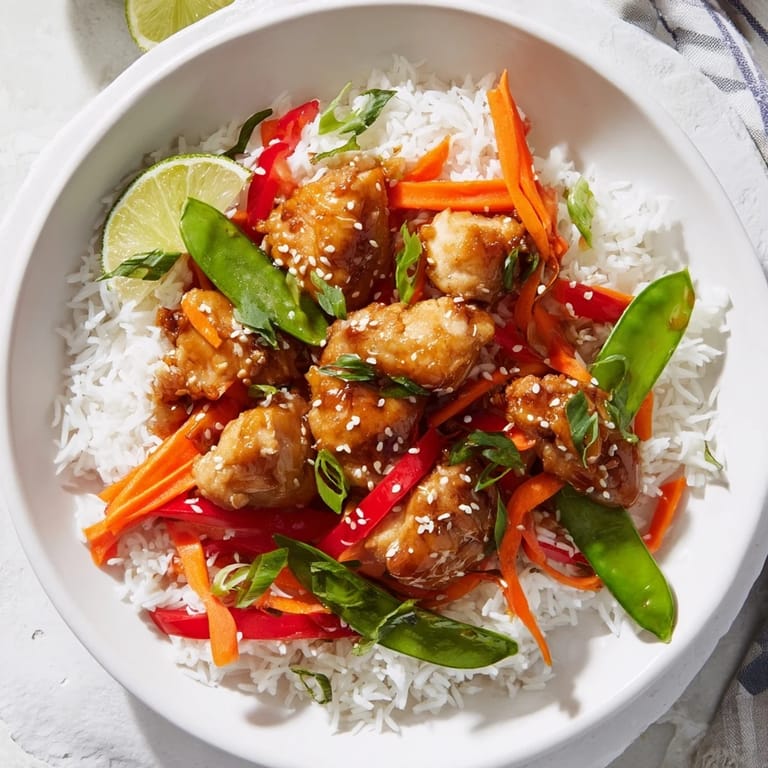
- Divide rice among bowls, top with chicken and vegetables, and drizzle with the reserved sauce—this is what makes every bite feel balanced instead of some bites being dry and others being oversauced.
 Save Pin
 My neighbor brought her five-year-old over one afternoon, and I made this bowl for them on a whim. The kid ate almost all of it, which surprised her mom who was convinced he'd pick out every vegetable. When he asked for lime wedges to squeeze over everything himself, I realized that sometimes a meal becomes less about feeding people and more about letting them feel like part of the cooking.
Building Your Own Flavor
The beautiful thing about this bowl is how adaptable it is to what you're feeling. Some days I add a beaten egg to the hot pan after the vegetables are done, letting it scramble into soft ribbons through everything. Other times I'll use honey instead of maple syrup or swap the sriracha for sambal oelek if I want a different kind of heat. The sauce is your starting point, not your ceiling.
Making It Your Own
Once you've made this a few times, you'll notice what you naturally reach for. Some people add avocado slices, some add soft-boiled eggs, some prefer edamame instead of sugar snap peas. A friend of mine adds a handful of cashews for crunch and richness, and honestly, it's brilliant. The rice and sauce are the anchors; everything else is conversation.
Timing and Weeknight Meals
The reason I come back to this bowl constantly is that it respects your time. Nothing here demands special attention or complicated technique—you're just cooking chicken, sautéing vegetables, and making rice, which are the three things you've probably done a hundred times.
- You can marinate the chicken while you prep vegetables and start the rice, so everything finishes at almost the same moment.
- If you're not hungry at 6 p.m., make the components earlier and assemble everything when you are, since cold rice and room-temperature chicken tastes perfectly fine with fresh vegetables and sauce.
- Leftovers actually improve overnight as the sauce soaks into the rice, so make extra without guilt.
 Save Pin
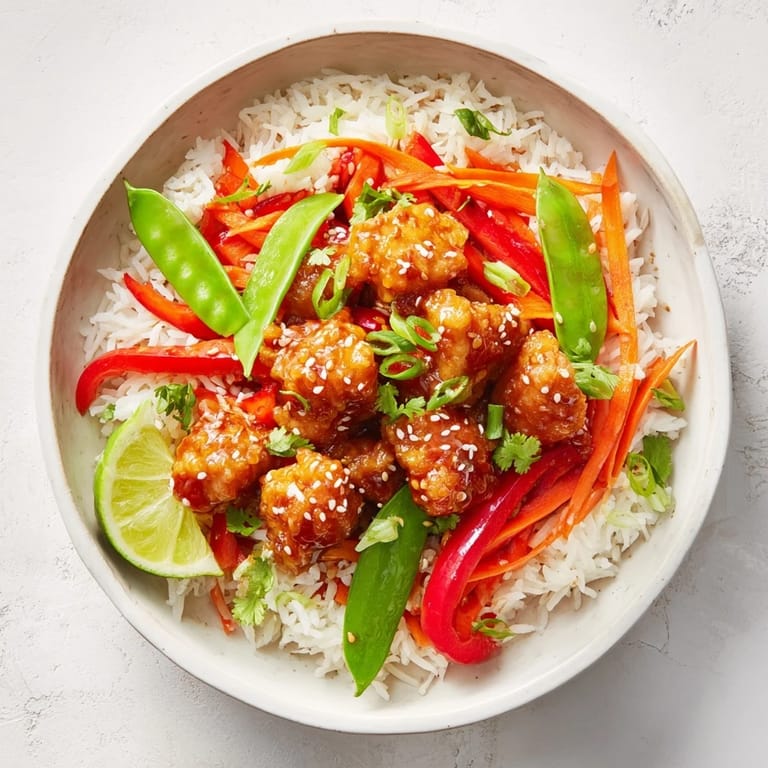
 This bowl has become my answer to so many different moments—tired Thursdays, last-minute dinners for friends, the nights when I need to eat something that tastes like it matters. It's the kind of meal that proves you don't need fancy techniques or obscure ingredients to cook something delicious.
Recipe FAQs
- → What type of rice works best?
Jasmine or short-grain white rice is ideal for its fluffy texture and ability to absorb the sesame-ginger flavors.
- → Can I substitute the chicken?
Yes, firm tofu or tempeh can be used for a vegetarian alternative without compromising flavor.
- → How long should the chicken marinate?
Marinate the chicken for at least 15 minutes to soak up the soy, sesame oil, ginger, and garlic flavors.
- → What vegetables complement this bowl?
Julienned carrots, sliced red bell peppers, and sugar snap peas provide crispness and color contrast.
- → Are there suggestions for garnishes?
Toasted sesame seeds, fresh coriander leaves, and lime wedges add texture and fresh notes.
- → Can the dish be spicy?
Adding sriracha or a chili garlic sauce to the marinade can give a subtle spicy kick if desired.