 Save Pin
 My first real bouillabaisse came not from a Michelin-starred kitchen but from a weathered fisherman's cottage outside Marseille, where his wife stirred an enormous pot with such casual authority that I understood immediately this wasn't about following rules. She taught me that bouillabaisse lives in the broth, in those moments when the saffron unfurls and the ocean seems to whisper from every spoonful. Now when I make it, I chase that same alchemy—the way humble vegetables and the day's best catch transform into something that tastes like a place, like a story.
I remember pulling this together on a rainy October evening when friends arrived unannounced, and instead of ordering takeout I found myself reaching for a bag of mussels at the market. The kitchen filled with that briny steam, the saffron turning the broth into liquid gold, and by the time everyone sat down there was this stunned silence—not because it was fancy, but because it tasted like the sea had been invited to dinner.
Ingredients
- Firm white fish fillets (monkfish or sea bass): These hold their shape under the gentle simmer, anchoring the stew with substance and a delicate sweetness that doesn't overpower the broth.
- Oily fish fillets (red mullet): The richness here is essential—it adds depth and a subtle flavor that transforms the broth into something with real character.
- Mussels and shrimp: Fresh mussels tell you immediately when they're ready by opening, and shrimp add a whisper of sweetness that balances the saffron's earthiness.
- Olive oil: Use your best—it's not just a cooking medium but a voice in the final dish.
- Fennel bulbs: Their anise-like sweetness is the backbone here, playing beautifully against the saffron without competing.
- Saffron threads: This is your investment, your promise to yourself that this meal matters; don't skip it or substitute.
- Orange zest: A small but crucial detail that lifts the entire broth with brightness and prevents it from becoming heavy.
- Fish stock or water: Stock adds richness, but I've made this with just water and good vegetables and been equally moved.
Tired of Takeout? 🥡
Get 10 meals you can make faster than delivery arrives. Seriously.
One email. No spam. Unsubscribe anytime.
Instructions
- Build your flavor foundation:
- Heat olive oil and add your onion, leek, fennel, carrot, and garlic, letting them soften gently for 8 to 10 minutes until they're tender and beginning to meld. This isn't about color—you're coaxing out their sweetness, creating the canvas everything else will rest on.
- Wake up the aromatics:
- Stir in tomatoes, orange zest, bay leaf, thyme, parsley, saffron, fennel seeds, and peppercorns, cooking just long enough for the kitchen to smell like a Provençal market. This moment matters more than you'd think.
- Deglaze and build the broth:
- Pour in the white wine and let it simmer briefly before adding your fish stock, then bring gently to a boil and reduce to a simmer for 25 minutes. This is where the magic happens—the vegetables break down, their essence becomes broth, and you'll taste something that feels centuries old.
- Strain for clarity and refinement:
- Pour everything through a fine sieve, pressing gently on the solids to coax out every last bit of flavor, then discard what remains. What you have now is pure, luminous broth that's ready for its stars.
- Bring the seafood together:
- Return the broth to a gentle simmer and add your firm white fish first, letting it cook for 5 minutes before introducing the oily fish, mussels, shrimp, and scallops. The timing here keeps everything at that perfect moment between tender and just-cooked, when flavors are brightest.
- Create the rouille:
- Whisk together egg yolk, garlic, chili, saffron-soaked water, and mustard until smooth, then add olive oil in a thin stream as if making mayonnaise. This garlicky, saffron-touched sauce is the final accent, the thing that transforms a bowl of broth into something unforgettable.
- Finish and serve:
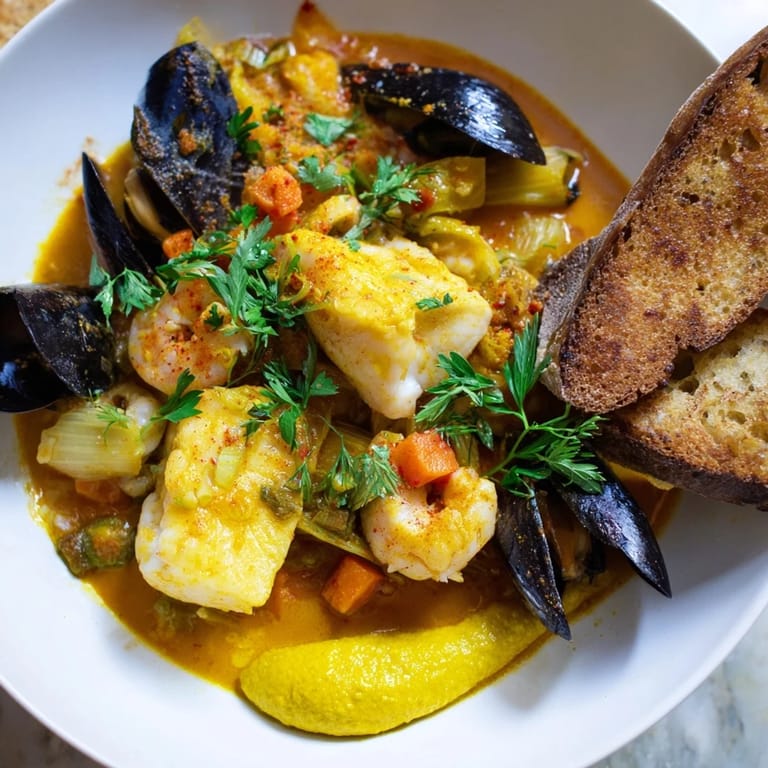
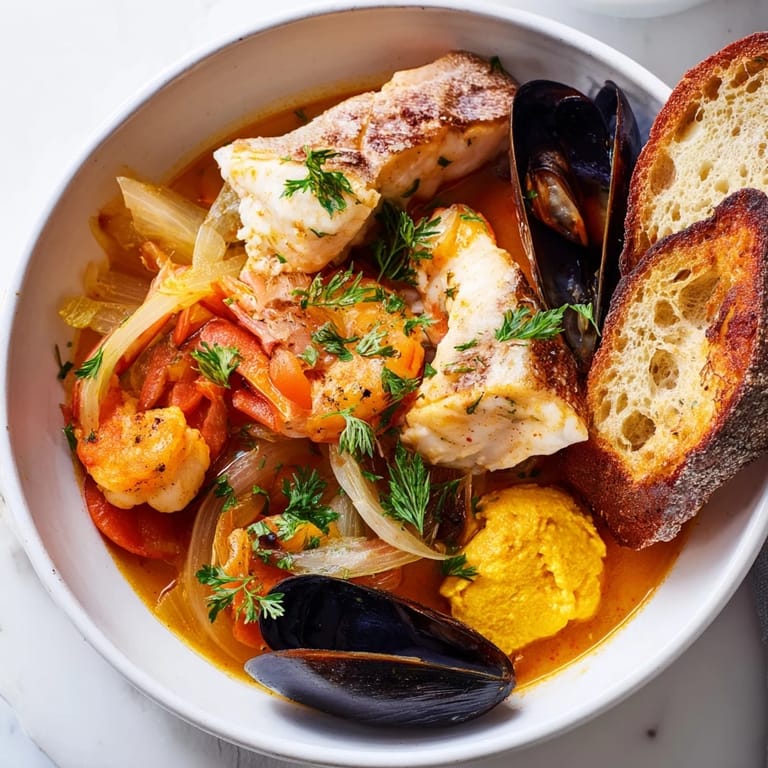
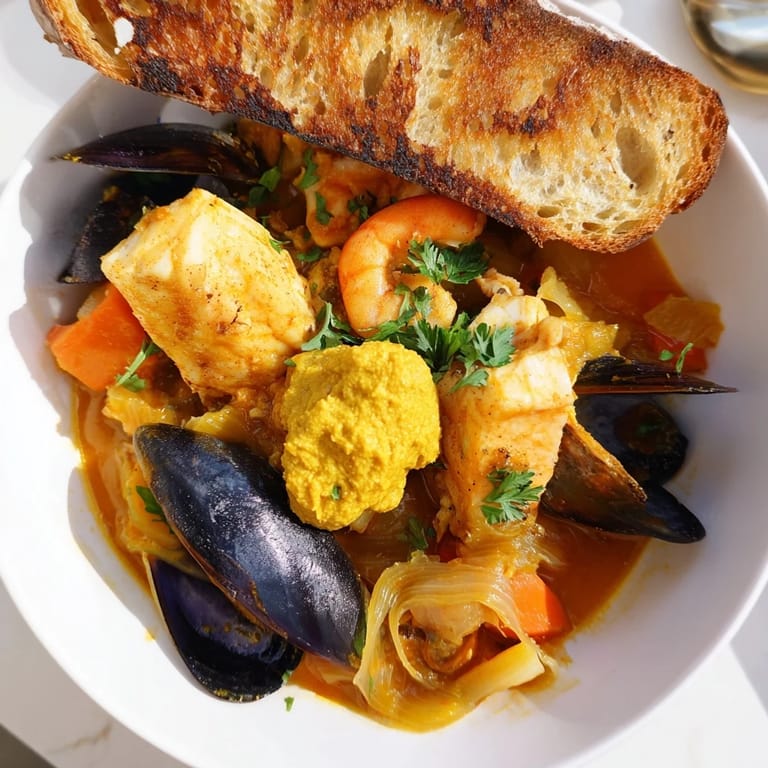
- Ladle the bouillabaisse into warm bowls, garnish with fresh parsley, and serve alongside toasted baguette slices brushed with olive oil and a generous spoonful of rouille on the side.
 Save Pin
 Years later, I still think about the way my friend looked up from her spoon that rainy evening, how she said, You did this? in a voice that made it clear she understood we'd crossed some invisible threshold together. That's when I learned bouillabaisse isn't about technique—it's about showing someone you believe they're worth the time.
The Philosophy of Bouillabaisse
Bouillabaisse arrived in Provençal kitchens not from ambition but from practicality—fishermen's wives using the catch that wouldn't sell, vegetables from the garden, the leftover wine. What emerged was something so generous and complete that it became celebrated, a reminder that the best dishes often come from making the most of what you have with genuine care. Every bowl tastes like that history, that humble beginning transformed into celebration.
Seafood Selection and Sourcing
The traditional rule is to use at least three to four types of local fish, which matters not for rules' sake but because variety creates complexity—each type of fish brings its own flavor note to the broth, and together they create something fuller and more interesting than any single fish could manage. Talk to your fishmonger, ask what arrived this morning, and build around that honesty rather than hunting for specific names.
Rouille, Wine Pairing, and Final Touches
The rouille is your secret weapon, transforming each spoonful with its saffron-touched garlicky richness, and it actually improves when made a day ahead, the flavors settling into something even more harmonious. A chilled Provençal rosé or crisp white wine alongside the bowl creates a conversation—the wine lifts the broth's richness while the rouille adds weight and drama. This is the kind of meal that deserves a moment, a table where people linger and talk, where the bread soaks up every last precious spoonful of broth.
- Make the rouille ahead if time is tight—it keeps beautifully for a full day and actually tastes better when the flavors have settled.
- Toast your baguette slices gently and brush them with extra-virgin olive oil, treating them as more than just vehicles for soup.
- Serve the bouillabaisse in warm bowls and let everyone build their own experience, choosing how much rouille, how much bread, making it personal.
 Save Pin
 There's something sacred about putting a bowl of bouillabaisse in front of someone and watching them taste it for the first time. You've given them more than dinner—you've handed them a piece of Provence, a moment when the everyday becomes unforgettable.
Recipe FAQs
- → What types of fish work best in this stew?
Firm white fish like monkfish or sea bass combined with oily fish such as red mullet create a balanced texture and flavor.
- → How is the saffron used to enhance the dish?
Saffron threads are added to both the broth and the rouille, imparting a subtle floral aroma and vibrant color.
- → Can I prepare the rouille ahead of time?
Yes, the rouille can be made a day in advance and refrigerated until ready to serve.
- → What is the purpose of straining the broth?
Straining removes vegetable solids to create a clear, flavorful base for the seafood without heaviness.
- → How should I serve the dish for an authentic experience?
Serve the stew hot with a spoonful of rouille and toasted baguette slices brushed with olive oil for dipping.
- → Are there any suggested wine pairings?
A chilled Provençal rosé or a crisp white wine complements the seafood and saffron notes wonderfully.