 Save Pin
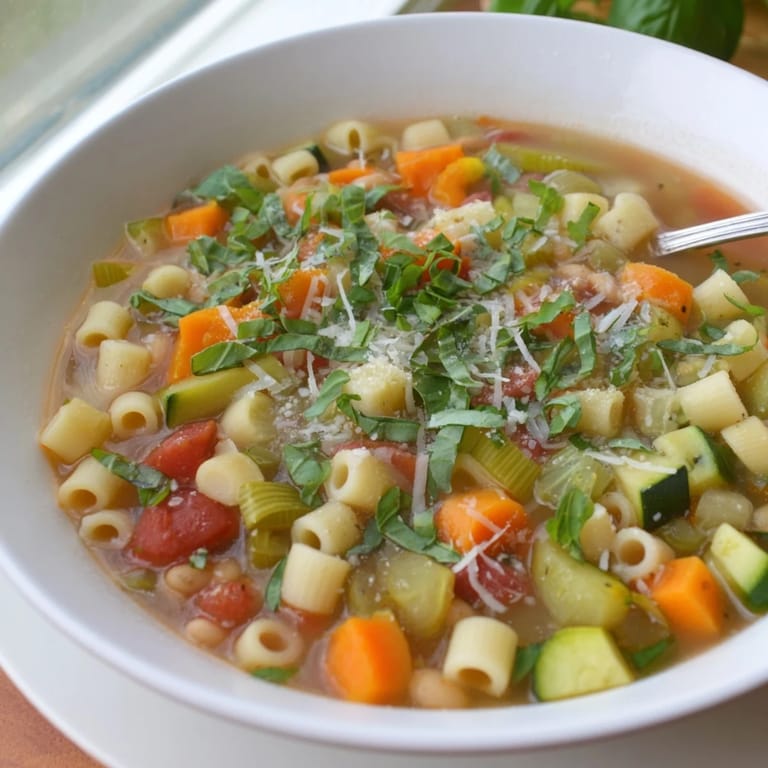
 The first time I made minestrone was during a rainy weekend when my vegetable drawer was overflowing with odds and ends. I had been putting off grocery shopping and decided to just throw everything into a pot with some canned beans and pasta. That impulsive soup ended up being better than any restaurant version I had ever tasted, and my roommate actually asked if I could make it every week.
Last winter, my neighbor came over shivering from walking her dog in the snow. I ladled this soup into mismatched bowls and we sat at my kitchen table watching steam curl up from our spoons. She said it was exactly what her Italian grandmother used to make, which might have been the best compliment I have ever received in my kitchen.
Ingredients
- Olive oil: Creates the foundation for sautéing your aromatics, so use a good quality one
- Onion and garlic: These build your flavor base, so do not rush them
- Carrots and celery: The classic mirepoix that gives the soup its savory depth
- Zucchini and potato: Potato adds body while zucchini brings freshness
- Green beans: Add a satisfying crunch that holds up beautifully in the simmer
- Diced tomatoes: The juices create a rich, tomatoey broth
- Vegetable broth: Use a good quality one or homemade if you have it
- Water: Thins the broth without overwhelming the vegetables
- Cannellini beans: Creamy white beans that make this soup truly satisfying
- Small pasta: Ditalini or elbow macaroni works perfectly here
- Dried oregano and basil: Your classic Italian herb combination
- Bay leaf: Adds a subtle herbal depth to the simmering broth
- Salt and pepper: Essential for bringing all flavors together
- Fresh parsley and basil: Stir these in at the end for bright, fresh flavor
- Parmesan cheese: The salty, umami finish on top
Tired of Takeout? 🥡
Get 10 meals you can make faster than delivery arrives. Seriously.
One email. No spam. Unsubscribe anytime.
Instructions
- Sauté the aromatics:
- Heat olive oil in your large pot over medium heat, add the chopped onion and garlic, cook until they turn fragrant and translucent
- Soften the vegetables:
- Add carrots, celery, zucchini, potato, and green beans to the pot, sauté for 5 to 6 minutes until they start to soften
- Build the broth:
- Pour in diced tomatoes with their juices, vegetable broth, water, oregano, basil, bay leaf, salt, and pepper, bring everything to a boil
- Simmer the base:
- Reduce heat to low, cover the pot, let it simmer gently for 15 minutes
- Add beans and pasta:
- Stir in cannellini beans and pasta, continue simmering uncovered for 10 to 12 minutes until everything is tender
- Finish with fresh herbs:
- Remove the bay leaf, stir in fresh parsley and basil, adjust the seasoning to your taste
- Serve it up:
- Ladle into warm bowls and top with grated Parmesan if you like
 Save Pin
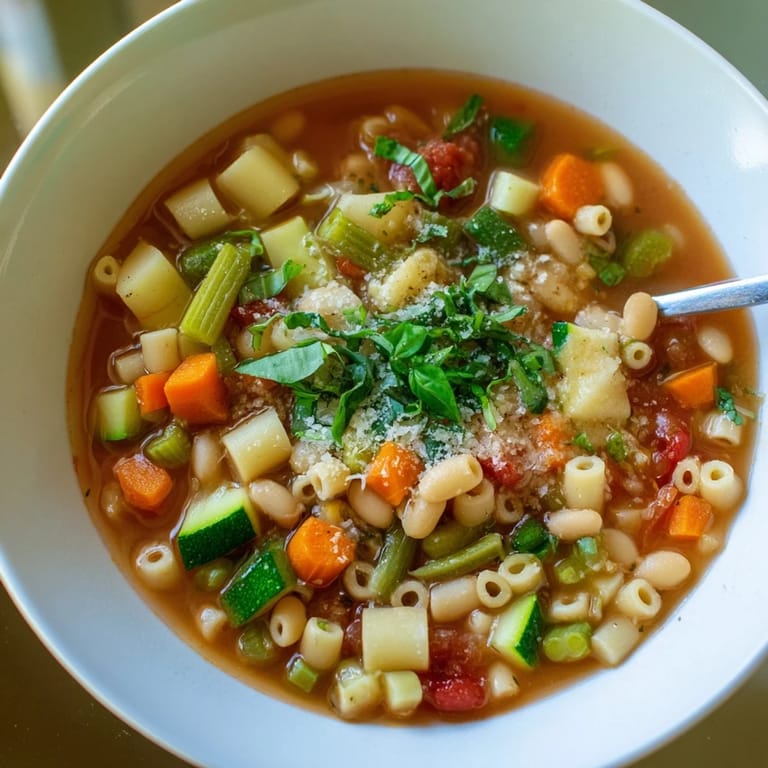
 Something magical happens when you let minestrone bubble away on the stove. The whole kitchen starts smelling like an Italian grandmother is cooking nearby, and suddenly a simple Tuesday dinner feels like a special occasion.
Making It Your Own
I have learned that minestrone is beautifully forgiving. Use whatever vegetables you have on hand or whatever looks fresh at the market. The technique matters more than the exact ingredients.
The Pasta Secret
Cooking the pasta directly in the soup rather than boiling it separately gives you starch that thickens the broth naturally. Just keep in mind that the soup will continue to thicken as it sits.
Perfect Pairings and Variations
This soup welcomes endless adaptations while staying true to its Italian soul. The best part is how well it pairs with simple sides and how easily it accommodates different dietary needs.
- Crusty bread for dunking is absolutely essential
- A glass of red wine transforms this into a proper dinner
- Add a handful of spinach in the last two minutes for extra nutrition
 Save Pin
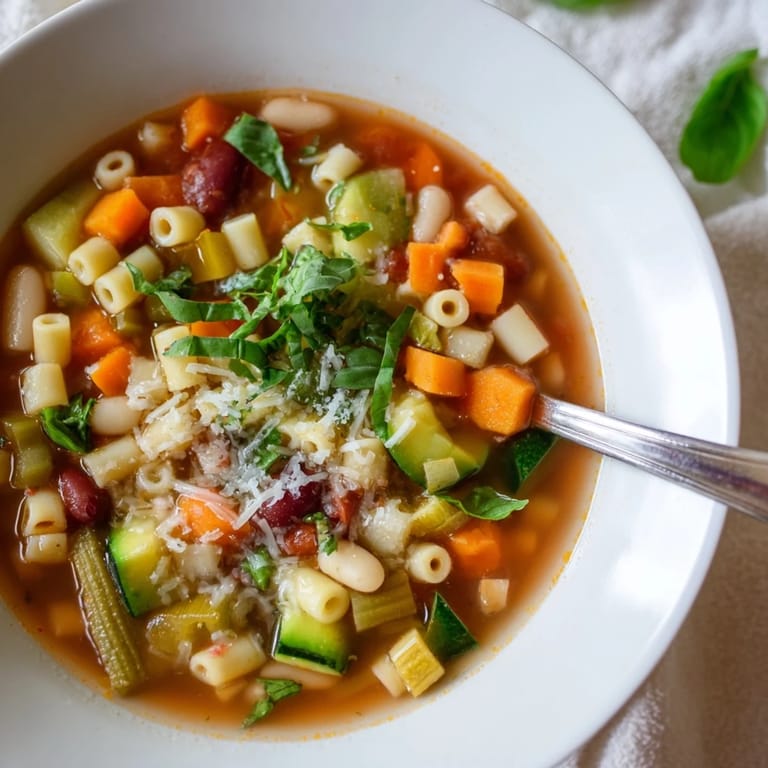
 There is something deeply satisfying about a soup that makes the whole house feel cozy. This minestrone has become my go-to for rainy days, sick friends, or just when I need a bowl of comfort.
Recipe FAQs
- → What vegetables work best in minestrone?
Classic minestrone includes carrots, celery, zucchini, potatoes, and green beans. You can easily substitute based on seasonality—try spinach, kale, cabbage, or Swiss chard. The key is using firm vegetables that hold their shape during simmering.
- → Can I make minestrone ahead of time?
Absolutely. This minestrone actually tastes better the next day as flavors meld together. Store in the refrigerator for up to 4 days. Note that pasta will continue absorbing liquid, so you may need to add extra broth when reheating.
- → What pasta shapes are traditionally used?
Small pasta shapes like ditalini, elbow macaroni, shells, or tubetti work beautifully. These small sizes cook evenly and fit perfectly on a spoon. If you prefer gluten-free options, use rice-based or chickpea-based pasta in similar small shapes.
- → Is minestrone suitable for freezing?
Yes, minestrone freezes well for up to 3 months. For best results, slightly undercook the pasta before freezing, as it will continue cooking when reheated. Cool completely before storing in airtight containers, leaving some space for expansion.
- → How can I add more protein to this soup?
The cannellini beans already provide 10g protein per serving. For extra protein, add pancetta or bacon while sautéing the aromatics, stir in shredded chicken, or top with extra Parmesan. You can also double the beans or add Great Northern beans for variety.
- → What should I serve with minestrone?
Crusty Italian bread or garlic bread is perfect for soaking up the flavorful broth. A simple green salad with balsamic vinaigrette complements the hearty soup. For a complete Italian meal, pair with a glass of Chianti or your favorite red wine.