 Save Pin
 There's something almost meditative about standing over a pot of risotto, wooden spoon in hand, watching the rice gradually absorb each ladle of broth like it's breathing. I discovered this dish on a rainy October evening when a friend brought over a container of wild mushrooms from a farmers market, and I had nothing but Arborio rice and determination in my pantry. What started as an improvisation turned into the kind of meal that makes you understand why Italians spend forty minutes stirring instead of rushing through dinner.
I made this for my partner one night when we both needed comfort food but wanted something that felt like a celebration. Halfway through stirring, they wandered into the kitchen drawn by the smell, and we ended up talking for the entire cooking time, sharing the spoon and stealing tastes. That's when I realized risotto isn't really about the rice—it's an excuse to slow down and be present for forty minutes.
Ingredients
- Arborio Rice (1 ½ cups): This short-grain rice is essential because it releases starch gradually, creating that signature creamy texture without becoming mushy. Substitute only if you absolutely must, but the result won't be the same.
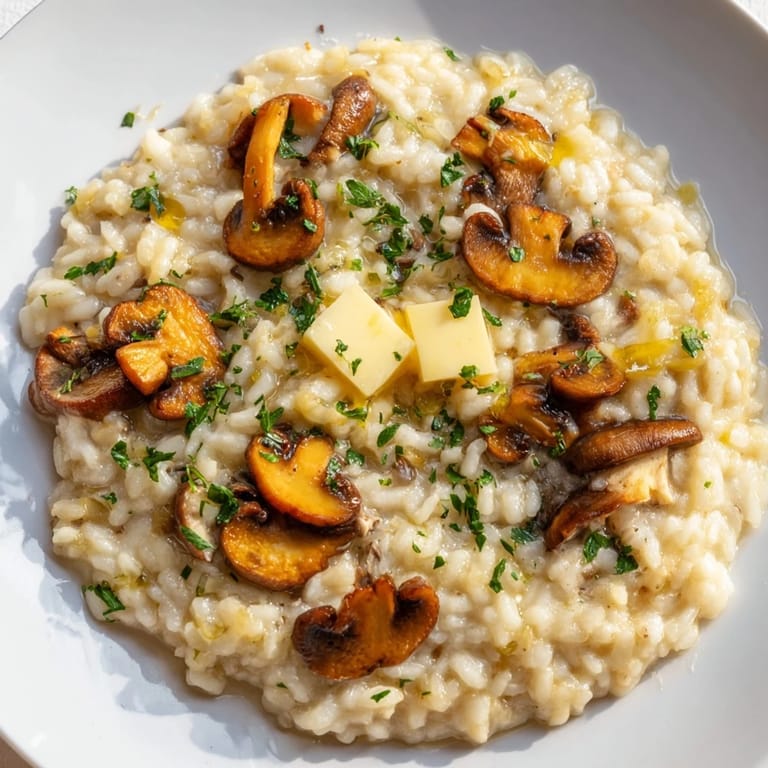
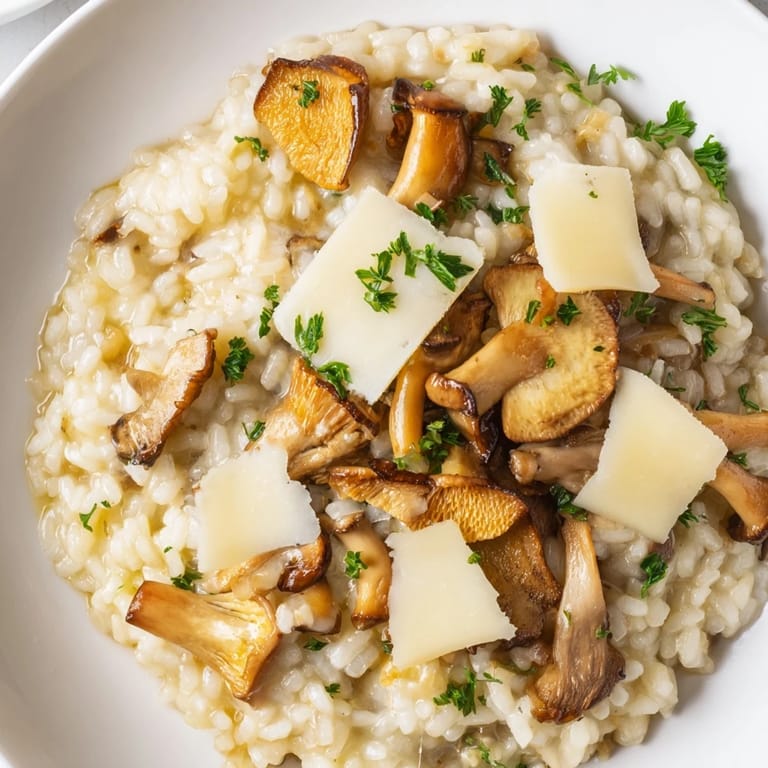
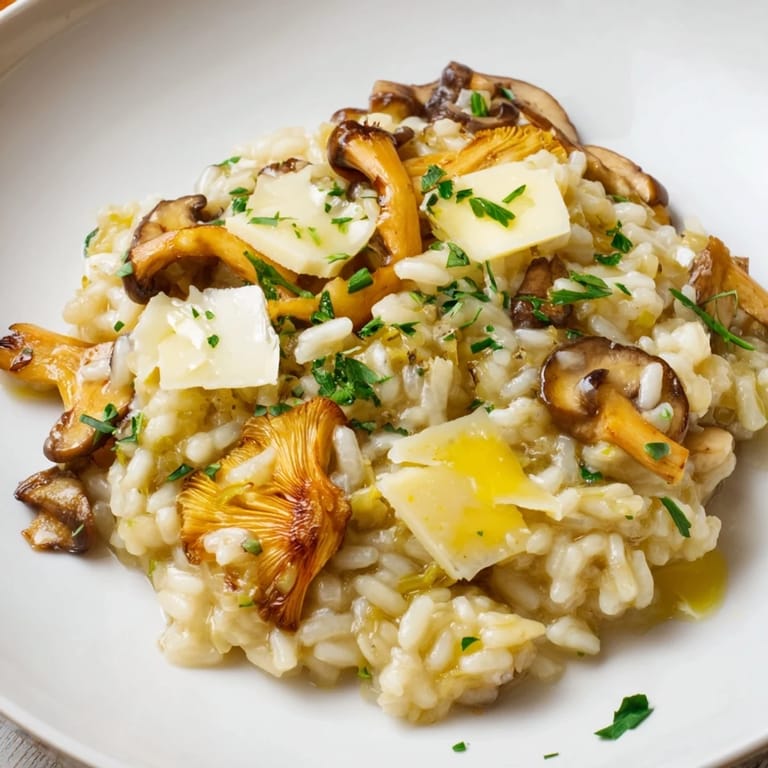
- Mixed Wild Mushrooms (400 g): Cremini, shiitake, and porcini together create layers of umami that make this dish sing. Slice them thick enough to hold their shape but thin enough to cook through in minutes.
- Vegetable Broth (5 cups): Warm broth is non-negotiable—cold broth will shock the rice and disrupt the cooking process. Keep it gently simmering in a separate pot.
- Yellow Onion and Garlic: The aromatic base that builds flavor from the first sizzle in the pan.
- Dry White Wine (½ cup): The acidity brightens everything and prevents the dish from tasting flat. Don't skip it or substitute with vinegar.
- Parmesan Cheese (¾ cup grated): Freshly grated is crucial—pre-shredded contains anti-caking agents that prevent the cheese from melting smoothly into the rice.
- Cold Butter (4 tbsp total): The final knob of cold butter stirred in at the end is what creates that luxurious, glossy finish. This technique is called mantecatura.
- Fresh Parsley and Seasoning: Parsley adds a fresh note at the end, while salt and pepper are your volume controls for fine-tuning taste.
Tired of Takeout? 🥡
Get 10 meals you can make faster than delivery arrives. Seriously.
One email. No spam. Unsubscribe anytime.
Instructions
- Sauté the Aromatic Base:
- Warm the olive oil and butter together over medium heat, then add your finely chopped onion. You're looking for that transparent, slightly softened stage after three to four minutes—it should smell sweet and caramelized at the edges. Add the minced garlic and cook for just a minute until fragrant; any longer and it'll turn bitter.
- Build Flavor with Mushrooms:
- Stir the sliced mushrooms into the pan and let them cook undisturbed for a few minutes before stirring. You want them to develop a golden color and release their moisture, which then evaporates and concentrates their earthy flavor. This takes five to seven minutes and fills your kitchen with a deep, savory aroma.
- Toast the Rice:
- Toast the Rice:
- Add the Arborio rice and stir constantly for one to two minutes. You'll hear it clicking gently against the pan and see each grain turn slightly translucent at the edges—this toasting creates a subtle nuttiness and helps each grain maintain its structure as it cooks.
- Deglaze with Wine:
- Pour in the white wine and stir as it sizzles and reduces. The wine will smell sharp and delicious, then gradually soften as it's absorbed into the rice. This takes a minute or two and creates a flavorful base for the broth to build on.
- Add Broth Gradually and Stir:
- Here's where patience becomes your best ingredient. Ladle in warm broth one scoop at a time, stirring frequently but not obsessively. The rice should always look creamy, not dry or soupy—wait until most of each addition is absorbed before adding the next. This takes eighteen to twenty minutes and is the meditative heart of risotto-making. Taste the rice after eighteen minutes; it should be tender but still hold a slight firmness when you bite it (this is al dente), and the overall texture should flow slightly when you shake the pan.
- Finish with Butter, Cheese, and Herbs:
- Remove the pan from heat and immediately stir in the cold butter cubes and freshly grated Parmesan. The cold butter emulsifies with the starch and cream, creating an incredibly silky texture. Fold in half the parsley, taste, and adjust salt and pepper as needed.
- Rest and Serve:
- Let the risotto sit undisturbed for two minutes—this allows the starches to set slightly so it holds its shape on the plate. Serve immediately into warm bowls, top with remaining parsley and extra Parmesan, and eat while it's still steaming.
 Save Pin
 The first time someone tasted my risotto and said it tasted like something they'd order at a nice restaurant, I realized that standing in front of a stove for forty minutes, spoon in hand, stirring and paying attention had transformed simple ingredients into something that mattered. That's the real magic of this dish.
Choosing and Preparing Your Mushrooms
The difference between okay risotto and extraordinary risotto often comes down to mushroom selection and how you treat them. I learned this the hard way after buying pre-sliced mushrooms that released all their moisture and turned gray and sad in the pan. Now I always buy whole mushrooms and slice them myself just before cooking, which means they brown properly instead of steaming. If you can find dried porcini mushrooms, rehydrate them in warm water and add that soaking liquid (strained through a fine sieve) to your broth—it adds a depth of flavor that fresh mushrooms alone can't provide. Mixed varieties matter too; the earthy cremini, the woodsy shiitake, and the rich porcini each contribute something different to the final taste.
The Broth Strategy
Many home cooks underestimate how important warm broth is to risotto success. Cold broth added to hot rice causes the temperature to drop suddenly, which disrupts the even cooking of the grains and can result in rice that's creamy on the outside but hard in the center. I keep my broth in a separate pot at a gentle simmer the entire time I'm cooking the risotto, then ladle it in gradually while stirring. This consistency in temperature and the slow, steady addition of liquid is what creates that signature risotto creaminess without any cream at all.
Wine, Cheese, and the Final Moments
The quality of your wine, Parmesan, and butter matters more at the end of risotto-making than at any other point because they're not cooked down—they're tasted directly. Use a wine you'd actually drink, grate your Parmesan fresh from a wedge, and use real butter, not margarine. The final step of stirring in cold butter and cheese is called mantecatura in Italian, and it's what transforms the dish from simply good into silky and luxurious. If the risotto seems too thick after sitting for those two minutes before serving, add a splash of warm broth and stir to loosen it again.
- Taste and season aggressively at the end; risotto that's under-seasoned feels flat and lifeless.
- Serve immediately into warm bowls so the risotto stays at the perfect temperature and consistency.
- Leftover risotto can be chilled, then formed into patties and pan-fried into risotto cakes, which is a different but equally delicious dish.
 Save Pin
 Risotto is the kind of dish that teaches you to slow down and trust the process. Once you've made it a few times and feel the transformation happen in your hands, you'll understand why Italians have been making it the same way for centuries.
Recipe FAQs
- → Which mushrooms work best for this dish?
Mixed wild mushrooms like cremini, shiitake, and porcini provide a deep, earthy flavor and pleasant texture.
- → Can I use chicken broth instead of vegetable broth?
Yes, chicken broth can be used to add richer flavor, though it changes the dish’s vegetarian nature.
- → How do I achieve the perfect creamy texture?
Slowly add warm broth to the rice while stirring frequently, allowing each addition to absorb before adding more.
- → What role does white wine play in the cooking process?
White wine deglazes the pan and adds subtle acidity that balances richness and enhances flavor depth.
- → How important is the choice of cheese?
Freshly grated Parmesan brings a salty, nutty finish essential for balancing the creaminess of the dish.