 Save Pin
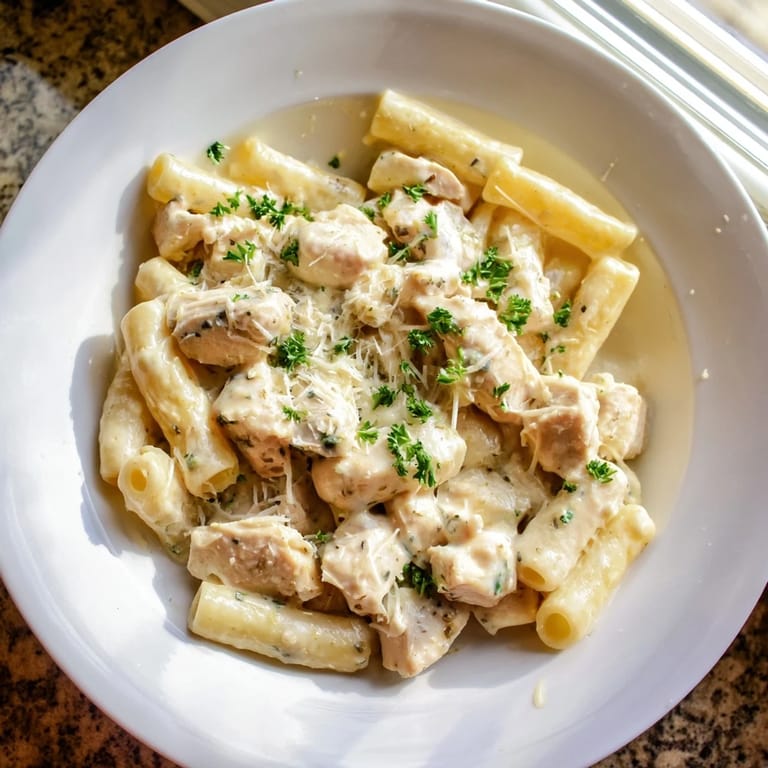
 There's something about a weeknight when you're standing at the stove, the smell of garlic hitting the pan and filling your entire kitchen in seconds. That's when I discovered this dish wasn't just about throwing ingredients together—it was about that moment when cream and Parmesan swirl into something golden and luxurious in under thirty minutes. My friend Marco called it his secret weapon for impressing people without the fuss, and he wasn't wrong. The beauty is in its simplicity: one pan, tender chicken, and a sauce that tastes like you've been simmering it all day.
I made this for my sister on a random Tuesday when she was stressed about work, and watching her face light up when she tasted it reminded me that comfort food isn't always about tradition—sometimes it's about being there for someone with a bowl of something warm and delicious. She asked for the recipe the next day, and honestly, that felt like the highest compliment.
Ingredients
- Chicken breasts: Cut into bite-sized pieces so they cook quickly and absorb all that garlic-cream goodness—no waiting around for dense chunks to cook through.
- Penne or rotini pasta: Choose a shape that catches sauce in its ridges and swirls; I've learned that thin pasta turns mushy in the broth, so stick with heartier cuts.
- Parmesan cheese: Freshly grated makes all the difference—pre-shredded cheese has anti-caking agents that make the sauce grainy instead of smooth.
- Heavy cream: This is what transforms the broth into something luxurious; don't skip it or try to replace it with milk alone.
- Unsalted butter: It gives the oil a richer flavor and helps brown the chicken properly.
- Garlic: Four cloves might seem like a lot, but it mellows as it simmers and becomes sweet, not sharp.
- Onion: Adds depth and sweetness that balances the saltiness of the Parmesan.
- Fresh parsley: The brightness at the end wakes everything up and makes it feel less heavy.
- Chicken broth: Low-sodium gives you control over the final salt level; high-sodium versions can make the whole dish taste like the ocean.
- Italian seasoning: A reliable shortcut that does the job, though you could swap in dried oregano and thyme if you prefer.
- Red pepper flakes: Optional, but a whisper of heat makes the garlic and cream even more interesting.
- Olive oil: Just for starting the pan; it works with the butter to create the right cooking temperature.
Tired of Takeout? 🥡
Get 10 meals you can make faster than delivery arrives. Seriously.
One email. No spam. Unsubscribe anytime.
Instructions
- Heat the pan and start the chicken:
- Warm the olive oil and butter together over medium-high heat until the butter foams—this means it's ready. Add the chicken pieces and season them generously; you'll know they're done when they're golden on the outside and no longer pink inside, usually four to five minutes of not moving them around too much.
- Build your base with aromatics:
- Once the chicken is out of the pan, add the chopped onion and let it soften for a couple of minutes, then add the garlic and listen for that sharp, wonderful sizzle. Cook it just until it smells incredible, not so long that it browns and turns bitter.
- Create the braising liquid:
- Pour in the chicken broth and let it come to a rolling boil—you should see active bubbles, not just steam. Stir in the uncooked pasta directly into the liquid, breaking up any clumps.
- Simmer until pasta is tender:
- Lower the heat to medium and let everything bubble gently, stirring every minute or so to prevent sticking. The magic happens when the pasta absorbs the broth while staying al dente and the liquid reduces into something creamy and concentrated, about ten to twelve minutes.
- Finish with cream and cheese:
- Turn the heat to low, then pour in the heavy cream and sprinkle the Parmesan over the top. Stir gently and watch as it transforms into a silky sauce—the residual heat melts the cheese without breaking it. Don't let it boil hard or the cream can separate.
- Bring the chicken back home:
- Add the chicken back to the pan and toss everything together, letting it warm through for just a minute or two. This is when you taste and adjust the seasoning—salt, pepper, maybe a pinch of red pepper flakes if you want some depth.
- Finish and serve:
- Stir in the fresh parsley right before plating; it keeps its bright color and flavor this way. Serve immediately in warm bowls with extra Parmesan on top.
 Save Pin
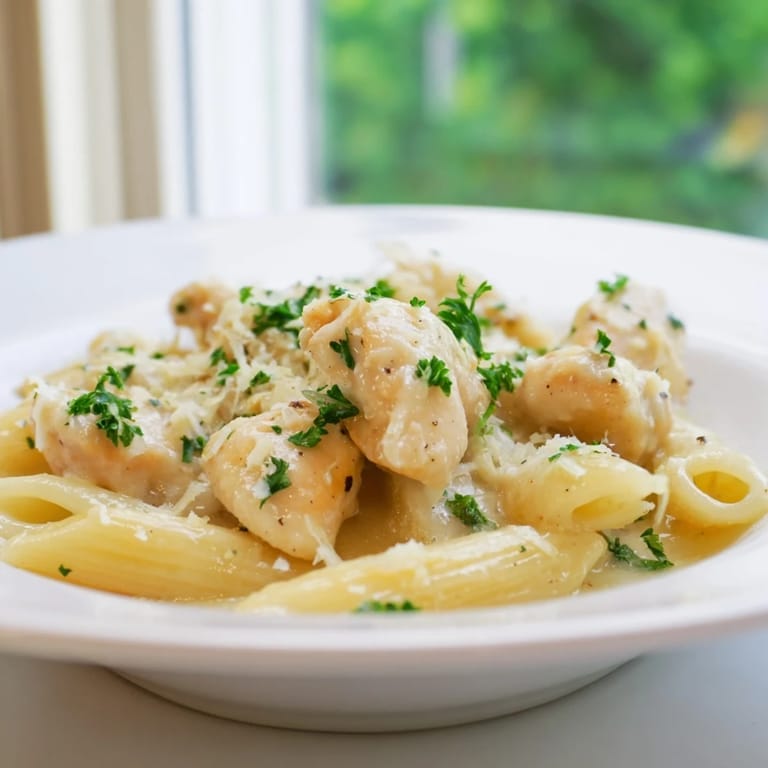
 The first time I served this to my family, my eight-year-old nephew asked for seconds before I'd even finished plating, and my mom—who always has an opinion about food—simply nodded and asked if there was more Parmesan. Sometimes the best recipes are the ones that bring people to the table without fanfare or pretense.
Why This Dish Works So Well
There's a technique hiding in plain sight here: by cooking the pasta directly in the broth instead of in separate salted water, the pasta absorbs all those savory flavors from the beginning. The starches released from the pasta also help thicken the sauce naturally, so you don't end up with a watery mess or have to use cornstarch. It's lazy cooking that actually produces better results than the traditional method.
Scaling and Substitutions
I've made this recipe with half-and-half instead of heavy cream when I was trying to eat lighter, and it works fine—you just get a thinner sauce that feels less indulgent, which is either a win or a loss depending on your mood. For vegetables, I've stirred in everything from spinach to mushrooms to sun-dried tomatoes, always adding them at the point where the pasta is almost done so they have time to warm through without falling apart.
Pairing and Serving Ideas
This pasta is rich enough to stand on its own, but a simple green salad with lemon dressing alongside it cuts through the cream beautifully. A chilled glass of Pinot Grigio or even a crisp Sauvignon Blanc makes the whole meal feel intentional rather than rushed, which is funny considering how fast you put it together.
- Pair with a bitter green salad dressed simply with olive oil, lemon, and salt to balance the richness.
- A crispy garlic bread made from leftover baguette is never wrong for soaking up extra sauce.
- Save any leftovers in an airtight container and reheat gently with a splash of broth or cream, as the pasta continues to absorb liquid as it sits.
 Save Pin
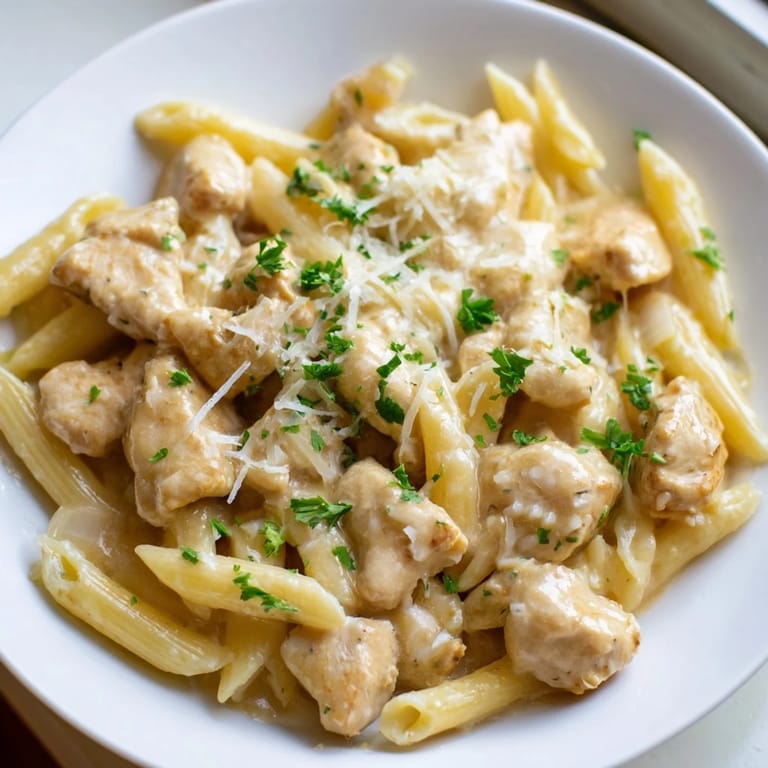
 This recipe became my go-to on nights when I wanted to feel like I'd cooked something special but didn't have the energy for complexity. It's proof that you don't need complicated techniques or obscure ingredients to make something people want to eat again and again.
Recipe FAQs
- → What type of pasta works best for this dish?
Penne or rotini pasta are ideal as their shape holds the creamy sauce well.
- → Can I substitute heavy cream for a lighter option?
Yes, half-and-half can be used for a lighter sauce, though it may be less rich and thick.
- → How do I ensure the chicken remains tender?
Cook chicken pieces over medium-high heat until golden and fully cooked but avoid overcooking to keep them juicy.
- → Can I add vegetables to this dish?
Adding baby spinach or sliced mushrooms when sautéing the onions enhances flavor and adds nutrients.
- → What seasoning balances the flavors here?
Italian seasoning and crushed red pepper flakes add a subtle herbal and spicy kick complementing the creamy sauce.