 Save Pin
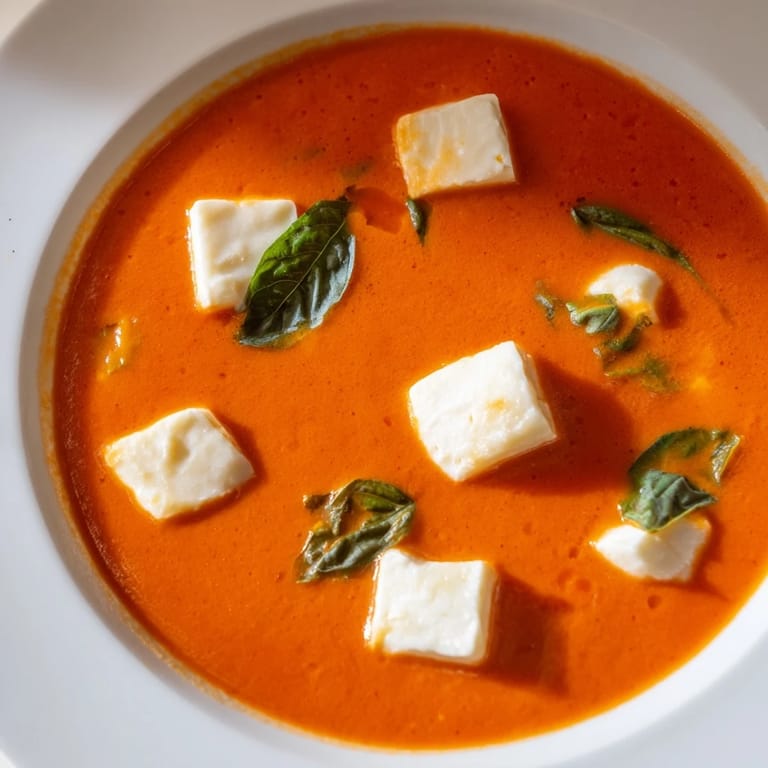
 There's something about a creamy tomato soup that brings back a specific afternoon—I was visiting my cousin in Milan, and she casually threw together this soup while we talked about everything and nothing. The mozzarella melted into the broth so naturally, creating this silky texture I'd never quite managed at home before. That day taught me that the best recipes aren't complicated; they're just honest ingredients knowing how to share space. I've made it countless times since, and it never fails to taste like someone cares.
I made this for my partner during their first week of a new job, when they came home exhausted and hungry but had no appetite for anything heavy. They ate three bowls without saying much, and when they pushed the bowl away, they just looked relieved. That's when I knew this soup did something beyond filling a stomach—it quiets the noise.
Ingredients
- Olive oil (1 tbsp): Use something decent here—the better the oil, the better the foundation of your soup tastes.
- Yellow onion (1 medium, diced): This is your first layer of flavor; don't rush browning it, as the sweetness matters.
- Garlic (2 cloves, minced): Fresh is non-negotiable; jarred garlic will betray you in a soup this simple.
- Canned whole peeled tomatoes (800 g): The juice in the can is liquid gold—never drain it.
- Tomato paste (2 tbsp): This concentrates the tomato flavor and deepens the color; cook it briefly in oil to wake it up.
- Vegetable broth (500 ml): A mild broth lets the tomatoes speak; avoid anything heavily seasoned.
- Heavy cream (120 ml): This is the silk that makes the soup feel luxurious without being heavy.
- Fresh mozzarella (200 g, diced): The cheese must be fresh, not aged; it melts into clouds rather than strings.
- Dried oregano (1 tsp): Crumble it between your fingers as you add it—activates the oils.
- Sugar (½ tsp): A tiny pinch balances the acidity of the tomatoes; don't taste it, just feel its effect.
- Fresh basil (small bunch): Tear it by hand right before serving so it stays bright and alive.
- Salt and black pepper: Taste as you go; the tomatoes and broth are already seasoned, so go gentle.
Tired of Takeout? 🥡
Get 10 meals you can make faster than delivery arrives. Seriously.
One email. No spam. Unsubscribe anytime.
Instructions
- Sauté the foundations:
- Heat olive oil in your saucepan over medium heat, then add diced onion. You'll know it's ready when the pieces turn translucent at the edges and smell sweet—usually 5 minutes, but watch them, not the clock. Stir in garlic next, and after just a minute when it smells incredible, add the tomato paste and let it cook for another minute, almost caramelizing slightly in the oil.
- Build the broth:
- Pour in your canned tomatoes and all their juice, using a wooden spoon to break them into smaller pieces as they hit the pan. Add the vegetable broth, oregano, sugar, salt, and pepper, then bring everything to a boil before immediately turning it down to a simmer.
- Let it simmer:
- Simmer uncovered for 15 minutes, stirring every few minutes so nothing sticks to the bottom. You're letting the flavors marry and the tomatoes soften completely.
- Blend to silk:
- Remove the pan from heat and use an immersion blender, pushing it gently through the soup until it's completely smooth. If using a countertop blender, work in batches and let it cool slightly first—safety matters.
- Finish with cream and cheese:
- Return the pan to low heat, then stir in the heavy cream, mozzarella, and torn basil. Cook for 3 to 4 minutes, stirring often, until the cheese has fully melted and the soup feels silky and luxurious. Don't let it boil or the cream will separate.
- Taste and serve:
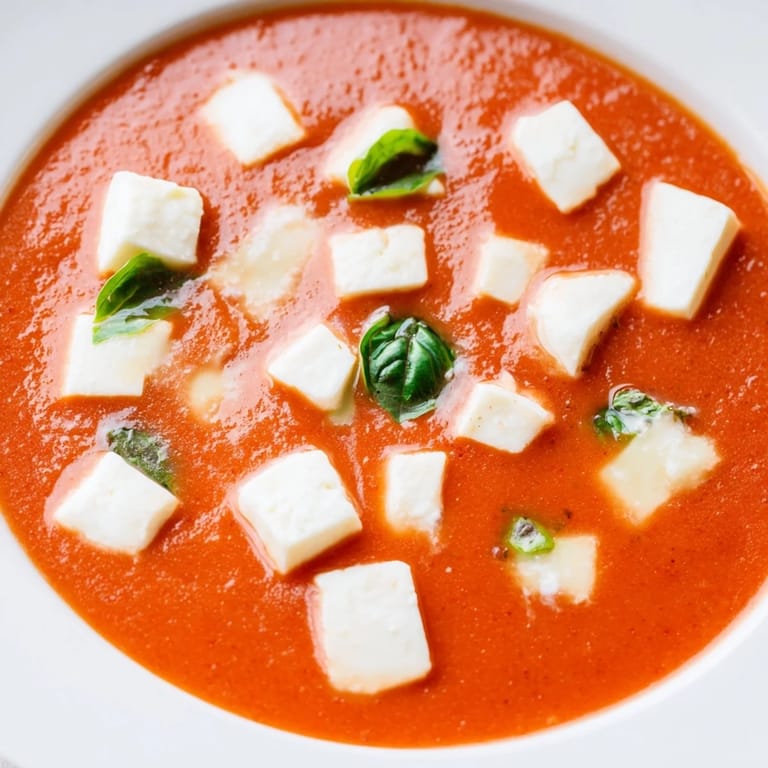
- Taste a small spoonful and adjust salt and pepper until it tastes like home. Ladle into bowls, top with extra basil leaves, and serve immediately while it's still steaming.
 Save Pin
 Years ago, I made this for someone who said they didn't like tomato soup, and watching them discover that this wasn't the canned stuff from childhood changed something. Food, I learned that day, isn't really about the ingredients—it's about invitation.
The Mozzarella Moment
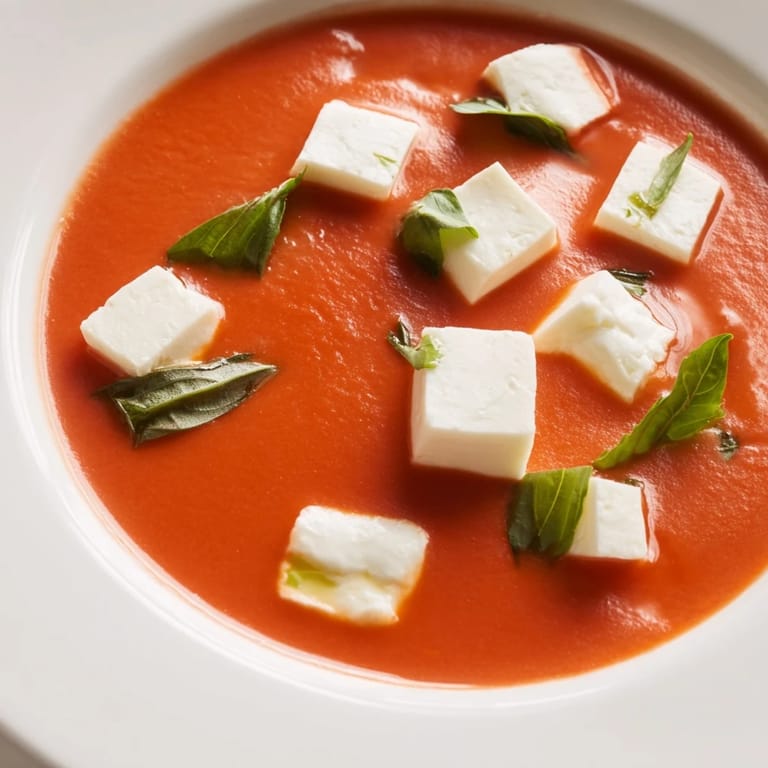
The magic happens when you add the mozzarella to warm soup and don't stir it immediately. Watch it float for a second, then slowly bloom into the broth like a sunset spreading across water. That split-second pause before stirring is where the real flavor happens—the cheese releases its milk fats and softness into every spoonful, transforming something good into something you'll crave. Fresh mozzarella is forgiving and generous, unlike aged cheeses that might clump or separate in heat.
Why Basil Changes Everything
Dried basil in the simmering stage builds a foundation, but fresh basil stirred in at the end is what makes someone close their eyes when they taste it. The heat releases its oils without destroying its brightness, so you get both the cooked depth and the fresh spark. I've learned to tear it by hand instead of chopping—it bruises less and stays more vivid. If you add it early, it turns dark and loses its voice.
Serving and Small Touches
A good crusty bread is optional but transformative—something to soak up the last spoonful from the bowl. A light drizzle of very good olive oil on top adds a whisper of richness that ties everything together. Red pepper flakes are a secret weapon if you want heat without heaviness, and a small pinch of fleur de sel on top brings the flavors into sharper focus.
- Serve immediately in warm bowls so the mozzarella stays at its creamiest.
- Leftover soup keeps for three days in the fridge and actually tastes deeper the next day.
- If you're reheating, do it gently on low heat to keep the cream from breaking.
 Save Pin
 This soup is proof that the simplest dishes often hold the most meaning. Make it when you need comfort, when you're cooking for someone you care about, or just because an afternoon calls for something warm and honest.
Recipe FAQs
- → Can I use fresh tomatoes instead of canned?
Yes, fresh ripe tomatoes can be used but may require longer cooking to soften and develop flavor.
- → What type of mozzarella works best?
Fresh mozzarella provides a creamy melt and mild taste, enhancing the soup's texture and richness.
- → Is it possible to make this soup spicier?
Adding red pepper flakes or a pinch of cayenne during cooking can bring a subtle spicy note.
- → How can I adjust the soup's thickness?
Vary the amount of broth or cream, or blend to desired smoothness for thicker or lighter consistency.
- → Can I prepare the soup in advance?
Yes, it stores well refrigerated for up to 3 days and reheats gently on the stove to preserve creaminess.