 Save Pin
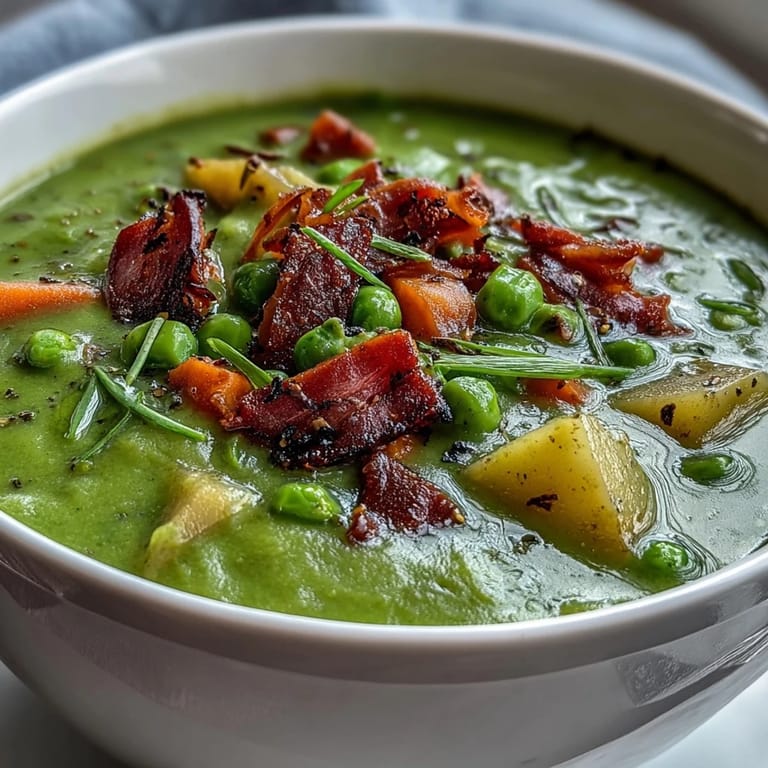
 There's something almost meditative about watching split peas soften into creamy submission, transforming from hard little pellets into the soul of a soup that tastes like it took all day to make. My kitchen smelled like heaven the first time I made this properly, with carrots and celery singing together in olive oil before the broth came in. The soup sat there on the stove, bubbling quietly, asking for nothing but patience and the occasional stir. What struck me most wasn't the cooking itself, but how the house filled with this warm, savory cloud that made everyone gravitate toward the kitchen without invitation. This is the kind of soup that reminds you why people gather around tables in winter.
I made this for my neighbor on a particularly cold February afternoon, and she showed up at my door with red cheeks and tired eyes from shoveling snow. I handed her a bowl still steaming, and she sat at my kitchen counter in her coat for twenty minutes, just quietly eating and staring out the window. She didn't say much, but she came back the next week asking if I'd make it again. Sometimes the best compliment for food isn't words, it's someone asking you to repeat the moment.
Ingredients
- Dried split green peas (2 cups, rinsed): These are your foundation, and rinsing them prevents any grit from sneaking into your finished soup; I learned this the hard way with a friend's grandmother watching silently.
- Onion, carrots, and celery (1 large onion, 2 carrots, 2 stalks): This trio is called mirepoix in fancy kitchens, but really it's just the flavor base that makes everything taste intentional.
- Garlic cloves (2, minced): Garlic added early becomes mellow and sweet, not sharp, which is exactly what you want here.
- Potato (1 medium, diced): The potato doesn't just add substance; it helps thicken the soup naturally and gives you pockets of different texture.
- Vegetable broth (6 cups): Use good broth if you can find it, because it carries the entire weight of the flavor profile.
- Olive oil (1 tablespoon): Just enough to coat the pan and soften your vegetables without making the soup greasy.
- Bay leaf and dried thyme: Bay leaf is the polite whisper in the background; thyme adds earthiness that grounds the whole thing.
- Smoked ham or ham bone (1 cup diced or 1 bone, optional): This is where the smoke flavor comes in; even a ham bone transforms the soup into something deeper.
- Salt and black pepper: Season as you taste, not all at once; the soup will concentrate as it cooks.
Tired of Takeout? 🥡
Get 10 meals you can make faster than delivery arrives. Seriously.
One email. No spam. Unsubscribe anytime.
Instructions
- Build your flavor base:
- Heat the olive oil in your pot over medium heat and add the diced onion, carrots, and celery together, stirring occasionally for about five minutes until they start to soften and smell incredible. You're not looking for color here, just for them to give up their hard edges and release their sweetness into the oil.
- Welcome the garlic:
- Once your vegetables are tender, add the minced garlic and let it cook for just one minute, stirring constantly so it doesn't burn and turn bitter. You'll smell when it's ready, that moment when raw garlic transforms into something golden.
- Bring it all together:
- Add your rinsed split peas, diced potato, bay leaf, thyme, and broth to the pot, along with ham or ham bone if you're using it. The liquid should cover everything comfortably; if it doesn't, add a splash more.
- The long, gentle simmer:
- Bring the whole thing to a boil, then immediately turn the heat down to low and cover the pot with a lid, leaving it slightly ajar so steam can escape. Let it bubble quietly for about an hour, stirring every fifteen or twenty minutes to make sure nothing sticks to the bottom.
- Remove the guests of honor and assess:
- After an hour, fish out the bay leaf and ham bone if you used one, setting them aside on a plate. If you used diced ham, you'll stir that back in later.
- Decide your texture:
- This is where you get to choose: you can blend half the soup with an immersion blender for a creamy result, or blend half in a regular blender in batches and pour it back in, or leave it chunky if you prefer. I usually do the immersion blender halfway through, making it easier and less splashy.
- Final seasoning and serve:
- Taste it, add salt and pepper to your liking, then serve it hot with crusty bread to soak up every bit. The soup will thicken more as it cools, which is normal and actually kind of wonderful.
 Save Pin
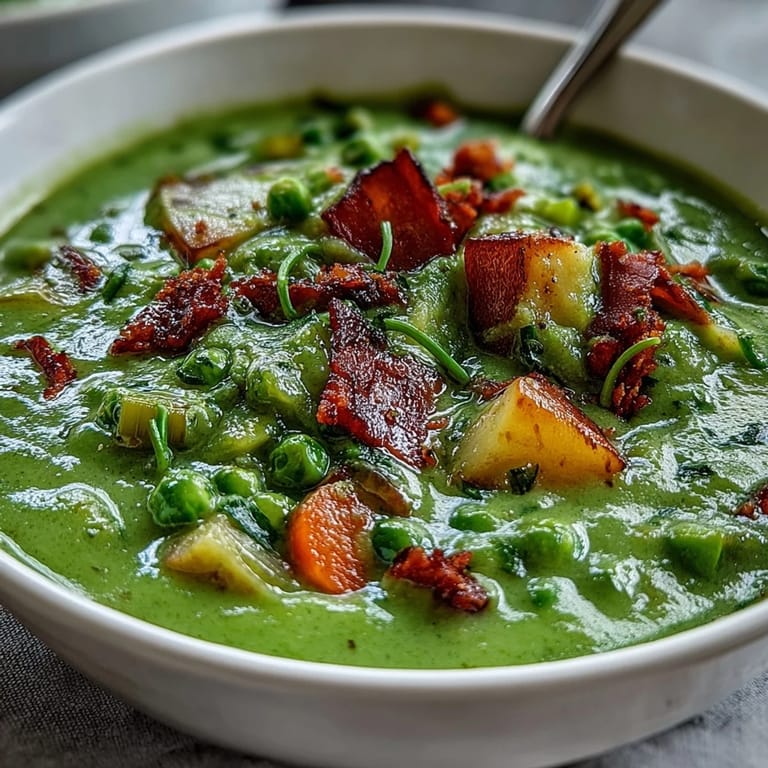
 My kid once asked why this soup looked like it had been through a storm, pointing at the slightly murky, humble appearance of it. I told her that sometimes the most beautiful things aren't meant to be pretty; they're meant to fill you up and make you feel taken care of. She ate two bowls without further complaint.
The Secret to Creamy Without Cream
The split peas themselves do all the work here, breaking down and releasing their natural starches into the broth as they cook. You don't need heavy cream or any of that; the soup becomes luxurious on its own terms. I used to think I needed to add cream to make soups feel fancy, until I realized that the plainness of this dish is actually its greatest strength, letting the vegetables and pea flavor shine without competing against dairy richness.
Vegetarian and Vegan Variations
Leaving out the ham doesn't mean leaving out the smoky, savory depth that makes this soup feel complete. Smoked paprika does wonders here, adding that charred, sophisticated flavor without any animal products. I've made both versions for friends with different diets, and honestly, the vegetarian version holds its own beautifully if you season it well and give it the same patient cooking time.
Serving and Storage Wisdom
This soup tastes better on the second day, and even better on the third, when all the flavors have gotten to know each other properly. Store it in the fridge for up to four days in an airtight container, and when you reheat it, add a splash of broth or water to loosen it back up since it will have thickened. Serve it alongside something crusty to drag through the bowl, maybe a hunk of sourdough or a grilled cheese sandwich if you're feeling indulgent.
- Freeze it in portions for quick dinners on nights when cooking feels impossible.
- Leftovers are even better than the first serving, so make extra on purpose.
- A squeeze of lemon right before serving brightens everything up if you want a little zing.
 Save Pin
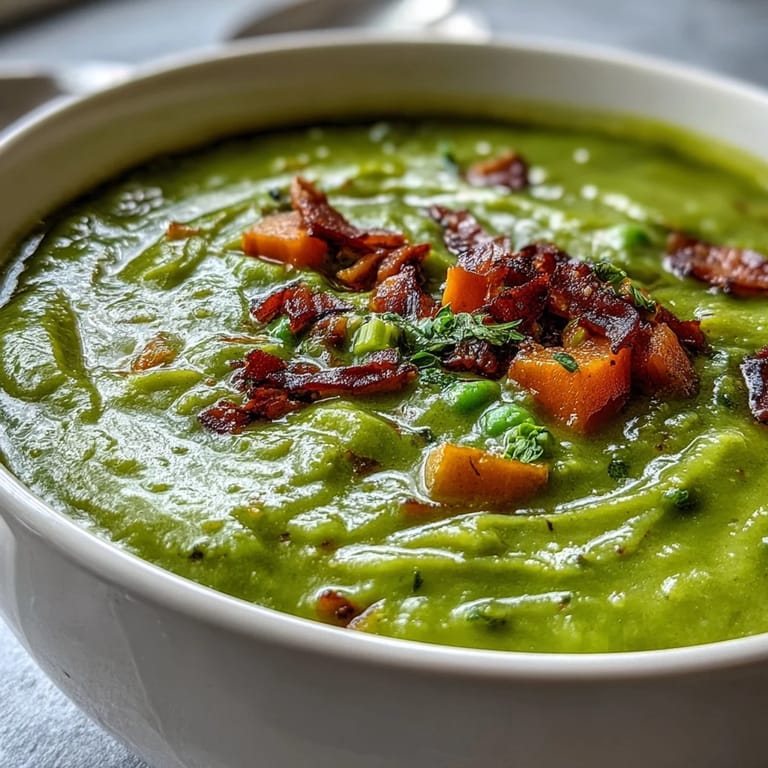
 This is the soup you make when you want to feel like you're taking care of people, even if that person is just yourself on a rough Tuesday. It's simple enough that you won't stress about it, but good enough that everyone will think you spent hours in the kitchen.
Recipe FAQs
- → Do I need to soak split peas before cooking?
No soaking required. Split peas cook relatively quickly compared to other dried legumes and will soften completely during the hour-long simmer time.
- → Can I make this soup in a slow cooker?
Absolutely. Combine all ingredients in your slow cooker and cook on low for 6-8 hours or on high for 3-4 hours until peas are tender and creamy.
- → How do I achieve a smoother texture?
Use an immersion blender to puree directly in the pot, or transfer half the soup to a blender and return it to the main pot. Leave some chunks for texture if preferred.
- → What can I use instead of ham for smoky flavor?
Smoked paprika works beautifully for vegetarians. Add 1-2 teaspoons during the sauté step to infuse that signature smokiness without meat.
- → How long will this soup keep in the refrigerator?
Store in an airtight container for up to 5 days. The soup will continue to thicken, so add broth or water when reheating to reach desired consistency.
- → Can I freeze this soup?
Yes, freeze for up to 3 months. Thaw overnight in the refrigerator and reheat gently on the stove, adding liquid as needed since freezing tends to thicken it further.