 Save Pin
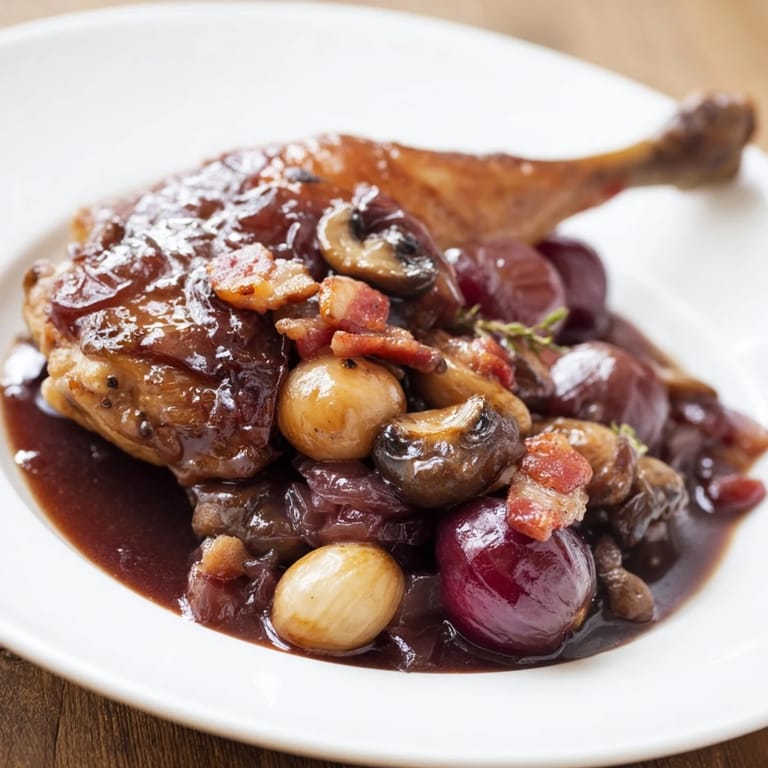
 The first time I made coq au vin, I was nervous about doing a French classic justice. My friend had raved about having it in Burgundy, and when she described how the wine seemed to meld into the chicken until you couldn't tell where one ended and the other began, I knew I had to try. That evening, as the pot simmered on my stove and the kitchen filled with the smell of wine, bacon, and herbs, I realized this wasn't restaurant magic—it was just time and attention working together.
I made this for a dinner party on a cold November night, and I still remember how my guests went quiet the moment they took their first bite. One of them actually closed his eyes. There's something about serving a whole pot of something so luxurious and homemade that shifts the whole mood of an evening—everyone relaxes a little deeper into their chair.
Ingredients
- Chicken pieces: One whole chicken cut into 8 pieces gives you a mix of white and dark meat, so everyone at the table gets what they prefer, and it cooks evenly in that wine bath.
- Smoked bacon or pancetta: This isn't just flavoring—those crispy bits become little pockets of richness throughout the stew, and the fat renders out to help brown everything else.
- Pearl onions: They stay intact and become almost candy-like as they braise, sweet and soft without falling apart.
- Cremini or button mushrooms: I learned to sauté these separately so they brown properly instead of steaming in the pot—it makes a real difference in texture and color.
- Carrots: Sliced thick enough to hold their shape but thin enough to soften properly.
- Garlic cloves: Just two, minced fine so they dissolve into the sauce rather than announcing themselves.
- Dry red wine: Use something you'd actually drink—Burgundy or Pinot Noir work perfectly—because the wine becomes the soul of this dish.
- Chicken stock: This is your safety net, keeping everything moist and preventing the sauce from becoming too wine-forward.
- Tomato paste: A small amount adds depth without making the sauce acidic.
- All-purpose flour: Just a touch to help thicken the sauce naturally as things braise.
- Olive oil and butter: The oil gets things started, but that butter swirled in at the end rounds out all the flavors.
- Bay leaves and thyme: Fresh thyme is worth seeking out here—dried works but tastes a bit dusty by comparison.
- Salt and pepper: Essential at the beginning and crucial again at the end, since everything concentrates as it cooks.
Tired of Takeout? 🥡
Get 10 meals you can make faster than delivery arrives. Seriously.
One email. No spam. Unsubscribe anytime.
Instructions
- Dry and season the chicken:
- Pat each piece thoroughly with paper towels so the skin can actually brown instead of steam. Season generously with salt and pepper—this is your only chance to season the chicken itself.
- Render the bacon:
- Cook it slowly in your Dutch oven until the edges curl and it's properly crispy. You want those rendered fat and those crunchy bits, so take your time.
- Brown the chicken in batches:
- Don't crowd the pot or it'll steam rather than sear. Work in two batches if you need to, letting each piece sit until it's golden and releases naturally from the bottom. This is flavor-building work that can't be rushed.
- Build your flavor base:
- Sauté the carrots, onions, and garlic until the onions start to turn translucent and everything smells incredible. Then add the tomato paste and flour, stirring constantly for a full minute so the flour cooks out and stops tasting raw.
- Bring everything together:
- Return the chicken and bacon, then pour in the wine and stock. Scrape the bottom of the pot with a wooden spoon to release all those browned bits—that's pure flavor. Tuck in the bay leaves and thyme so they float around in there.
- Let it simmer low and slow:
- Cover and let the oven do the work at a low temperature for 90 minutes. You'll know it's ready when the chicken is so tender a fork slides through easily.
- Brown the mushrooms separately:
- While the chicken braises, get a skillet hot and sauté the mushrooms in butter and oil until they're deeply browned on both sides. This takes about 5 minutes but makes all the difference.
- Finish with a reduction:
- Uncover the pot for the last 15 minutes so the sauce concentrates and becomes silkier. Stir in those sautéed mushrooms, taste, and adjust the seasoning—remember everything got saltier as it reduced.
- Clean and serve:
- Fish out the bay leaves and thyme sprigs, then ladle everything into bowls while it's still steaming. A little fresh parsley on top if you have it, but honestly, it doesn't need it.
 Save Pin
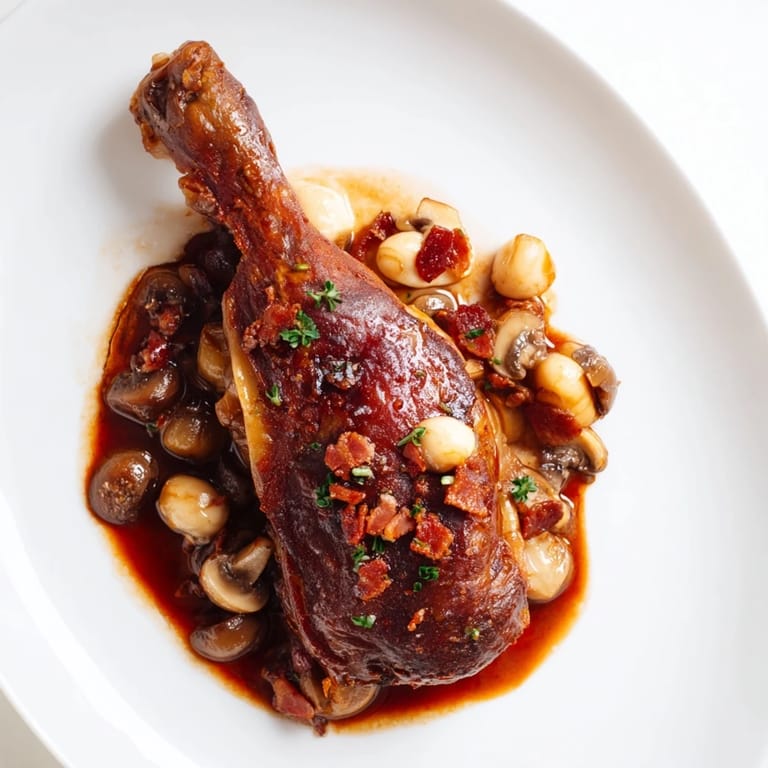
 I remember my grandmother tasting this and nodding quietly, which was her highest compliment. She'd grown up in France and had eaten coq au vin countless times, and I could see her mentally comparing. Afterward she told me it was good, which might not sound like much, but coming from her it meant everything.
Wine Pairing and Serving
Serve this with the same wine you used to cook it—or something very similar. The flavors already know each other, and it makes the whole experience feel intentional and complete. I like to pour generous glasses and let everyone settle in, because this is food that asks you to slow down.
What to Serve It With
Crusty bread is essential for soaking up the sauce, which is honestly the best part. Mashed potatoes work beautifully too—something about that combination feels both simple and fancy at the same time. I've also done it with buttered egg noodles on nights when I'm feeling a little less French and a little more cozy.
Making It Your Own
This is a recipe that welcomes small changes without losing its soul. If you love dark meat, use chicken thighs instead and just add a little extra cooking time. Some cooks splash in brandy when sautéing the mushrooms, and if you do that, take a breath and let it burn off completely—the alcohol cooks away but the richness stays. For a gluten-free version, swap the all-purpose flour for cornstarch or a gluten-free blend, using the same amount and stirring the same way.
- Chicken thighs work beautifully and stay even more tender than breast meat.
- A splash of brandy with the mushrooms adds a silky richness if you're feeling indulgent.
- Make this a day ahead if you can—the flavors settle overnight and taste even deeper.
 Save Pin
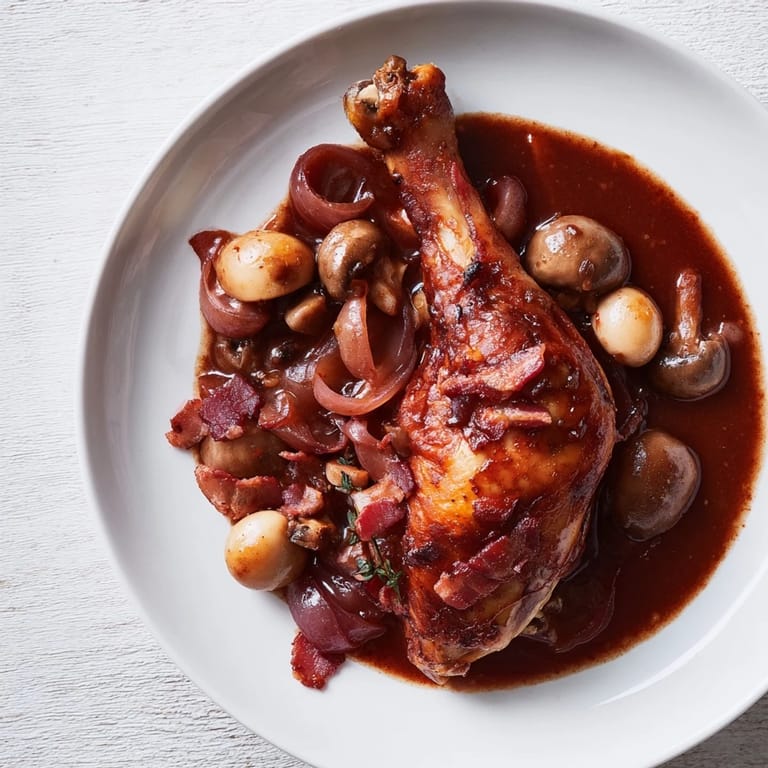
 This is the kind of recipe that teaches you something about cooking itself—how patience makes things tender, how flavors develop over time, how simple ingredients transform completely when you give them space and attention. Make it for someone you love.
Recipe FAQs
- → What wine is best for coq au vin?
Use dry red wines like Burgundy or Pinot Noir to achieve authentic depth and balanced acidity.
- → Can I use chicken parts other than whole chicken?
Yes, chicken thighs or drumsticks work well as they stay moist and absorb flavors during braising.
- → How do I get tender chicken every time?
Slow braising over low heat for about 1.5 to 2 hours ensures the chicken becomes tender and flavorful.
- → What vegetables are traditionally included?
Pearl onions, mushrooms, and carrots add sweetness and texture, complementing the savory sauce.
- → Can I prepare coq au vin ahead of time?
Yes, it benefits from resting overnight as flavors deepen, making it ideal for make-ahead meals.
- → What sides pair well with this dish?
Crusty French bread, buttered noodles, or mashed potatoes perfectly soak up the rich sauce.