 Save Pin
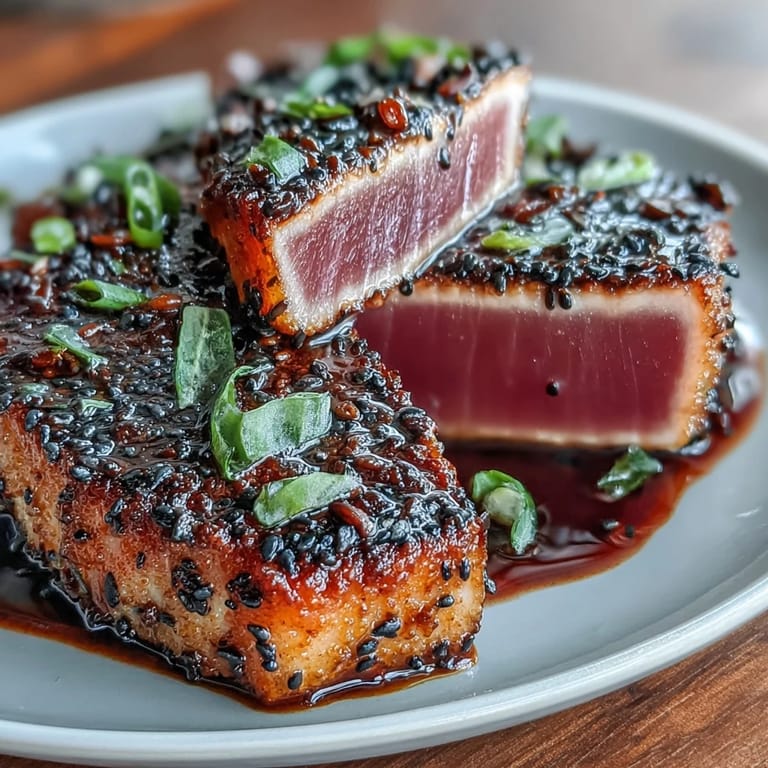
 My cooking confidence took a real leap the night I decided to sear tuna at home instead of ordering it out. I'd been intimidated by the simplicity of it all—how could something so elegant come from just a few minutes in a hot pan? But standing in my kitchen with sushi-grade tuna and black sesame seeds catching the light, I realized the magic wasn't in complexity but in respecting the ingredient. That first bite, with the warm nutty crust giving way to cool, buttery rare tuna, changed how I thought about weeknight cooking.
I made this for my partner on a random Tuesday when they'd had a rough day, and watching their face light up at the plate made me understand why restaurants charge what they do for this dish. There's something about the visual—those dark seeds glistening, the pink center peeking through—that signals something special is about to happen. It became our go-to celebration meal, and now whenever either of us mentions wanting something that feels fancy but doesn't demand hours in the kitchen, this is what we're really asking for.
Ingredients
- Sushi-grade tuna steaks (2, about 6 oz each, 1 inch thick): This is where everything starts—don't skip the sushi-grade designation, as it means the fish has been handled and frozen to food-safety standards that make eating it raw or rare safe.
- Soy sauce (1 tablespoon): This is your pre-sear flavor foundation, adding umami depth before the heat even touches the pan.
- Sesame oil (1 teaspoon): A little goes a long way; it brings warmth and toasted fragrance that complements the black sesame crust beautifully.
- Salt and freshly ground black pepper: Keep these minimal since the soy sauce already brings saltiness, and you want the sesame and tuna to shine.
- Black sesame seeds, toasted (1/2 cup): The toasting is already done if you buy them pre-roasted, but taste them first—stale seeds will ruin the texture and flavor.
- White sesame seeds, toasted (1/4 cup, optional): This is purely for visual contrast and a slightly milder nuttiness; skip it if you want the drama of all-black.
- Mayonnaise (1/4 cup): Use good quality mayo here; it's going to be the vehicle for wasabi heat and brightness.
- Wasabi paste (1 to 2 teaspoons): Start with less and add more—wasabi heat builds as you taste it, and you can always adjust but can't take it back.
- Rice vinegar (1 teaspoon): This cuts the richness of the mayo and adds a clean, subtle tang that lets the wasabi sing.
- Lemon juice (1 teaspoon): Fresh lemon is essential; bottled won't give you the same brightness against the rich tuna.
- Scallions, pickled ginger, lemon wedges (for garnish): These aren't decoration—they're palate cleansers and textural contrast that complete the plate.
Tired of Takeout? 🥡
Get 10 meals you can make faster than delivery arrives. Seriously.
One email. No spam. Unsubscribe anytime.
Instructions
- Prepare and Season the Tuna:
- Pat your tuna steaks completely dry with paper towels—any moisture will steam instead of sear. Brush both sides with soy sauce and sesame oil, then season lightly with salt and pepper, keeping in mind the soy adds saltiness.
- Coat with Sesame Crust:
- Pour your black sesame seeds (and white, if using) onto a shallow plate, then press each tuna steak firmly into the seeds, rotating to coat all sides evenly. The pressure matters—you want the seeds to really grip the fish.
- Heat Your Pan Properly:
- Place a non-stick or cast-iron skillet over high heat and let it get genuinely hot; you should feel serious heat radiating when you hold your hand above it. Add just a touch of oil once it's ready.
- Sear with Confidence:
- Place the tuna steaks in the hot pan and leave them alone for 30 to 45 seconds per side—resist the urge to fidget with them. You're aiming for a golden crust and a cool, rare center, which means speed is your friend here.
- Make the Wasabi Mayo:
- While the tuna rests, whisk together mayonnaise, wasabi paste, rice vinegar, and lemon juice until completely smooth. Taste and adjust the wasabi heat to your preference—this is your moment to customize.
- Slice and Plate:
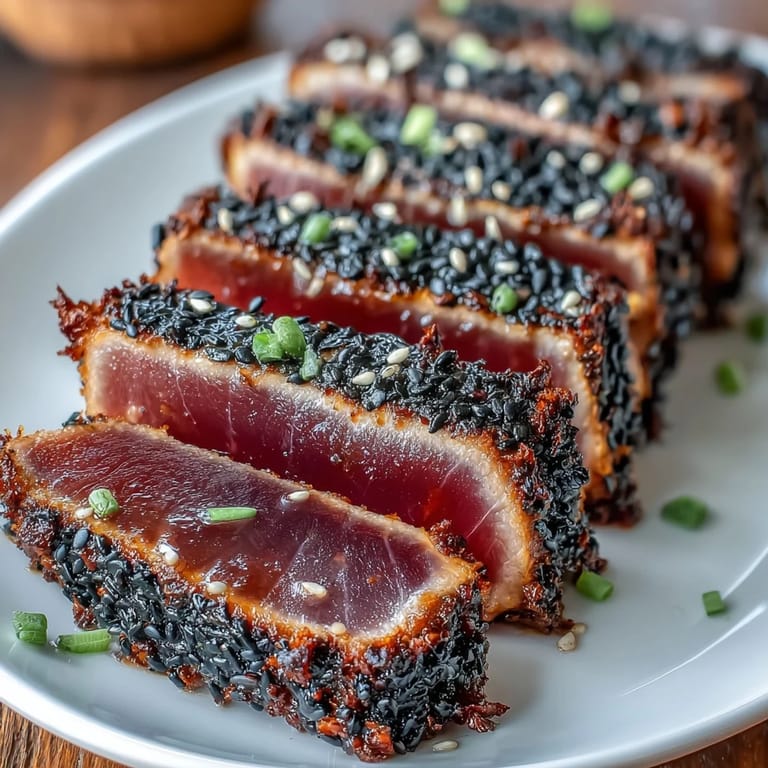
- Slice the tuna steaks against the grain into half-inch pieces, which makes each bite easier and shows off that stunning rare center. Arrange on plates, drizzle generously with wasabi mayo, and garnish with scallions, pickled ginger, and lemon wedges.
 Save Pin
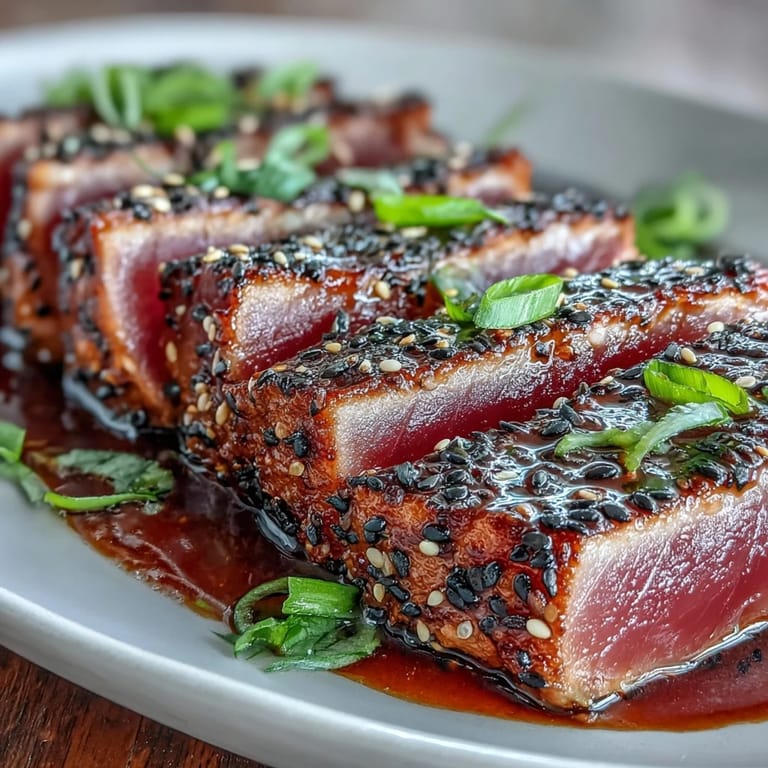
 The first time I sliced into my homemade version and saw that perfect rare center lined with the dark sesame crust, I actually called my friend who loves sushi to tell her I'd finally figured out something special. She laughed and said I'd joined the club of people who realize they can make restaurant food at home and never look back. That feeling of small mastery, of knowing you can pull off something that looks impossibly elegant, is part of why this dish stuck with me.
The Art of the Sear
Searing tuna is honestly a meditation in restraint—you're fighting every instinct to keep checking on it, flipping it, moving it around. The pan needs to be properly hot, which you'll know because a drop of water should evaporate instantly, and you need to trust that the sesame seeds are doing their job creating a barrier. I learned this by over-handling my first batch and ending up with a crust that stuck to the pan instead of to the tuna. Now I set a timer, step back, and let the heat work its magic.
Building the Perfect Wasabi Mayo
The wasabi mayo is where most people play it too safe, adding just a ghost of heat when this sauce is supposed to have presence. I've found that tasting as you go is crucial because wasabi's heat develops over a few seconds—what seems mild at first builds into something really punchy. The rice vinegar and lemon juice are equally important; they're the reason the mayo doesn't feel heavy alongside the rich tuna, instead cutting through with brightness.
Serving and Enjoying This Dish
This is a dish that doesn't need much accompaniment, but I've learned that a small mound of steamed rice and some lightly dressed greens on the side make it feel like a complete meal rather than just an appetizer. The pickled ginger isn't just traditional—it's functional, cleansing your palate between bites so each one feels as vivid as the first. The lemon wedges are there because that last squeeze of brightness over everything ties the whole plate together in a way that makes sense.
- Serve this immediately after plating so the tuna stays cool and the sesame crust stays crisp.
- If you're cooking for guests, prep the wasabi mayo ahead and have your garnishes ready so you can focus entirely on nailing the sear.
- Leftover tuna should not be left at room temperature; eat it right away or chill and enjoy cold the next day.
 Save Pin
 This dish reminds me that some of the most impressive meals come from respecting good ingredients and resisting the urge to overcomplicate things. Every time I make it, I'm grateful for how it taught me that home cooking doesn't have to mean elaborate or time-consuming to feel truly special.
Recipe FAQs
- → What is the best way to sear tuna for this dish?
Use a very hot non-stick or cast-iron pan and sear tuna steaks for 30-45 seconds per side to achieve a golden crust while keeping the center rare.
- → Can I use other types of fish for the crust?
Yes, firm-fleshed fish like swordfish or salmon can work, but adjust searing times to maintain desired doneness.
- → How do I toast black sesame seeds properly?
Toast sesame seeds in a dry skillet over medium heat, stirring frequently until they become fragrant and slightly golden, about 2-3 minutes.
- → What alternatives exist for wasabi paste?
Horseradish or a mild green chili paste can provide similar heat and flavor if wasabi is unavailable.
- → How can I make the dish dairy-free?
Use a dairy-free or vegan mayonnaise to prepare the wasabi mayo, ensuring the dish remains free from dairy products.
- → What side dishes pair well with this tuna preparation?
Steamed rice, lightly dressed greens, or a soy reduction drizzle complement the rich flavors and balance the dish.