 Save Pin
 The first time I understood what made a schnitzel truly Viennese was watching my neighbor Marie tap her meat mallet with practiced rhythm, each stroke deliberate and gentle. She explained that pounding wasn't about force but patience, coaxing the veal to an even thinness where it would cook perfectly and stay impossibly tender. That afternoon, standing in her small kitchen near the Donau, I realized this dish wasn't just about technique, it was about respect for the ingredient and the moment.
I made this for a dinner party when I wanted to impress without spending hours in the kitchen, and something magical happened, the breading stayed perfectly crisp even as people lingered over wine and conversation. My friend Thomas kept saying it tasted like Vienna itself had landed on his plate, which made me laugh, but he was right, there's something about this dish that transports you.
Ingredients
- Veal cutlets: Four pieces at about 150 grams each, pounded to a quarter inch thickness, this is where quality matters most, as thin, even meat ensures tender, evenly cooked results.
- All-purpose flour: Use 100 grams for your first dredging step, the foundation that helps everything adhere properly.
- Eggs and milk: Two large eggs beaten with 4 tablespoons of milk create a binding wash that's crucial for the breadcrumbs to stick evenly.
- Fine dry breadcrumbs: About 150 grams, the key to that shatteringly crisp crust that makes schnitzel unmistakable.
- Clarified butter or neutral oil: You'll need 250 milliliters for frying, this is non-negotiable for authentic flavor and a proper golden finish.
- Lemon wedges and fresh parsley: Not just garnish, these brighten the richness of the fried veal and add a restaurant quality finish.
Tired of Takeout? 🥡
Get 10 meals you can make faster than delivery arrives. Seriously.
One email. No spam. Unsubscribe anytime.
Instructions
- Prepare your veal with intention:
- Lay each cutlet between plastic wrap and use your meat mallet to gently pound until it reaches a quarter inch thickness, you want evenness, not bruising. Pat each piece dry with paper towels and season both sides lightly with salt and pepper, dry meat will brown better and stay crispier.
- Build your breading station:
- Arrange three shallow dishes in a line, flour in the first, beaten eggs with milk in the second, breadcrumbs in the third, this assembly line approach keeps things clean and efficient.
- Bread each cutlet with a light touch:
- Dredge the veal in flour first, shake off any excess so it's just a whisper of coating, then dip into the egg wash making sure it's fully coated, finally press gently into the breadcrumbs but do not pack them down, a loose, airy coating is what gives you that crispy shell.
- Fry to golden perfection:
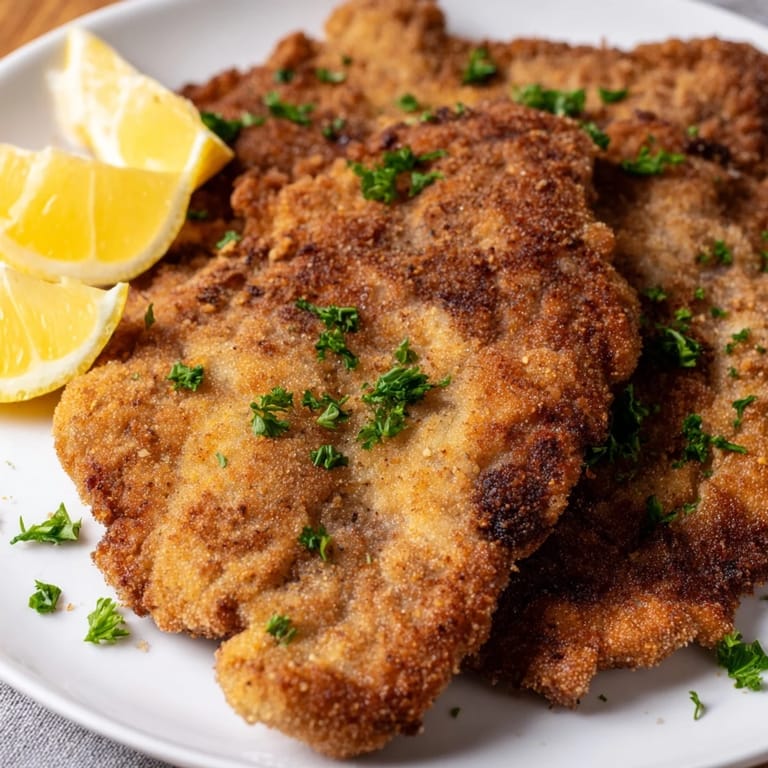
- Heat your clarified butter or oil in a large skillet over medium-high heat until it shimmers and moves easily when you tilt the pan, this takes about three minutes and is worth waiting for. Working with one or two schnitzels at a time depending on your pan size, fry for two to three minutes per side, tilting the pan occasionally to spoon the hot fat over the top for even browning, you'll know it's ready when the color deepens to a rich golden brown.
- Finish and serve immediately:
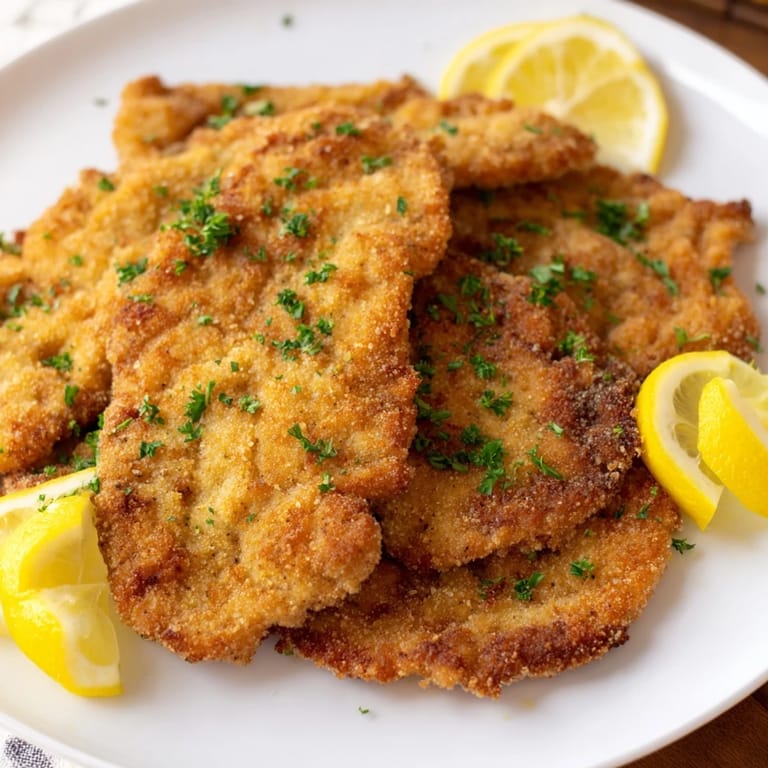
- Remove each schnitzel with a slotted spatula and let it drain briefly on paper towels, this keeps the bottom from getting soggy while you finish cooking. Plate immediately with lemon wedges scattered around and a sprinkle of fresh parsley if you like, timing is everything here.
 Save Pin
 There's a moment right when you pull a perfectly cooked schnitzel from the pan and it's still crackling softly, steam rising, the sound and smell of it more delicious than the taste almost, that's when you know you've done it right. That moment is why this dish has survived more than a century on Viennese tables.
Why Veal Matters Here
Veal has a delicate flavor and tender texture that takes to pounding without becoming tough or stringy, this is the traditional choice and for good reason. If veal isn't available or feels wrong to you, pork and chicken work beautifully too, though Austrians would call those Schnitzel Wiener Art, a subtle but important distinction that respects tradition.
Building the Perfect Crust
The three dish breading station might seem fussy but it's actually the fastest way to work and keeps your ingredients from getting mixed and muddy, dry flour first, wet egg wash second, breadcrumbs last, that's the rhythm. Many home cooks skip the flour step thinking it's extra work, but that flour layer is what makes the egg wash stick and the breadcrumbs adhere evenly.
Serving and Pairing Ideas
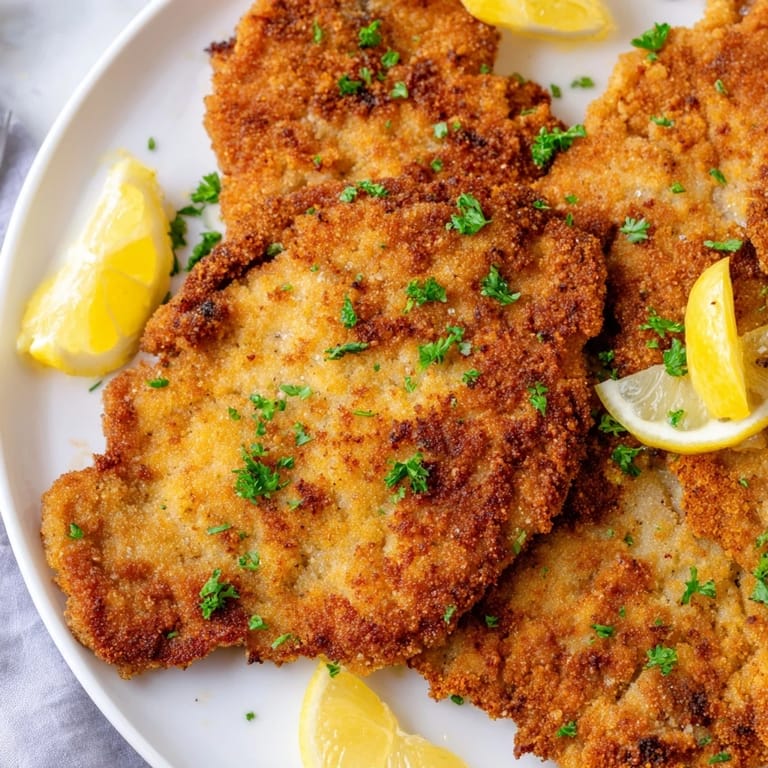
Schnitzel is beautifully versatile in how you serve it, a crisp potato salad with vinegar dressing is the most traditional route, cool and tangy against the hot rich veal. Some people love a cucumber salad, others serve it with lingonberry jam or a squeeze of lemon, there's no single right answer just what feels right to you.
- Keep lemon wedges nearby for people who want that bright acidic contrast at the end.
- Fresh parsley is optional but worth the two tablespoons of chopping time for color and freshness.
- Serve on a warm plate right from the stove, schnitzel doesn't wait for anyone.
 Save Pin
 This is the kind of dish that brings people back to the table and back to your kitchen, it's simple but never feels ordinary. Once you've made it a few times, you'll have the rhythm in your hands and the confidence to feed anyone.
Recipe FAQs
- → What type of meat is ideal for this dish?
Veal cutlets are preferred for their tenderness and flavor, thinly pounded for even cooking.
- → How should the cutlets be breaded for best texture?
Dredge in flour, dip in an egg and milk mixture, then coat lightly with dry breadcrumbs for a crisp exterior.
- → What is the recommended fat for frying?
Clarified butter is traditional, but neutral oils with a high smoke point work well to achieve golden browning.
- → Why is pounding the meat important?
Pounding the cutlets thin tenderizes the meat and ensures they cook quickly and evenly.
- → What sides pair well with this dish?
Classic accompaniments include potato salad, cucumber salad, or lingonberry jam for a sweet contrast.
- → How can I keep the breading crispy during frying?
Avoid pressing breadcrumbs into the meat and do not overcrowd the pan to maintain crispiness.