 Save Pin
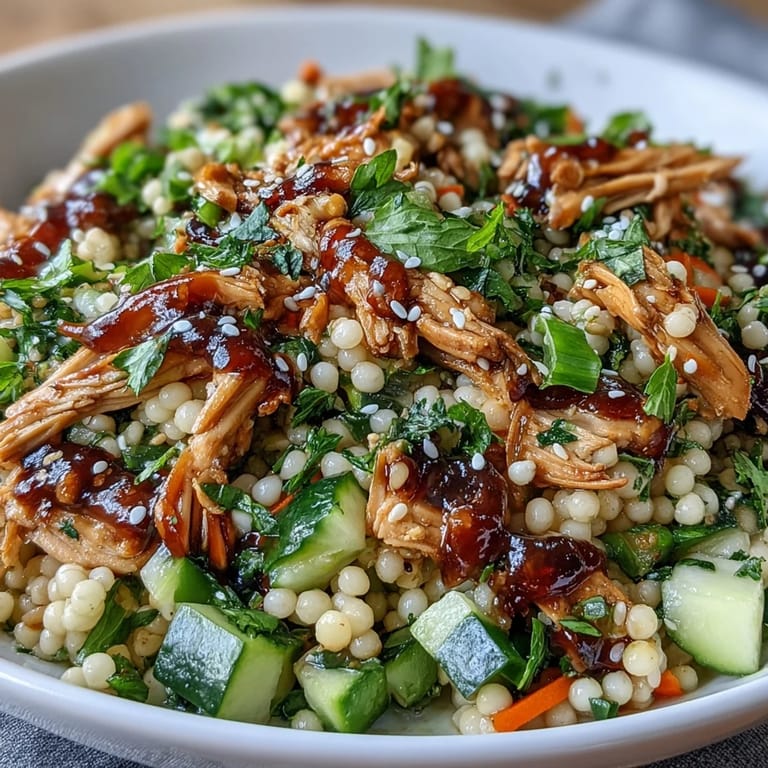
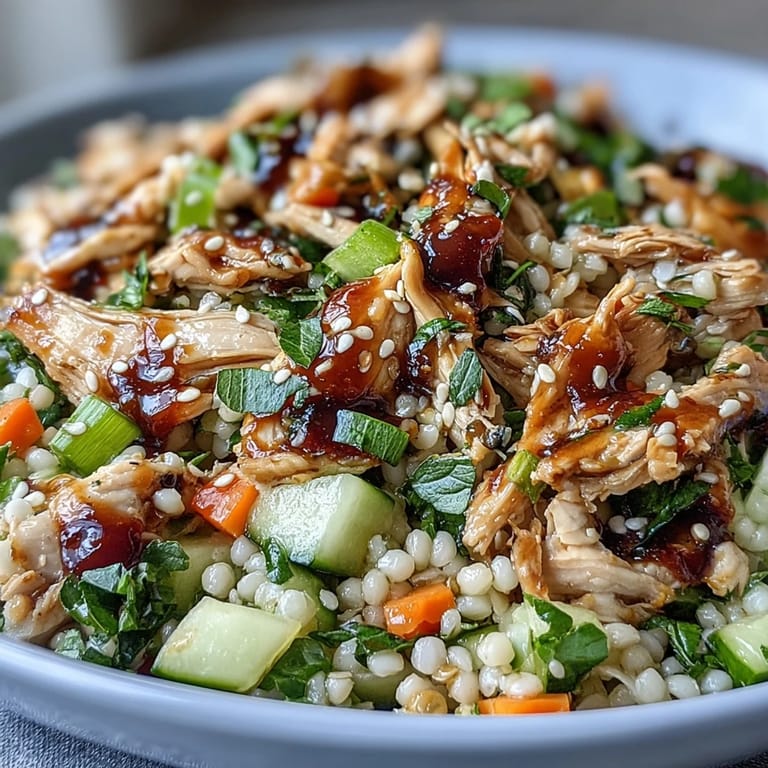
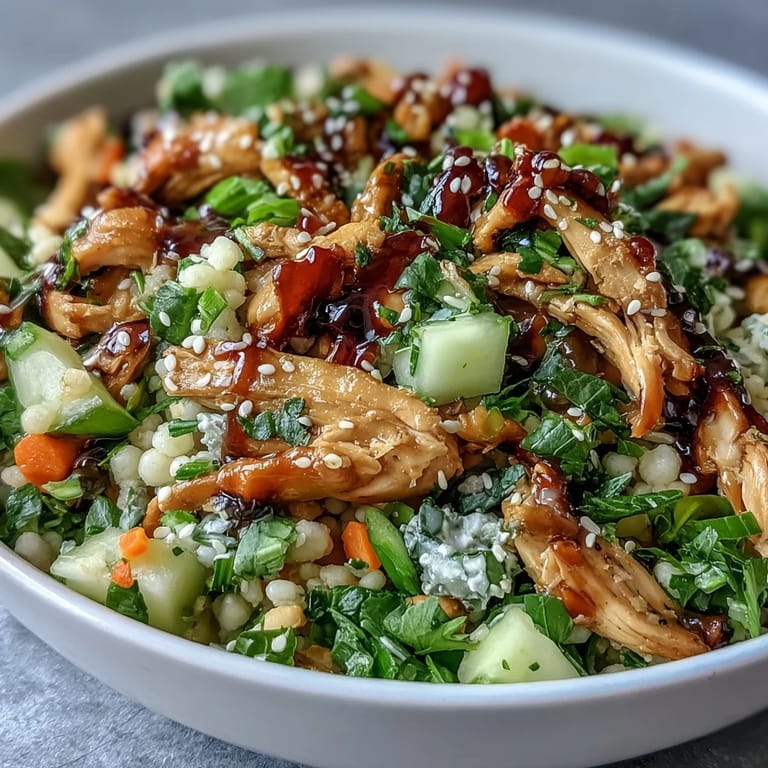
 A friend texted me one humid Tuesday asking if I could throw together something light but filling, something that wouldn't heat up the kitchen. I'd just grabbed a rotisserie chicken from the market and had a box of pearl couscous sitting in the pantry, so I improvised. What came together was this sesame-soy couscous salad—bright, chewy, and somehow both comforting and refreshing at the same time. It's become my go-to when I need to feed people quickly without feeling like I'm taking shortcuts.
I made this for a potluck at my office during a particularly chaotic week, and I remember standing in the break room watching people come back for thirds. Someone asked if I'd bought it from somewhere fancy, which made me laugh—it was literally assembled in my tiny apartment kitchen the night before. That moment when a simple, honest dish gets genuine appreciation? That's when I knew this one was a keeper.
Ingredients
- Pearl (Israeli) couscous: These little toasted pasta balls hold up better than regular couscous and give you actual texture instead of turning mushy—buy the Israeli kind if you can find it.
- Water: Just enough to cook the couscous tender without leaving it waterlogged; a simple ratio of about 1.5 parts water to couscous.
- Kosher salt: Season as you cook rather than after, and the salt flavor gets absorbed directly into each grain.
- Rotisserie chicken: Skinless works best here since the skin can get soggy once it sits with the dressing; shred it while it's still warm if you have time.
- Cucumber: A big crisp one gives you that refreshing crunch that keeps this salad from feeling heavy.
- Shredded carrots: Buy them pre-shredded if you're short on time—nobody's judging, and it actually gets the salad on the table faster.
- Scallions: Slice them thin so they distribute throughout the salad instead of getting stuck in clumps.
- Fresh cilantro and mint: The herbs are what make this taste actually bright and alive; don't skip them or use dried.
- Soy sauce: Use tamari if you need gluten-free, and taste the dressing before you commit to the full amount since soy sauces vary in saltiness.
- Toasted sesame oil: This is non-negotiable—regular sesame oil tastes flat by comparison, and the toasted version carries all the flavor you need.
- Rice vinegar: Milder than regular vinegar, so it won't overpower the sesame and soy.
- Honey or maple syrup: Just a touch of sweetness to balance the salt and vinegar, making the dressing taste complete instead of one-dimensional.
- Lime juice: Fresh lime, squeezed that day, brings everything into focus at the very end.
- Ginger and garlic: Fresh ginger especially—minced fine so you get little bursts of heat throughout.
- Sriracha: Optional but worth trying; it adds a subtle kick without making the salad spicy if you're measured about it.
- Toasted sesame seeds: The garnish that ties everything together, adding crunch and a nutty richness.
Tired of Takeout? 🥡
Get 10 meals you can make faster than delivery arrives. Seriously.
One email. No spam. Unsubscribe anytime.
Instructions
- Bring water and salt to a rolling boil:
- You'll hear it before you see it, and that's your signal that the couscous is about to cook properly. Don't skimp on the salt here—it seasons the couscous from the inside out.
- Add couscous and let it simmer gently:
- Stir it once or twice so nothing sticks to the bottom, and keep the heat moderate so the water doesn't evaporate too fast. After about 8 to 10 minutes, taste a grain—it should be tender but still have a slight chew, not mushy.
- Drain and cool:
- If there's excess water sitting in the pan, pour it off so the couscous doesn't get waterlogged as it cools. Spread it out on a plate or shallow bowl so it cools faster and won't clump together.
- Whisk the dressing together in a separate bowl:
- Start with the soy sauce, sesame oil, and vinegar, then add the honey, lime juice, and ginger. Taste it as you go—this is your moment to adjust flavors, and it's easier to do now than after everything's mixed together.
- Combine everything in a large bowl:
- The couscous should be at least room temperature by now, so fold in the chicken, cucumber, carrots, scallions, cilantro, and mint gently so you don't crush anything. Then pour that gorgeous dressing over it all.
- Toss thoroughly so every bite gets coated:
- Use your hands or a pair of tongs and really make sure the dressing gets into all the corners and crevices. This is what transforms separate ingredients into an actual salad.
- Taste and adjust before serving:
- Maybe you want more lime brightness, or a touch more sesame oil—now's the time to fix it. Divide into bowls, scatter sesame seeds on top, and pass lime wedges at the table.
 Save Pin
 I made this salad once for someone I was trying to impress, and instead of stressing about whether I'd nailed it, I just watched them eat it. They got to the bottom of their bowl and looked up with this expression of genuine satisfaction, and that's when I realized this dish had somehow crossed over from just being easy and quick into actually being something special. Food does that sometimes—it stops being about technique and becomes about the moment.
Why This Works as a Weeknight Dinner
There's no standing over the stove stirring constantly, no delicate timing, and almost everything can be prepped while the couscous cooks. The rotisserie chicken means you're not wrestling with raw poultry at the end of a long day, and pearl couscous is forgiving enough that it won't fall apart if you're not perfect with the water-to-grain ratio. This is the kind of recipe that lets you actually taste your food instead of just getting fuel on the table.
Storage and Make-Ahead Tricks
This salad genuinely gets better overnight as the flavors meld together, so make it a day ahead if you can. Store it in a covered container in the fridge, and it'll keep well for three days—though I've never had it last that long. If it seems a little dry the next morning, stir in a splash more sesame oil or lime juice right before eating, and suddenly it's fresh again.
Ways to Customize Without Losing the Plot
The skeleton of this recipe is solid enough that you can swap things around based on what you have or what you're craving. Red bell pepper adds sweetness and crunch, snap peas bring a springy texture, and shredded red cabbage gives you visual drama plus a peppery bite. For protein, substitute the chicken with cubed baked tofu, chickpeas, or grilled shrimp depending on your mood—the dressing is flexible enough to carry any of them. Just remember that the sesame oil, soy sauce, and ginger are the backbone, so keep those consistent and you won't go wrong.
- Vegetarian versions work beautifully with baked tofu or edamame, and the salad actually tastes complete either way.
- For extra heat, add more Sriracha to the dressing or scatter some red chili flakes on top.
- Fresh basil can stand in for cilantro if mint isn't available, and the salad will still sing.
 Save Pin
 This salad feels like something you can serve to just about anyone and they'll feel taken care of, even though you barely spent an hour in the kitchen. That's the quiet magic of a recipe done right.
Recipe FAQs
- → Can I make this dish vegetarian?
Yes, simply substitute the rotisserie chicken with cubed baked tofu or edamame. Both options absorb the sesame-soy dressing beautifully and provide satisfying protein.
- → Is pearl couscous the same as regular couscous?
No, pearl couscous (also called Israeli couscous) consists of larger, round pasta-like pearls that require boiling, unlike traditional tiny couscous which steams. Pearl couscous has a chewier texture and works perfectly in salads.
- → How long does the dressing stay fresh?
The sesame-soy dressing keeps well in an airtight container in the refrigerator for up to one week. The flavors actually develop and meld together over time, making it great to prepare ahead.
- → Can I serve this warm or chilled?
This versatile dish works beautifully either way. Serve it warm right after assembling, or refrigerate for at least an hour for a refreshing cold salad. The flavors remain vibrant in both preparations.
- → What can I add for extra crunch?
Consider adding chopped red bell pepper, snap peas, or even toasted cashews or peanuts. These additions complement the Asian flavors while adding satisfying texture and color contrast to the dish.
- → Is this dish gluten-free?
Traditional pearl couscous contains wheat, but you can use gluten-free couscous or quinoa as a substitute. Additionally, use tamari instead of soy sauce to make the entire dish gluten-free while maintaining the same savory depth.